AI and technology stocks perked up early this week following the publication of the IPO prospectus for Anthropic. Investors took heart from news that the Claude chatbot maker pulled in more than $16 billion in revenue in the first half, says Ipek Ozkardeskaya of Swissquote.
But cracks have begun to emerge in parts of the AI landscape. The cost of insuring debt issued by CoreWeave, a “neocloud” data-centre business, recently rose to allow for “a more than 60% chance of default within the next five years”, according to Bloomberg. CoreWeave is a highly leveraged owner-operator of potentially fast-depreciating assets, says Victor Balfour of Rothschild & Co. It’s little surprise the shares have plunged 67% since their peak in June 2025.
That doesn’t necessarily spell doom for AI more generally. The technology “hyperscalers” are much more robust – Microsoft shares have risen 38% since the start of July. These companies are issuing a lot of debt to pay for their AI investments, but their strong operating cash flows and balance sheets are “reassuring”.
Start your trial of MoneyWeek today
Get unparalleled financial insight, analysis and expert opinion you can profit from.
Start your trial
Sign up for MoneyWeek’s free twice-daily newsletter.
Join more than 165,000 subscribers and keep yourself informed with latest financial news, insights and expert analysis to help you understand what really matters when it comes to your finances.
Join more than 165,000 subscribers and keep yourself informed with latest financial news, insights and expert analysis to help you understand what really matters when it comes to your finances.
Stijn Van Nieuwerburgh of Columbia University estimates that spending on AI data centres, power systems, networking infrastructure and specialised chips will hit $10.3 trillion in 2025-2032. On an annual basis, investment will run at 3.63% of US GDP. For comparison, the late 1990s dotcom boom saw capital spending equivalent to 1.1% of annual GDP; the 1870-1890 US railroad mania was previously the historical leader at 2.24% of GDP.
As the credit boom goes on, Van Nieuwerburgh warns financing is moving into an opaque world of “joint ventures, private credit, securitisation, special-purpose vehicles, lease commitments and loan guarantees”. That makes it much harder to keep track of where dangerous credit risks are accumulating.
AI profits bubble?
The Nasdaq 100 trades on a forward price-to-earnings ratio a little over 20 times, a premium rating but not obviously bubbly. That’s because the “bubble is in profits, not valuations”, says Edward Chancellor on Breakingviews. Big American blue-chips have reported breathtaking earnings growth; S&P 500 earnings per share rose 26% in the 12 months to July, far above the long-term average of 7%. Morgan Stanley predicts the 42 most AI-exposed firms will grow profits by 67% this year.
But the AI profit boom is something of an accounting “mirage”. When a hyperscaler such as Microsoft buys a chip from Nvidia, the latter is able to book an immediate sale, but the former acquires an “asset” that depreciates slowly over a number of years. Unless the chips deliver the promised earnings bonanza, an earnings hangover will eventually catch up with the hyperscalers – “by the end of the decade… annual depreciation charges will range between $500 billion and $1 trillion”.
Earnings bubbles have occurred before, notably in US housebuilders at the 2006 peak of the property bubble. Should US profit growth revert to the historical mean and losses emerge at data-centre operators and AI frontier labs, then the damage could “metastasise through the financial system”.
This article was first published in MoneyWeek’s magazine. Enjoy exclusive early access to news, opinion and analysis from our team of financial experts with a MoneyWeek subscription.
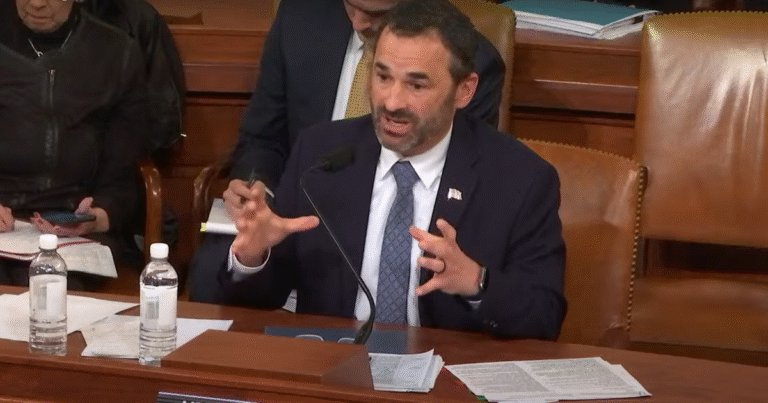
Key Insight: A framework may serve better that standards or regulations with rapidly evolving tax AI tools. What’s at Stake: Accounting firms risk repeating their competitors’ AI errors if they refuse to share lessons. Expert Quote: “There was nothing to tether [due diligence] to.” — Danny Werfel, former IRS Commissioner Former IRS Commissioner Danny Werfel…
Nitin Agrawal, Chief Financial Officer, sold 10,062 shares of CoreWeave, Inc. (CRWV -1.88%) on Aug. 20, 2026. SEC Form 4 filing. Transaction summary Metric Value Shares sold 10,062 Transaction value ~$924,500 Post-transaction shares (total) 279,933 Post-transaction shares (directly held) 138,105 Post-transaction shares (indirectly held) 141,828 Post-transaction value $25.13 million Transaction value based on SEC Form…
NDF algo innovation rises as internal matching builds – Risk.net Skip to main content Close navigation menu End of drawer navigation content Banks bolster offerings with new EM pairs and improved execution quality, in bid to increase internalisation Banks are stepping up their algorithmic execution capabilities for restricted market currencies, applying many of the electronic…
Article content THIS CONTENT IS RESERVED FOR SUBSCRIBERS ONLY Subscribe now to read the latest news in your city and across Canada. Exclusive articles from Barbara Shecter, Joe O’Connor, Gabriel Friedman, and others. Daily content from Financial Times, the world’s leading global business publication. Unlimited online access to read articles from Financial Post, National Post…
SAN DIEGO, July 7, 2026 /PRNewswire/ — Robbins Geller Rudman & Dowd LLP announces that purchasers or acquirers of Commvault Systems, Inc. (NASDAQ: CVLT) securities between April 29, 2025 and January 26, 2026, all dates inclusive (the “Class Period”), have until Friday, July 17, 2026 to seek appointment as lead plaintiff of the Commvault class action…
Personal Finance Updated: Sunday, August 23, 2026, 17:02 [IST] A new framework has been introduced to push the adoption of piped natural gas (PNG), a cooking gas that is cleaner, safer, and more efficient. The Oil Ministry has issued a new advisory for ensuring that one household uses only one cooking gas connection. For this,…