RIA Growth Outpaces Succession Planning Efforts
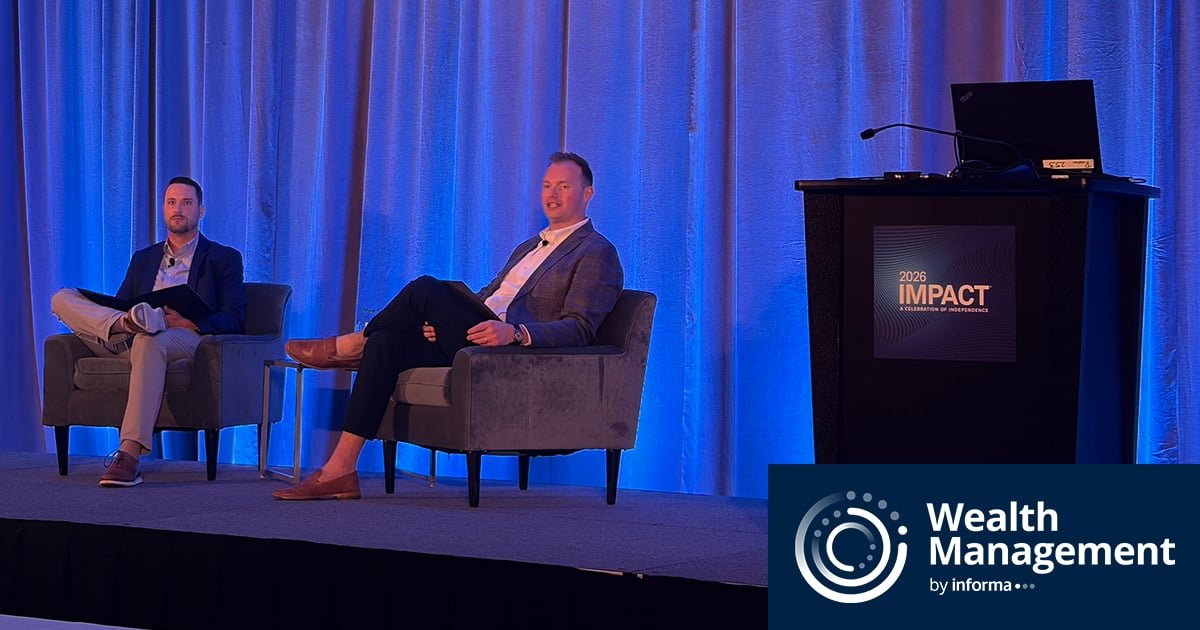
Registered investment advisors are growing faster than almost every other channel in wealth management, but a looming succession gap threatens to undercut that momentum, according to research presented by Cerulli Associates at Schwab Impact in Boston on Thursday.
Stephen Caruso, who leads Cerulli’s RIA research, and Andrew Blake, an associate director on the firm’s wealth management team, presented data showing independent RIAs are growing at a 12% five-year compound annual growth rate—outpacing wirehouses by a wide margin and just behind independent broker/dealers at 12.7% (which benefit from roll-up acquisition activity).
But that growth trajectory remains at risk of colliding with the long-anticipated wave of advisor retirements.
Cerulli’s research found that 35% of advisors industrywide, representing 40% of total assets, plan to retire within the next decade. In addition, 29% of those retiring advisors have no defined succession plan. Among independent RIAs specifically, 38% of retiring advisors say an external sale is their intended exit strategy.
“We hear sometimes five years or so in the open market to really find that successor,” Blake told an audience of RIAs, noting that firms frequently underestimate how long the process takes and should expect trial and error before locking in the right person.
The research reflected many of the conversations among RIAs at Schwab. Though advisors did not want to be named, a few founders spoke about the difficulty of selling to junior advisors with such high market valuations for their firms, whereas one second-generation advisor noted he didn’t want to “mortgage away his future” by taking a loan large enough to get a significant stake in his firm.
Caruso backed up these anecdotes, noting that while many larger RIAs have created equity plans, many smaller or mid-sized firms struggle to find a viable approach even as founders ponder retirement.
“As you approach succession, this equity component becomes more and more key in aligning the interests of the firm overall,” Caruso said during the presentation.
According to Cerulli’s survey, 45% of $1 billion RIAs now offer direct equity ownership to employees.
Caruso said that equity can serve multiple purposes at once: a retention mechanism for tenured staff, a recruiting differentiator, and—critically—a mechanism for “founder liquidity” when the time comes to sell.
“Having your staff aligned ahead of time, as it comes down to that point, gives folks the liquidity event as well, but gives them the buyer and the transaction awareness,” he said, noting that employees who have a financial stake and understanding of the business are far more likely to stay through a transition rather than leave once a sale is announced.
Caruso also connected succession outcomes directly to a firm’s organic growth rate.
With industry-wide organic growth ranging from 2% to 4%, he argued that consistent growth — through referrals, centers of influence like CPAs, and diversified lead sources—has a direct and measurable impact on sales valuations.
“Your organic growth rate directly impacts the valuation that your practice will receive,” he said.
The Cerulli researchers, while advocating for a succession plan, acknowledged the challenges of focusing on it amid pressing areas such as technology, compliance and staffing—particularly in the $1 billion RIA market.
In its survey of $1 billion RIAs, Cerulli found the top challenge to be compliance responsibilities and filings. That was followed by selecting, maintaining and integrating technology, and then the “time required to run the business.”
Caruso said technology integration is becoming an increasingly important factor for RIAs, sucking time away from other areas.
“There is a critical need for understanding your data, understanding your tech stack in a way that I think previously hadn’t been seen in the RIA space,” he said.
That hit another theme at Schwab Impact, with some of the technology demos and booths seeing heavy traffic as RIAs considered how incorporating AI into business processes would be worth the cost.
According to research by Blake, about 50% of RIAs plan to onboard advisors and staff with AI tools, noting that “there are efficiency gains that firms are exploring on that side of the business.”
According to Cerulli, independent RIAs now manage $6.9 trillion in assets, while hybrid RIAs, which are dually registered, account for another $4.7 trillion, with both growing at more than 11.5% annually. IBDs, for their part, account for $5.5 trillion in market value, and wirehouses are the largest asset holder with $13.7 trillion, though from a smaller growth rate of 8.8%.