Possible Senate EPW leader shift with permitting bill in spotlight

Daniel Heuer/Bloomberg
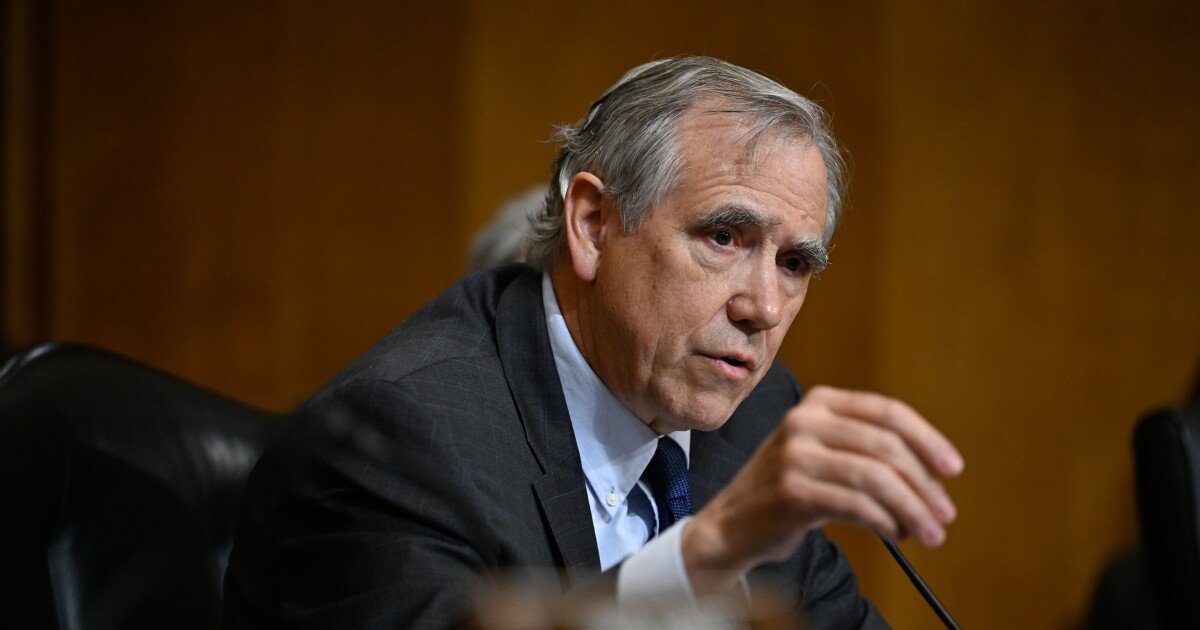
If Democrats take control of the Senate in next week’s midterm elections, Oregon progressive Democratic Sen. Jeff Merkley may take the helm of the Senate Environment and Public Works Committee as a long-awaited bipartisan permitting reform aimed at making it easier to build infrastructure is in play.
Processing Content
Senate EPW Ranking Democrat Sen. Sheldon Whitehouse, D-R.I., a climate hawk who helped craft the permitting bill, is expected to chair the Senate Judiciary Committee if Democrats win the Senate. Merkley is likely to take the EPW gavel, although he may face competition from Sen. Ed Markey, D-Mass.
Merkley is currently ranking member of the Senate Budget Committee, and sits on the Appropriations, Foreign Relations and Rules and Administration committees. He has said he would make a decision about chairing EPW after the midterms, according to Politico.
Merkley was first elected to the Senate in 2008. In 2010, he co-authored the so-called Volcker Rule in the Dodd-Frank Act, which
In August, Merkley was one of nine Democratic senators who
Sen. Shelley Moore Capito, R-W.Va., would remain in the chair’s seat if Republicans retain control of the upper chamber.
The EPW panel is important to the municipal bond market as it oversees transportation and infrastructure spending, public works as well as environmental policy and how the Federal Emergency Management Agency administers disaster relief.
The committee may take up its portion of the surface transportation reauthorization after the midterms, Capito has said, although many observers think the bill will be punted to next year.
The panel will be in the spotlight as the permitting bill — the Bipartisan American Affordability and Jobs Act of 2026 — could be taken up for a key procedural vote as soon as Nov. 9, during an already busy lame duck session.
Capito and Whitehouse helped write the bill, which aims to speed up infrastructure projects with a comprehensive overhaul of the
The bill marks a rare area of bipartisanship, although the alliance is fragile. Four Democrats, including Merkley, on Tuesday
The bill would accelerate federal review schedules by narrowing the amount of federal actions currently required for National Environmental Protection Act review, expanding categorical exclusions and enforcing stricter schedules for objecting to projects.
It would also protect already-issued permits by blocking agencies from revoking or altering federal authorizations for projects with nonfederal sponsors that were in effect after September.
The bill brings benefits to states, said the American Association of State Highway and Transportation Officials, by improving project certainty and delivery.
AASHTO president Russell McMurry called it a “major step in supporting our nation’s state DOTs to speed up delivery of projects and their tangible safety and quality of life benefits for all communities.”
Meanwhile, a group of nine attorneys general from Democratic states last week