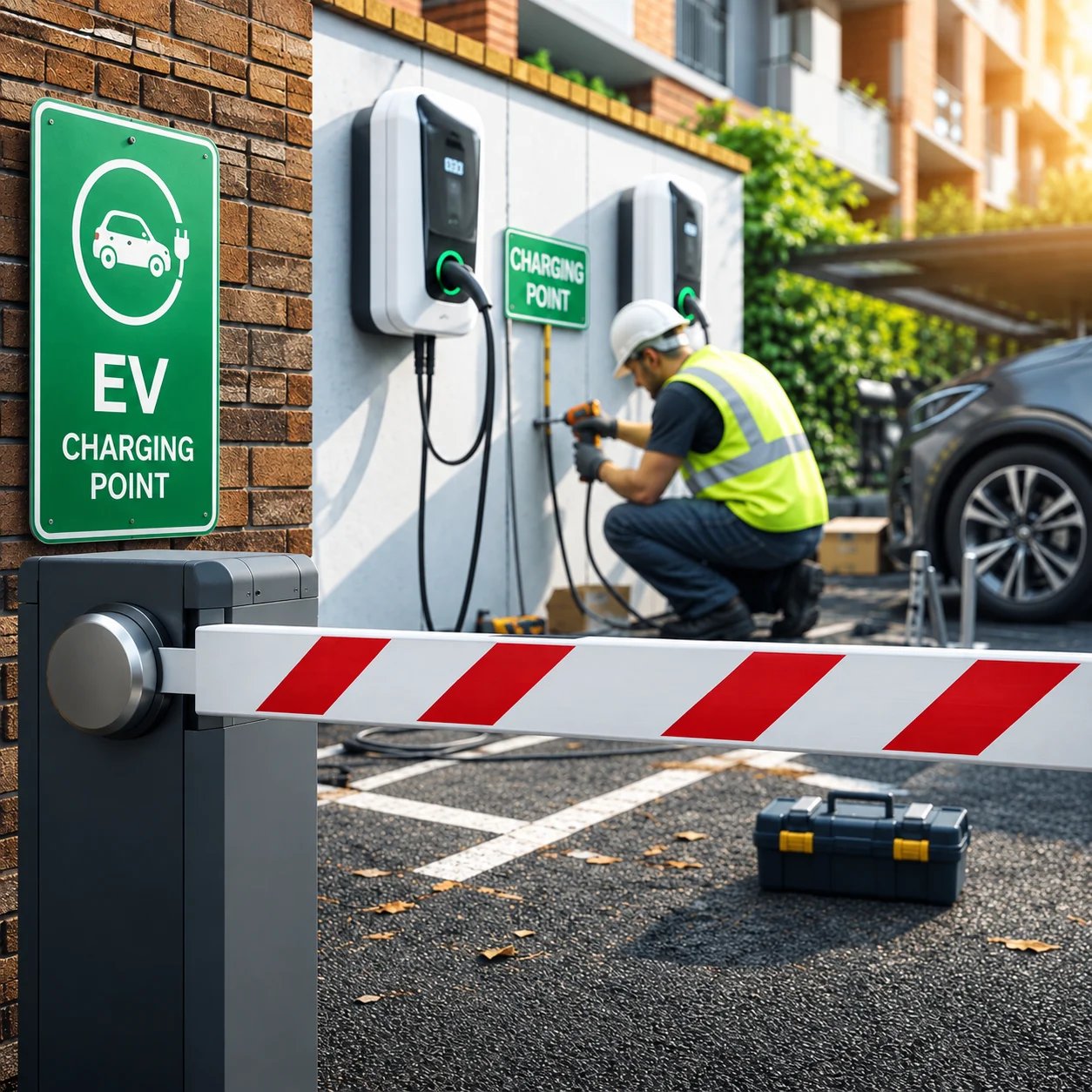
Landlords could face a legal duty to allow EV chargers
12:10 AM, 27th October 2026, 1 hour ago
Landlords could be required to justify refusing a tenant’s request for installing an electric vehicle charger under government proposals for England.
However, who pays to remove it later is still an open question.
A consultation proposes giving tenants and leaseholders an ‘ability to charge’, with legislation requiring landlords and freeholders to make timely decisions and not unreasonably refuse permission.
The plans focus on homes with off-street parking and suggest a written response within a period such as 28 calendar days, although that timescale has not been settled.
Published by the Department for Transport and the Ministry of Housing, Communities and Local Government, the consultation also considers voluntary guidance as an alternative to legal duties.
Who pays for the charger?
Under the proposed legislation, tenants or leaseholders would be expected to arrange and pay for the charger, installation work and any applicable fees for permission to make alterations.
However, the government is seeking views on responsibility for subsequent costs, including maintenance, use and removal.
Before installation, the parties would need to agree terms covering the work and their respective responsibilities.
For landlords, that makes the consultation about more than installing charging equipment on their property to include who takes responsibility for the kit after installation and when it is decommissioned.
When could landlords refuse?
The government acknowledges that some requests may reasonably be rejected by landlords.
Possible grounds include a conflict with an existing lease term or statutory obligation.
The list also includes the need for local electricity network upgrades, or an installation that fails to meet electrical standards.
A lack of off-street parking or insufficient parking space could also justify refusal.
In blocks of flats, another suggested ground is that the landlord or freeholder is already adopting a charging scheme for the whole building.
The government is also asking how disputes over charging requests should be escalated.
Requests may need freeholder approval
Under the suggested process, a private tenant would submit a written request to their landlord.
Where that landlord owns the property on a leasehold basis, they would generally be expected to pass the request to the freeholder.
Some intermediate landlords may already have authority to approve the necessary alterations.
The government wants the arrangements to cover as many parking types as possible, including allocated spaces.
It also wants views on the complications of communal parking.
Property118 reported in January that the government intended to consult on an ‘ability to charge’.
That earlier coverage outlined efforts to remove barriers for tenants and leaseholders, alongside grants encouraging installation.
The new consultation sets out how requests might be handled and where legal obligations could fall.
Landlords invited to respond
Under the guidance-only option, landlords and freeholders would be encouraged to explain refusals but would not be obliged to approve installations.
Introducing legal duties would require future primary legislation and parliamentary time.
The consultation itself creates no new requirement to accept a charger request.
Landlords can respond to the government consultation until 11.59pm on 16 December.