Less EMI tip: Can you switch your home loan lenders multiple times? What it costs to do so, when you should consider it?
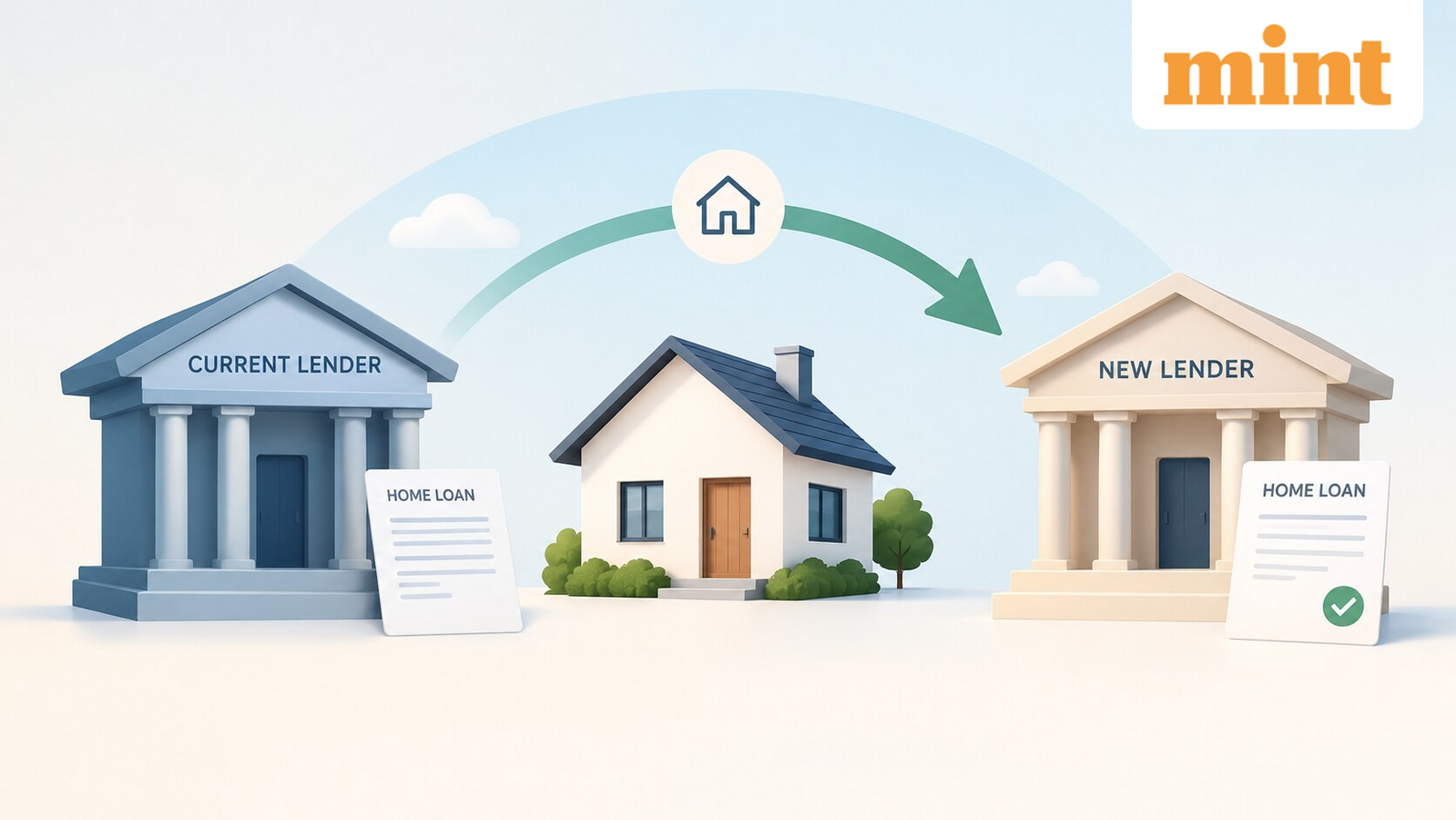
A home loan balance transfer facility allows borrowers to move their loan to another lender before the loan tenure ends, usually to secure a lower interest rate. The new lender evaluates the application as a fresh loan and if approved, repays the outstanding amount to the existing lender.
Once the transfer process is done, you begin repaying the remaining loan amount to the new lender at the revised interest rate.
However, a balance transfer is not necessarily a one-time option. Borrowers may consider switching lenders again if another lender offers a more competitive interest rate or more favourable terms.
Can you switch loans multiple times?
Yes, there is no fixed legal limit on the number of times you can transfer a home loan. Borrowers can switch lenders multiple times, provided they meet the new lender’s eligibility criteria and the loan is approved by the new lender.
Should you consider switching loan lenders?
As mentioned earlier, most borrowers shift their loans to another lender when they are being offered lower interest rates.
For example, if you got a home loan of ₹25 lakh at a 7% interest rate for 20 years. The approximate total interest due for payment will be ₹21.5 lakh. However, if another lender offers a reduced interest rate of 6%, your total interest amount would be almost ₹18 lakh, saving an amount of ₹3.5 lakh.
Apart from a lower interest rate, refinancing your home loan can offer other benefits, such as restructuring the repayment tenure to arrive at a more manageable EMI. Some lenders may also offer additional facilities, including top-up loans, doorstep services and better customer support.
However, transferring your home loan multiple times may not always be financially beneficial. According to a blog post by Kotak Mahindra Bank, borrowers should consider the following factors first:
- Applying for a home loan balance transfer is treated as a new loan application, meaning it involves the entire process of paperwork, formalities and documentation.
- Switching your loan means you need to ensure that you meet the eligibility of the lender every time you plan to do it.
- A borrower may also need to pay the processing fee and transfer cost to switch their loan, depending on the loan’s type.
- It might not be a good idea to switch in the later years of the loan, as you would have paid a considerable part of interest already.
- Considering the transfer cost, you might not save anything by multiple transfers.
What are the charges for a home loan transfer?
If you have a fixed rate home loan, the current lender can impose prepayment charges of up to 2% of the outstanding loan amount, according to a blog post by ICICI Bank. The levy varies between lenders.
Also, transferring a home loan is similar to taking a new home loan from a new lender. The new lender will also charge a processing fee on the loan amount.
If your home loan is under the floating rate regime, then your current bank cannot levy any prepayment charges as per directions from the Reserve Bank of India (RBI). However, in this case too, the new lender may charge you a processing fee for the loan being transferred to another lender.