SBI cyber fraud: Kerala HC orders ₹3.73 lakh refund. Can you get a refund after sharing an OTP?
Cyber fraudsters often impersonate bank, ED, RBI and police officials to trick customers into sharing confidential information such as OTPs, CVVs and ATM PINs. They use fear and urgency to pressure victims, then use the details to carry out unauthorised transactions, often causing serious financial loss.
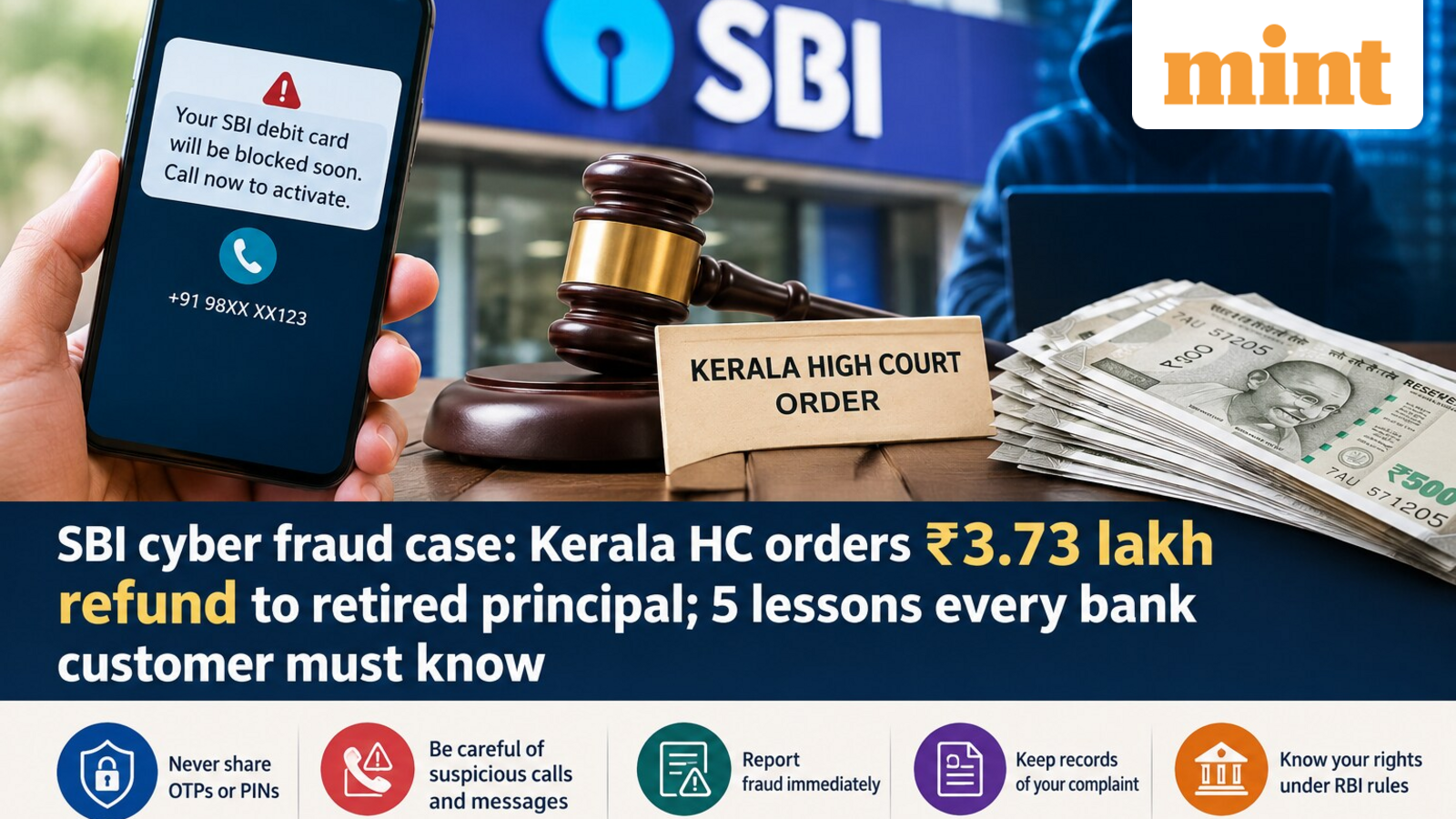
In a recent case, the Kerala High Court directed the State Bank of India (SBI) to refund ₹3.73 lakh to a retired college principal after an unauthorised transaction was made on her debit card. The ruling highlights the importance of promptly reporting fraud, staying vigilant, and understanding your rights as a customer. The case was reported by The Indian Express.
How did the cyber fraud take place?
According to the report, the victim received an SMS saying her debit card would soon be blocked. A call offering reactivation followed, from a number that looked official. Trusting the caller, she shared an OTP for the “registration” of the purported SBI Secure App, after which ₹3.73 lakh was debited from her account.
5 key lessons every bank customer should take from this case
I. Never share OTPs with anyone
Banks and their officials never ask customers to disclose confidential information, such as OTPs, over calls or messages. Turn down any such request immediately.
Fraudsters often pose as senior bank or police officers, so do not engage with such callers, and report the number to the authorities. Never share your bank details, OTPs, ATM PINs, internet banking credentials or card images with anyone.
II. Do not trust suspicious calls or messages
Calls, texts or emails warning that your debit card or account is about to be blocked are designed to cause panic. Stay calm and verify the claim through your bank’s official website, app or customer care number, not through links or instructions given by the caller.
III. Report unauthorised transactions immediately
Contact your bank or card issuer as soon as you notice or suspect a fraudulent transaction. Block the affected card or digital banking access, and report the incident through official channels. Prompt reporting helps limit further losses.
IV. Keep records of your complaint
After reporting a financial crime involving your card or account, save the transaction alerts, bank messages, debit details, complaint acknowledgements and other related communication. Also report the crime to the nearest police station or the cybercrime authorities. These records can later help establish when and how the fraud took place and what action you took.
V. Know your rights under RBI rules
The Kerala High Court held that the case fell under the Reserve Bank of India’s ‘zero-liability’ provision for certain unauthorised transactions involving a third-party breach, where neither the bank nor the customer is at fault. Under the rules, customers must notify the bank within three working days of receiving communication about the unauthorised transaction. Knowing these rules helps you protect your rights.
Cyber safety depends on both vigilance and timely action. Protect your banking credentials, carefully verify suspicious requests, and report fraud without delay.
If the bank does not address your complaint properly, you can use the available grievance redressal mechanisms, including the RBI’s integrated Ombudsman Scheme, where eligible. As financial fraud continues to evolve, awareness and vigilance remain your first line of defence.
Disclaimer: This article is for general information only. Customers should verify applicable RBI guidelines, understand the rules and consult their bank or a qualified expert for specific concerns.