Despite Foreclosure Litigation, Kaufman Astoria Studios Is Bouncing Back
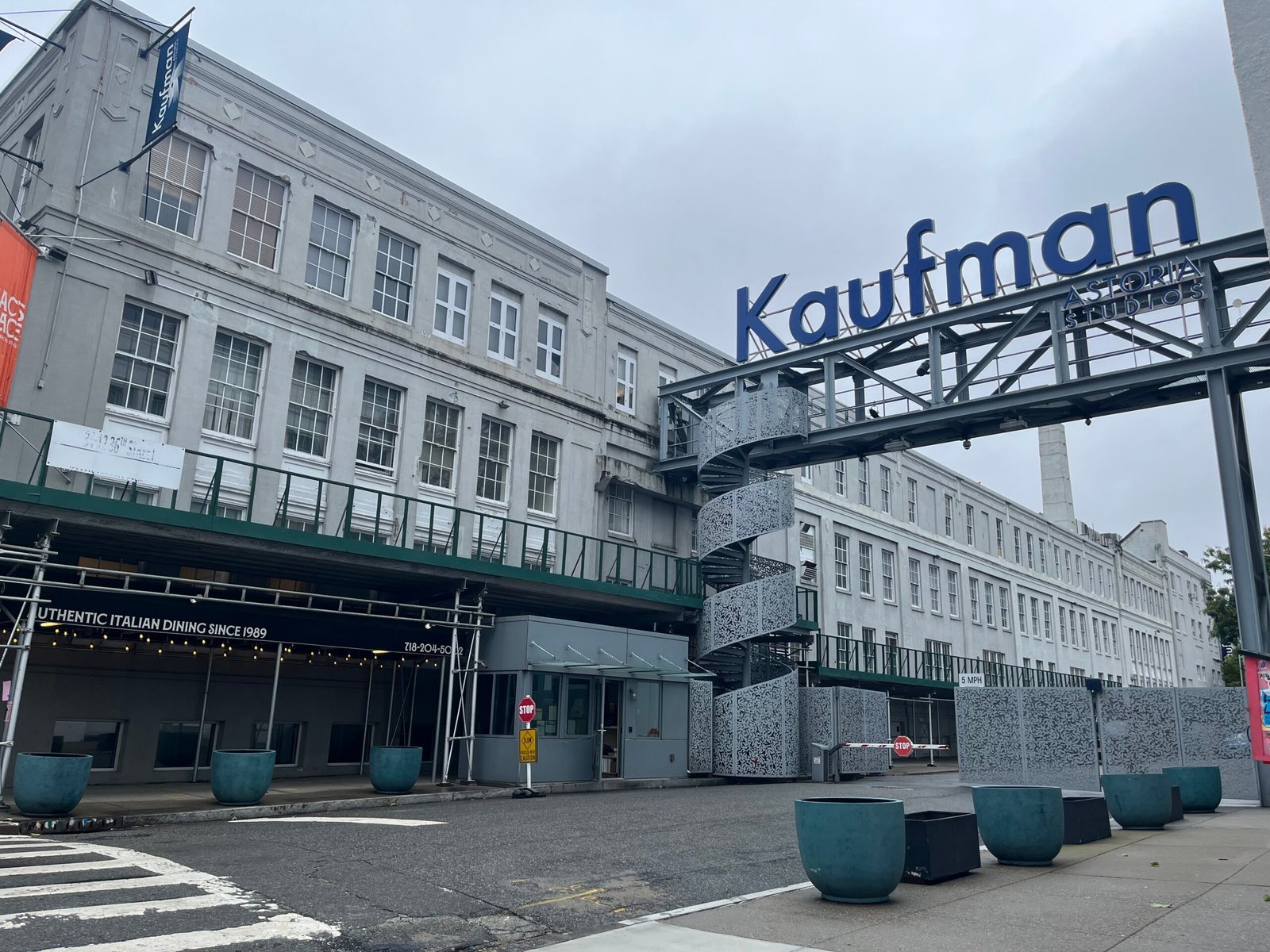
Early Friday morning, behind the leaf-embossed metal gates of Kaufman Astoria Studios in Queens, crew members whizzed between soundstages via a tangled maze of packed hallways.
The buzz permeating the 106-year-old film campus was absent a few years ago, when a monthslong work stoppage shut down studios across the U.S. Many film and TV industry hubs haven’t recovered, but New York is surging. Production spending has nearly caught up with California after rising 87% in the third quarter.
Kaufman Astoria Studios, built as the original home for Paramount Pictures, is in the midst of its own comeback. It has been nearly three months since a court-appointed receiver tapped Shadowbox Studios to operate the campus as a foreclosure case over the property plays out in court.
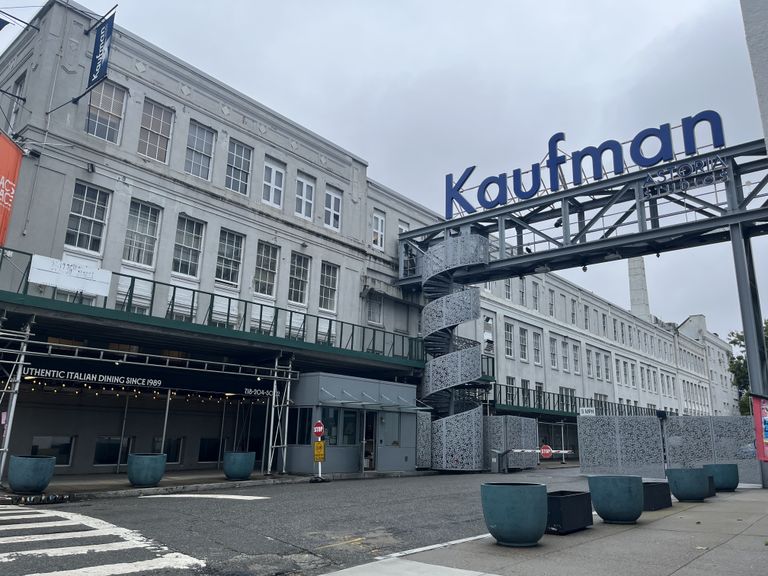
Bisnow/Ciara Long
Kaufman Astoria Studios in Queens, where business has picked up so rapidly that productions were filming on all 11 soundstages in mid-October
“This week is the first week since the end of ‘22, top of ‘23, that we’ve had 100% of the stage space full,” Thomas Laub, vice president of studio strategy at Shadowbox, said through a grin in a poster-decked conference room. “You walked into a bit of a zoo.”
Productions from Apple, Sony, Netflix and A24 were being shot in all 11 of the 500K SF campus’s soundstages last week. But that hustle and bustle is emerging amid a period of uncertainty for the studio’s future.
Hackman Capital Partners and Square Mile Capital Management acquired the complex five years ago for an estimated $600M, financed with a $340M mortgage from Deutsche Bank. After the borrower entities allegedly defaulted on the loan, which matured last November, the German lender filed a foreclosure complaint in March.
The case is ongoing in New York State Supreme Court, with Shadowbox taking over management in August after a judge granted Deutsche Bank its request for receivership. Hackman and the attorneys for both parties didn’t respond to requests for comment. Deutsche Bank declined to comment.
Laub, when asked about the foreclosure and Shadowbox’s takeover of Kaufman Astoria’s operations, said he would “leave any of the intricacy of the ownership to the ownership group with the receiver and the bank.”
He did add that Shadowbox expects to be a long-term partner at Kaufman Astoria.
The campus is one of the most storied film studios in U.S. history. It was New York City’s first major film studio, where actors shot movies during the day before parading across Broadway stages at night in its first decades. It was later used by the U.S. Army to shoot more than 2,000 training and indoctrination movies during World War II.
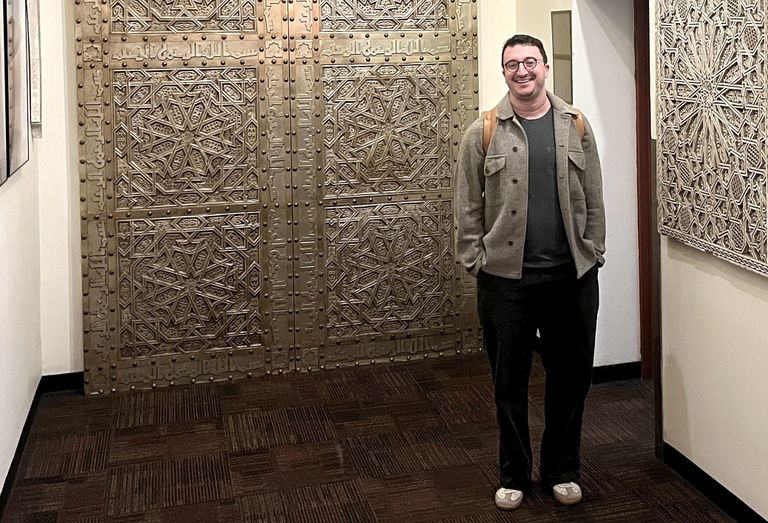
Bisnow/Ciara Long
Shadowbox Studios’ Thomas Laub in Kaufman Astoria Studios
The studios later became a catalyst for eastern Astoria’s economic development once the Army left, with gas stations, grocery stores and apartment buildings popping up to support the hundreds of crew members working there.
“What was a pretty bereft neighborhood back in that time, in the late ’60s, early ’70s, I think it’s fair to say enjoyed this wonderful rebirth,” Laub said.
The campus itself is now going through another period of rebirth, Laub said, emerging from one of the toughest periods for the silver screen since its beginnings. Simultaneous monthslong strikes from the Writers Guild of America and SAG-AFTRA actors in 2023 — focused on securing job protections under the looming threat of artificial intelligence — wound up costing the entertainment industry roughly $5B in 2023 alone.
The industry shakily restarted over the course of 2024, but the new deal upended the financing model for movie productions, and many shoots went overseas. California’s industry, which generates around $117.2B in total economic impacts, was hit the hardest, but significant production hubs across the country also suffered significant blows.
“What was so devastating to see was the impact it had on the crew,” Laub said, explaining that the strikes caused serious financial difficulties for the wide range of industries that rely on sets for their work, like electricians and camera operators. “That happened not just in New York but in Atlanta, in LA, so many places.”
Peter Romano has worked at Kaufman Astoria for 43 years, starting in production. Now its vice president of operations, he was visibly emotional when asked about the level of activity pulsing through the studios Friday in an office decked out with newspaper clippings and set memorabilia.
“I’ve missed a lot of friends over the last couple of years,” he said, his voice cracking. “I am very thrilled to be busy.”
When consumer demand for streaming began dropping from the all-time highs just after the pandemic as people started spending more time in the real world, that drop-off also impacted the rent that studio landlords could collect.
In LA, Hackman handed its Radford Studio Center back to lenders in January after defaulting on a $1.1B mortgage in 2025. Last month, Hudson Pacific Properties and Blackstone secured a one-year extension for a $1.1B loan secured by a portfolio of Hollywood studios, agreeing to fund $20M in reserves for leasing.
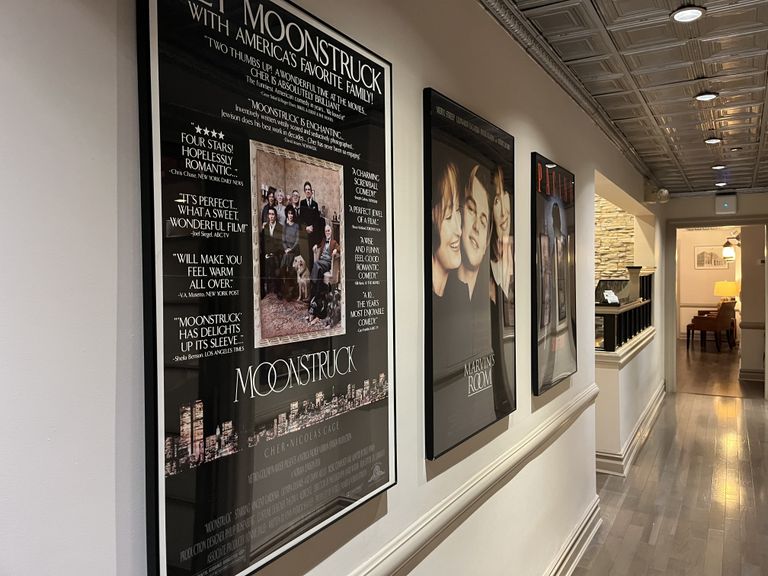
Bisnow/Ciara Long
A hallway in one of the office portions of Kaufman Astoria Studios is filled with posters of productions shot on the site over its decades of history.
Some owners are considering alternative uses. Last November in Atlanta, the owner of one 57K SF film and television studio famous for the zombie thriller The Walking Dead resolved to turn the property into an indoor amusement park for children. Others have floated conversions to pickleball courts.
In a bid to shore up extra revenues, Shadowbox is trying to develop a data center on a Georgia site where it had initially planned to build a soundstage campus, Bloomberg reported. Laub declined to comment on that project.
New York is fighting hard for its share of the industry after the pandemic halved the number of film permits production companies applied for. The state passed legislation last year that revamped a long-running tax credit program for the movie industry, attempting to compete with overseas production hubs like Canada, Australia and South Korea.
It has already turned NYC into “one of the more affordable places to shoot in the world,” New York City Mayor’s Office of Media and Entertainment Commissioner Rafael Espinal told Variety last month.
“The governor has very aggressively kept this business here, and I see that continuing,” said Doug Steiner, chairman of Brooklyn’s Steiner Studios, adding that his 900K SF, 32-soundstage campus is full again after a “big downturn.”
The real estate industry’s longer-term efforts also appear to be paying off: Purpose-built soundstage inventory in New York has grown 43% since 2020, according to CBRE. And New York has the demand to eat up that supply, with the state’s production spending on track to overtake LA’s by the end of this year, according to film and television production intelligence firm ProdPro.
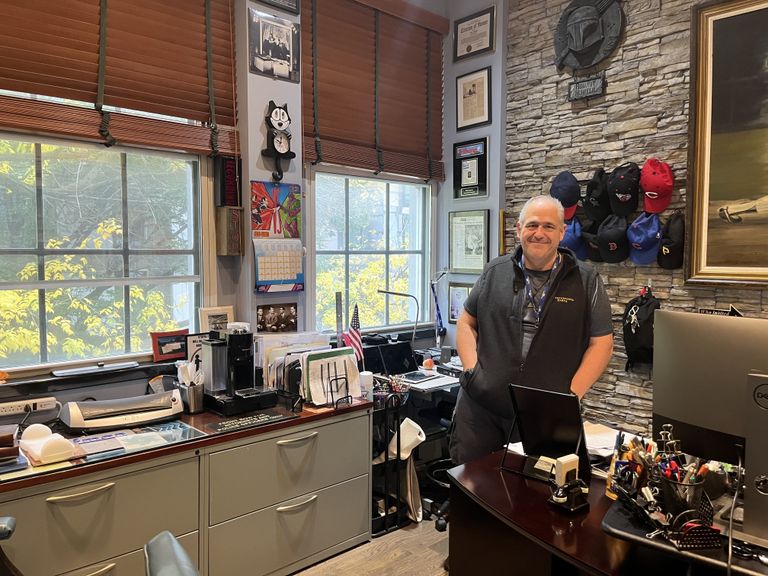
Bisnow/Ciara Long
Peter Romano, vice president of operations at Kaufman Astoria Studios, in his office
Yet even with the pandemic and the strikes in the rearview mirror, another threat is fast approaching.
Paramount Skydance closed on its $110B acquisition of Warner Brothers Discovery this month, a major consolidation for the industry. To secure regulatory approval, the new company, Skydance Corp., pledged to distribute at least 30 films a year to theater chains.
The merger has concerned investors and the industry alike. Skydance’s market cap, at less than $40B, is less than the two companies’ prior values combined. And the deal still places more than 10,000 jobs at risk, according to an August report from the LA County Department of Economic Development.
Laub declined to comment on how the merger will impact Shadowbox or Kaufman Astoria, but he said he is hopeful for the industry’s future. Last month, a bipartisan group of U.S. senators introduced what would be the inaugural federal film tax credit, with endorsements from more than a dozen industry unions.
The legislation would introduce a 20% base tax credit on labor expenses for projects with a budget of more than $1M, provided that three-quarters of the shoot is in the U.S. That could make a meaningful difference for studios, Laub said, because production companies will have stronger cash flow and therefore the potential to sign more real estate deals.
He is especially hopeful for Kaufman Astoria’s future, he said. Kaufman Astoria has preliminary agreements in place for next year that will rival the heights reached in the peak streaming era of 2022, he said.
“Holds two years in advance?” he said, still grinning. “I haven’t seen that since 2021.”