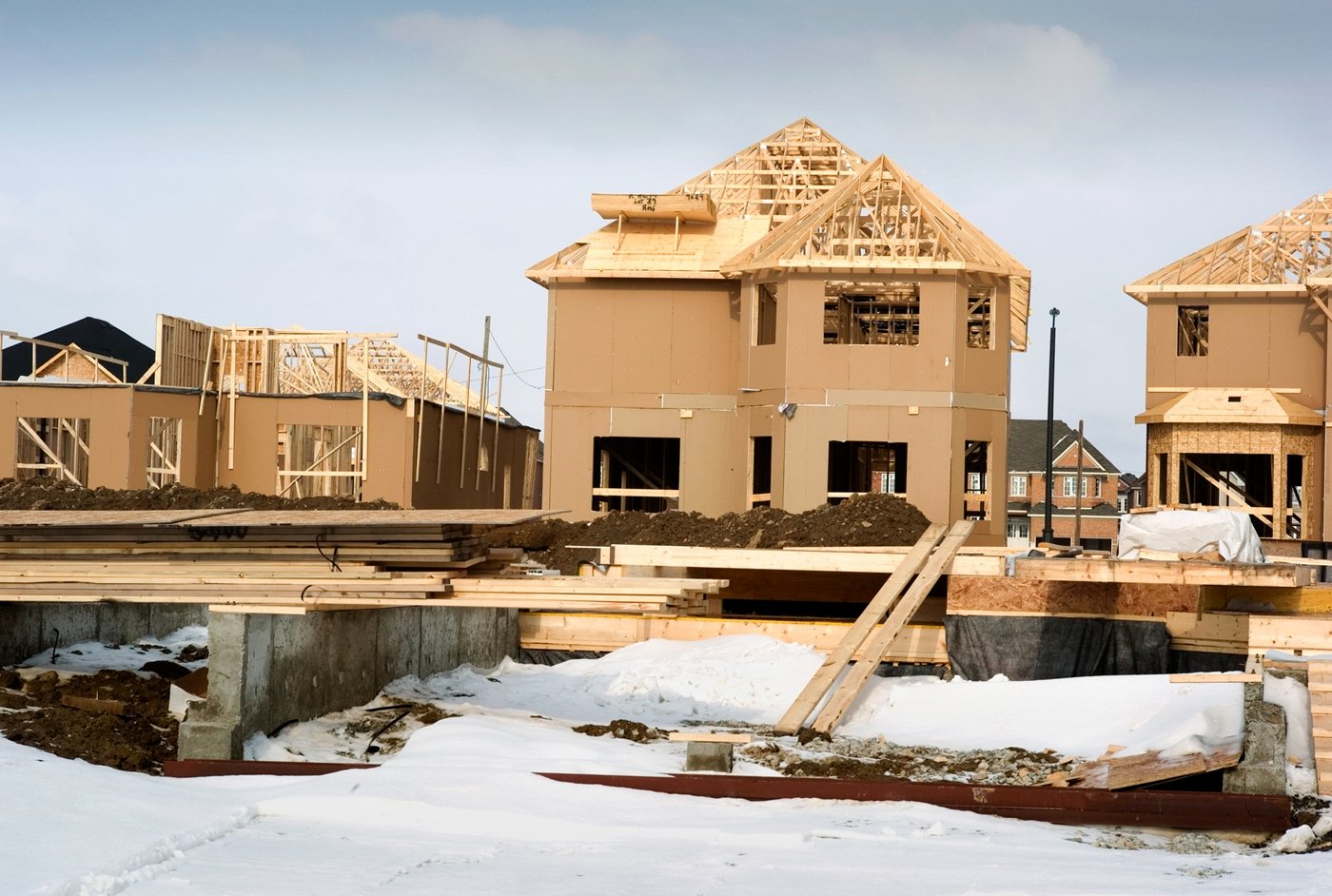
CMHC warns housing slowdown could set stage for next supply shortage

Canada risks creating another housing shortage if developers pull back too sharply during the current market slowdown, according to Canada Mortgage and Housing Corporation (CMHC) chief economist Mathieu Laberge.
Speaking at Mortgage Professionals Canada’s 2026 National Mortgage Conference in Calgary, Laberge warned that construction is slowing faster than the underlying need for housing, potentially setting the stage for renewed affordability pressures when demand recovers.
“If we react to a softer market by stopping too much construction, we may be protecting ourselves from today’s risks, but we’re also creating tomorrow’s shortages,” he told attendees.
Laberge said housing affordability has improved in every major Canadian market since 2023, pointing to increased housing supply as an important factor. But he cautioned that those gains could prove temporary if construction capacity shrinks.
Large condo and rental developments can take six to eight years to deliver, he noted, while demand can recover much more quickly as confidence returns and households that have postponed buying or moving re-enter the market.
“We should not close the fire station because it’s raining,” he said.
Building the right homes
Beyond the overall level of construction, Laberge argued that Canada faces a mismatch between the housing being built and what households need.
“What’s small is unaffordable and what’s large is unavailable,” he said.
In expensive downtown markets, developers have concentrated on smaller units that make financial sense given high land values. But outside city centres, many families are looking for affordable two- and three-bedroom homes near transit and employment, often without the premium finishes and amenities that add to construction costs.
Laberge also pointed to the fragmented nature of Canada’s residential construction industry as an obstacle to improving productivity.
He said the country has just six residential construction businesses with more than 500 employees, leaving many smaller builders without the scale needed to invest in automation, manufacturing facilities and advanced construction systems.
“We need to get to scale,” he said, adding that the goal is not necessarily to create giant companies, but to establish markets large enough to support those investments.
He pointed to opportunities in factory-built housing, mass timber, standardized components and digital design to improve construction efficiency.
Financing needs to keep pace
For mortgage lenders and brokers, Laberge said adapting financing practices will be an important part of supporting modern construction methods.
Factory-built housing presents different financing challenges from traditional construction, with materials paid for earlier, different construction-draw requirements and a different risk profile.
“A home made in a factory has a very different cash flow from a home built on site,” he said. “If financing understands only the old process, it can block the new one.”
Laberge encouraged mortgage professionals to share what they are seeing in their local markets, arguing that their experience with borrowers can help inform housing policy, financing practices and product development.
His broader message was that today’s weaker housing conditions should not distract policymakers and the industry from the longer-term need to expand and modernize supply.
“We can slow down now and scramble later,” he said. “Or we can use this moment to protect construction capacity, modernize how we build, connect Canadian resources to Canadian housing, and make our provincial economies work more like one Canadian economy.”
Visited 1 times, 1 visit(s) today
Canada Mortgage and Housing Corporation CMHC housing shortage housing supply housing supply crisis Mathieu Laberge mortgage professionals canada national mortgage conference
Last modified: October 18, 2026