Dussehra 2026: 6 bad money habits to give up this festive season
Dussehra is a festival that symbolises the victory of good over evil. It will be celebrated on Tuesday, 20 October this year. Beyond its religious significance, the festival offers individuals an opportunity to reflect on financial habits that may be holding back long-term economic progress and prosperity.
In the same vein, it is vital to acknowledge that festive spending usually leads to increased shopping, travel, lavish expenses and celebrations. That is why managing money wisely is essential in order to avoid unnecessary debt and protect savings.
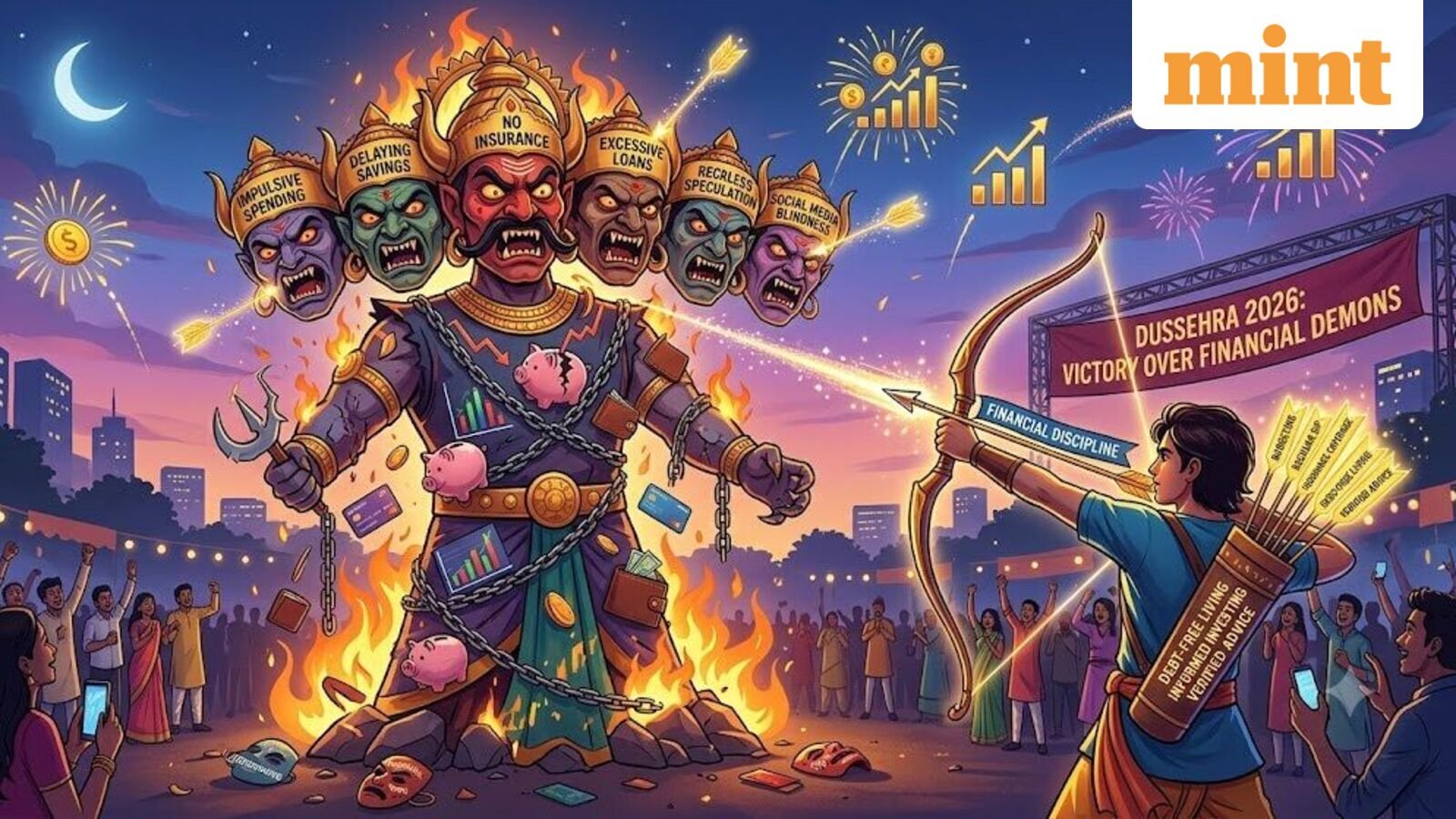
Yudhajit Baul, Founder of Yudhajit Financial Services Pvt Ltd, explained this in detail, stating, “This Dussehra, as we celebrate the triumph of good over evil, it is time to vanquish the financial demons holding your portfolio back. True financial liberation begins when you consciously choose to forego toxic habits such as failing to control your expenses, procrastinating on crucial savings, investments, and insurance, treating loans as a luxury rather than an absolute necessity, engaging in reckless trading and market speculation, and letting your hard-earned money be driven by volatile social media noise.”
Keeping these important observations in mind, let us now discuss six bad money habits that an individual should try to overcome this festive season in order to ensure long-term financial stability and economic well-being.
6 bad money habits to give up this festive season
1. Spending without a budget: Festive discounts, coupons, credit card offers, and lucrative looking deals can result in encouraging impulsive purchases and reckless financial decisions. That is why, to prepare for such a situation and address it objectively, it is wise for individuals to set a clear spending limit. Focus on prioritising essential expenses and avoid buying products and services simply because they are on sale.
2. Delaying savings and investments: In order to grow meaningfully in life and career, it is important to save money. Postponing savings can affect long-term financial objectives. That is why you should make sure you set aside money regularly, even during the festivities and build an emergency fund before increasing discretionary spending.
3. Ignoring insurance needs: If you delay adequate health and financial insurance, it can leave families financially vulnerable. As inflation rises, a sudden medical emergency can be detrimental to an individual’s and their family’s financial health. That is why one should review their coverage this festive season and ensure it suits their needs and those of their dependents in a meaningful way. So that any emergency can he handled properly without having to fall for an unwanted personal loan or other forms of debt.
4. Taking unnecessary loans: As a matter of rule, make sure that you avoid borrowing unnecessarily or excessively for lifestyle purchases or products or services you don’t need. Especially purchases that you cannot comfortably afford. High-interest debt, such as credit card debt, can quickly strain monthly budgets and even cripple an individual’s ability to save money. Such debt can also adversely impact an individual’s credit score and overall credit profile. Thus making future debt difficult to secure.
5. Speculating recklessly in markets: The idea of chasing quick profits and making a lot of money in a short period of time looks lucrative. Still, make sure you avoid chasing quick profits through frequent trading or risky bets. Such behaviour can result in serious financial losses. You should instead seek professional guidance from a certified financial advisor and plan your investments in accordance with your long-term financial goals, risk-taking capacity and time horizon.
6. Following social media investment tips blindly: With advancement in technology, it is natural to witness the rising influence of social media platforms. Still, be clear: viral stock recommendations and promises of quick returns can be misleading and lead to financial losses. Avoid falling for such recommendations this festive season. Make sure that you diligently verify information, analyse risks, and consult qualified financial advisors when required.
In summary, this Dussehra, focus on replacing unhealthy money habits by taking one step at a time, with disciplined spending, regular savings, and informed investing. Small, consistent changes can help strengthen financial security well beyond the festive season and can set the base for a financially successful future.