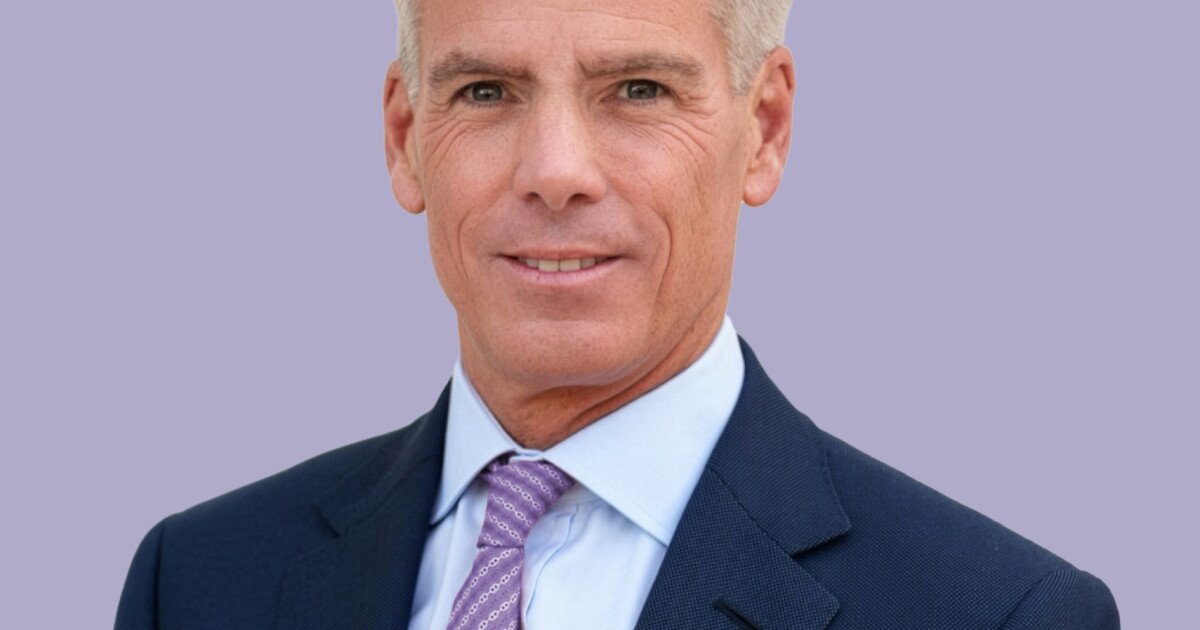
How Mike Lyons, Truist’s new CEO, is plotting a turnaround

- Key insight: Mike Lyons, who took the reins as Truist’s CEO last month, announced several changes Friday that he believes will better position the bank for success.
- What’s at stake: The long-struggling superregional bank will need to move relatively quickly to satisfy shareholders, who have been waiting for years for the underperforming bank to deliver on the promises it made seven years ago.
The new chief executive officer of
Processing Content
In his first public remarks since joining
Lyons also acknowledged
Now it’s time for change, starting with
“While I believe that history and context are important, and we have learned from it, we are where we are today, and we know we can perform better,” Lyons said on the bank’s third-quarter earnings call. “We’re now squarely focused on the future and are fortunate to move forward with some tremendous assets. Importantly, we do not need to reinvent
Analysts who cover
“Strategically speaking, I absolutely love the contrast in tone at the top,” Mike Mayo, an analyst at Wells Fargo Securities, told American Banker. “This is clearly a much more shareholder-oriented CEO,” whose earliest message centered on simplifying, executing and growing to create shareholder value, he said.
Still, Lyons and his management team are in a difficult spot, at least in the near term, Mayo said.
“Financially, progress is going to be a slog,” Mayo predicted. “They’ve not been in growth mode, and now they’re in shrinking mode. So I do think there will be some earnings headwinds.”
Changes afoot
On Friday, the bank said it hired two experienced executives to oversee consumer banking and small business banking, a move designed to increase accountability in each of those segments, and that the previous head of consumer and small-business banking is leaving the company.
It also said it will sell nearly all of the assets of LightStream, the unsecured lending platform it acquired in 2012, to Carlyle Group, marking the bank’s latest shift away from non-core lending.
The LightStream deal, which includes $7.7 billion of non-core loans, is expected to close by year-end. It will generate $7.2 billion of net proceeds, which
Lyons, the
Though he will be granted a window of time to begin shaping
“Virtually everyone I know thinks extraordinarily highly of Mike and what he’ll be able to do, but while Mike is new, the story of
So far, the findings are mixed, according to Lyons. The branch network is strong, and there are several high-quality businesses, such as corporate lending, commercial real estate and wealth management, he said. At the same time, “we found capital spread to a lot of areas,” including in areas that don’t support the bank’s core strategy, Lyons said.
“We have a clear lens … Is it strategic? [Are there] clear financial returns? Or does it … do something to protect the bank?” he said. “If it doesn’t, we’re moving it out.”
The bank has already taken certain actions to exit national businesses, as it attempts to focus on its core Southeastern market. In September, it said it
In July, prior to Lyons’ arrival and soon after setting higher profitability targets, the bank said it
As part of the leadership changes announced Friday,
In a LinkedIn post Friday, Wilson said he has “deep optimism for
Meanwhile, D. Steve Boland, the former chief administrative officer at Bank of America, is joining
Boland is set to join
Shimna Sameer, another longtime BofA executive, will become
In addition, Jeff Warner is coming on board later this month to serve as chief small business banking officer. Warner was named head of small business at Pittsburgh-based PNC in December 2024, according to his LinkedIn profile. His 17-year tenure at PNC overlapped with Lyons’ time there.
Boland, Sameer and Warner will report directly to Lyons, the bank said.
Rogers is still with the bank, serving as executive chair of the board. He plans to fully retire from
Third-quarter results
Excluding those items, net income was $1.4 billion for the quarter, the bank said.
Earnings per share were 56 cents, missing the $1.21 consensus estimate of analysts who were polled by S&P Capital IQ. Total revenue was nearly $3.8 billion, down from about $5.2 billion in the year-ago quarter, while noninterest expenses rose slightly to $3.1 billion as of Sept. 30.
The bank’s net interest income rose 0.7% year over year, mostly driven by fixed-asset and liability repricing, higher client deposit balances and higher loan balances,
Read more:
Noninterest income dropped 95% compared with the year-ago period, reflecting the $1.4 billion securities loss as well as a decline in mortgage banking fees and “other income,” the bank said.
The bank’s return on tangible common equity was 7.2% for the quarter, or 14.6% on an adjusted basis.
What Lyons does next, and how he decides to mold
“Defining who they don’t want to be is sometimes as important as defining what they do want to be,” he said.