Before You Turn On AI, Treat It Like a New Hire
Picture a new hire starting Monday. On day one, you hand over access to your custodian, your portfolio system and every client’s personal information. No background check. No policy. No training.
You’d never do that.
Yet that’s how many advisors are tempted to treat Claude for Financial Advisors, the new artificial intelligence suite from Anthropic that connects to Schwab, Orion and more. Within days, the September launch became the main topic on our AI mastermind call for advisors. I get why. One tool that pulls your appointments, balances and client data before your first meeting is hard to ignore.
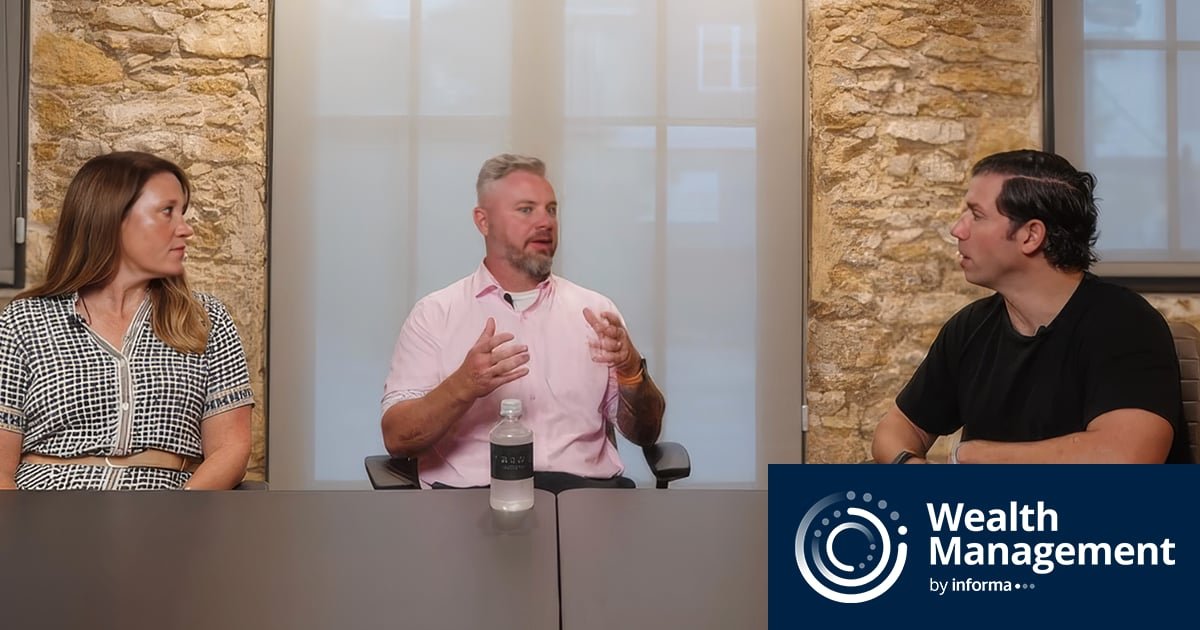
On a recent episode of the “Do Business. Do Life.” podcast, I played the advisor who wants to turn it on today. Then I sat down with Quin Kilgore, chief technology officer at Triad Partners, and Shannon McGinnis, chief compliance officer, to slow me down.
Their message was clear. Having a tool available and a firm being ready are two different things. As Shannon put it, “just because it exists doesn’t mean it’s ready to immediately turn on.”
How Should Advisors Think About AI Compliance?
Treat AI like a new employee and build your compliance program the way you’d onboard and supervise a new employee. That’s how Shannon frames it.
Her reasoning: “AI has come mainstream for advisors, but that means your compliance program has to also be elevated to that level.”
Here’s how the pieces map:
-
Background check: Vendor due diligence before the tool touches client data.
-
HR policy: An AI use policy with a named owner and concrete rules.
-
System access: Approved tools, approved users and off-limits data types.
-
Training: Teaching your team how to use each tool, understand its limitations and build new workflows around it.
-
One-on-ones and reviews: Ongoing supervision of the AI application and the team’s use.
Logs create another trap. Quin noted that the audit logging functionality needed by RIAs requires the Claude Enterprise tier, not the Teams plan.
Many advisors assume that having those logs means they’re covered. Shannon says logs are only the start because regulators expect someone to supervise them. That requires compliance and technology working side by side to answer practical questions: What did the tool do? Where did the data go? What prompt was used, and was it a problem?
Regulators also won’t accept “We don’t use AI.” Shannon’s read is that the SEC assumes nearly every firm uses it in some form. Expect to explain how your firm uses AI, who uses it and who is responsible for oversight.
I asked both guests whether an advisor without an AI acceptable use policy is putting the business at risk.
Both said “YES.”
Shannon went a step further: an advisor without the technology resources to write and oversee that policy is also putting the business at risk.
Why Does an AI Connector Need Its Own Vendor Review?
The Claude connector is a new door between two systems, and every door needs its own inspection. Most advisors have already vetted Orion or their custodian. Many will vet Claude.
Few will ask about the connection between them.
Quin suggests treating the connector as a “pseudo-vendor.” Claude is one vendor; Orion is another, and the connector links them. What does it open? Balance information only, or everything the system holds?
Take the Schwab connector. In our first look, it appeared to pass balance information, not client names. That sounds reassuring until you ask how it matches the right balance to the right client. Nobody on the call knew.
That’s why Quin advises auditing every connector: What does it read, what does it send, where does it go and can it write back?
If a connector that skips personally identifiable information today starts passing it in three months, Shannon said, the review starts over.
What Should AI Handle, and What Should it Skip?
Let AI prepare and summarize, and let your planning and portfolio software do the calculating.
Quin offered two practical rules.
-
Keep the math in the math engine. At launch, dedicated financial planning platforms weren’t on the connector list. Quin’s advice is to let your planning and portfolio systems do the calculations.
-
Match the model to the task. Not every job needs the most powerful tier.
Quin put it this way: “You don’t need to be using the highest-end model for every function within Claude.”
Using the highest-end model for a routine task like rewriting an email is like taking a Lamborghini to the grocery store: impressive, but a waste of fuel.
What Is the Upside of AI for Advisors?
The upside for advisors using AI is time.
AI takes on the gathering, entering and summarizing of data that crowds out client work, leaving advisors more room for the personal side of the job.
Quin’s excitement is agents. Picture them working across your connected tools overnight, surfacing portfolio drift and transactions, so you start the day reviewing a ready list instead of building one.
Shannon’s is consistency. People get rushed and forget things, so systematizing how data is gathered should produce more consistent output and better records, so long as a human stays in the loop. “I think it lets a lot more people do things that they’re passionate about versus work that just takes a lot of time and can kind of be drudgery.”
I went into this conversation as the advisor who wanted to turn it on today. I came out wanting to make sure I turned it on right.
What Should Advisors Do Before Turning AI On?
Build four things: an AI policy, vendor due diligence, an inventory of approved tools, and a supervision process. They map to the new-hire checklist from earlier: the HR policy, the background check, the system access list, and the performance review.
Together, they turn “we use AI” into something you can show a regulator.
If your firm can’t point to all four today, you’ve found your first project. Claude for Financial Advisors is exciting, and it won’t be the last tool of its kind.
So, here’s my challenge: if your AI tool were a new hire starting Monday, would your firm pass the onboarding test?
To hear the full conversation, listen to Episode 188 of “Do Business. Do Life.”