Tax pros push for House passage of TAS Act by end of year

- Key insight: Uncover how the bipartisan TAS Act alters IRS call-wait reporting and tax preparer standards.
- What’s at stake: Taxpayers risk continued fraud from unregulated “ghost preparers” if the House stalls the legislation.
- Expert quote: “It’s still unclear exactly what the House is going to do.” — Thad Inge, NAEA
After the
Processing Content
The
Bipartisan support
The TAS Act
“It initially had a strong vote out of the Senate Finance Committee,” said Thad Inge, vice president at Van Scoyoc Associates, a government affairs firm in Washington, D.C., and legislative counsel at the NAEA. “I thought that was a great sign, and then the fact that they were able to unanimously pass it out of the Senate. A while back, they were worried, making sure that all the Republicans got on board, trying to make sure there was nothing controversial in there, and that everybody was on the same page. I found it impressive that they were able to get there and able to pass it out unanimously.”
He believes that will put a great deal of pressure on the House. “It’s harder for them to act like some of the provisions are controversial or need changes when it sailed through the Senate with unanimous consent,” said Inge. “It’s still unclear exactly what the House is going to do. There’s a chance they’ll say, ‘Well, we want to make some changes or or do some things.’ But I think there’s going to be some pressure to not upset the apple cart and just take this window and get it through. I also think that House leadership, when they come back in November, will probably be looking for some bills to pass on suspension and some things to show that they’re getting done, outside of the craziness of the appropriations bills and other end-of-the-year stuff. I think this sets up well to pass on its own, on suspension, with two-thirds of a vote.”
However, he acknowledged that House Ways and Means Committee chairman Jason Smith, R-Missouri, and the rest of the committee will need to sign off on it. So far, it’s unclear if they have. Instead, Smith and his committee have mostly been passing pieces of tax legislation separately,
“There’s actually a fair amount of overlap between the TAS Act and what the House has done,” said Inge. “They’ve always said we’re taking this more piecemeal approach and doing individual bills as opposed to one big package. But there’s a lot of House Ways and Means member priorities and bills that are included in the TAS Act. Some of them word for word, some of them just very similar, but there’s a lot of overlap.”
The bipartisan support for the package bodes well for eventual passage of the package.
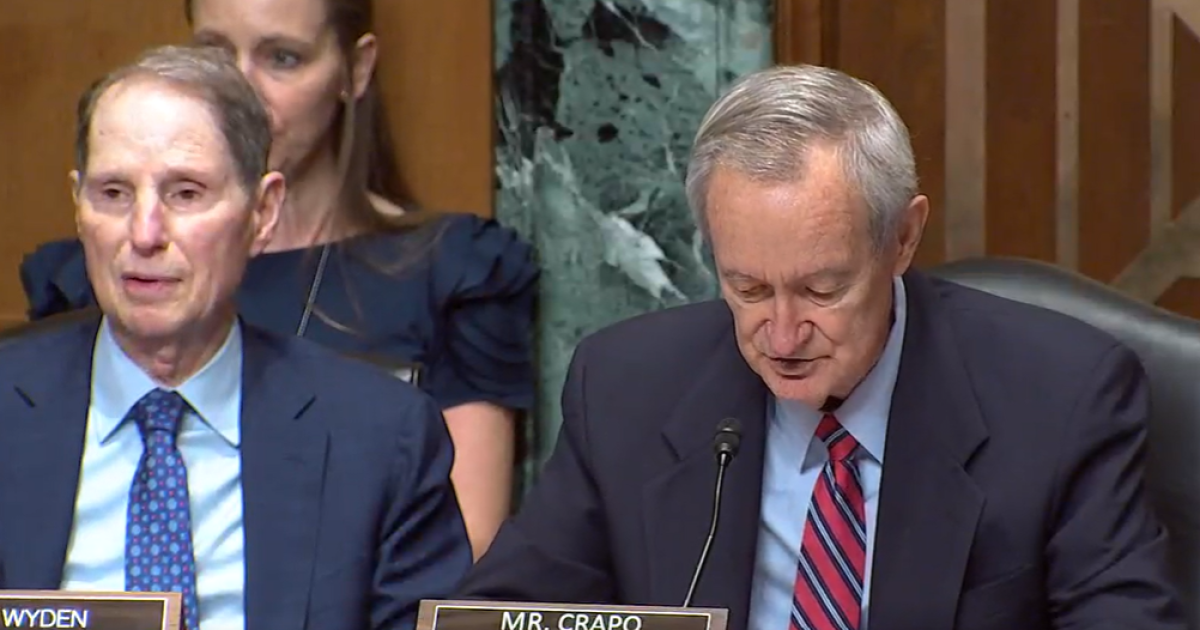
“We have got such amazing, wonderful bipartisan support for this legislation, both in the Senate and in the House,” said Tina Collins, president-elect of the NAEA and a principal at the accounting firm PYA. “The Senate Finance Committee’s Crapo and Wyden have been working on this for several years now to get it to come out of markup in Finance and then unanimously passed by the Senate. We also see that same bipartisan support in the House. There are 22 direct counterparts between the House Ways and Means legislation that go right back to the TAS Act, so I think we have an excellent opportunity for common-sense and meaningful legislation to make a difference for taxpayers with this. I’ve got my fingers and toes crossed, and may even be making a trip in late November, early December to do a little bit more advocacy on the Hill.”
Tax preparer minimum standards
The NAEA has been working with a coalition of tax and accounting organizations, including the AICPA, the NATP, Intuit and H&R Block, on advocacy work. One of the priorities is combatting so-called “ghost preparers” who commit tax fraud and avoid any licensing and certification requirements.
“This is great legislation for taxpayers because of the way that it protects them,” said Collins. “The minimum standards for tax preparers are something that we have been advocating for multiple years now, and to actually have a chance of being enacted is huge. Anybody can hang up a shingle and call themselves a tax preparer. They don’t have to have any education. They don’t have to have any expertise. They don’t have to have any training. They don’t have to meet any ethical minimums or anything like that. As a result, we end up seeing a lot of fraud.”
In fiscal year 2025, there was an estimated $21.1 billion in potentially improper payments on the Earned Income Tax Credit in fiscal year 2025, according to a recent
“By having minimum tax standards for preparers, we see that preparers have a way to be regulated,” said Collins. “The IRS has more control over revoking PTINs or giving disciplinary action to tax preparers, and I think it elevates the enrolled agent profession in really showing that we are the tax experts when it comes to tax preparation and representation.”
Groups have been pushing for such minimum standards, after federal judges ruled against the Registered Tax Return Preparer requirements that the
“I know that the enrolled agents and tax professionals in general, and also a lot of the tax prep companies, have really pushed this minimum standard, which are long overdue,” said Inge. “They did come to some bipartisan agreement on that, and that’s been one of the things that the House has looked at closely. Do we want to make changes to that? Are we OK with what Crapo signed off on? I do think the unanimous support of that creates some pressure to not mess with that.”
The bill also promises to make the IRS more responsive to taxpayers, although it does not provide any extra funding to make up for the
“The other part is that the stronger footing that it gives taxpayers in the event of a dispute with the IRS,” said Collins. “There’s a lot of improvements to that process. The IRS would have to respond within 12 months, and then taxpayers would be given additional opportunities to seek review through the IRS Independent Office of Appeals, so it gives them a little bit firmer footing there. There is a 125% threshold for the penalty. If you extend your return, as long as you paid 125% of the prior-year tax liability, you’re not going to be subject to any other payment penalties, so I think there’s a lot of things in there that protect and help taxpayers.”
Improving IRS responsiveness
The legislation also promises to make the IRS more responsive to calls during tax season from both taxpayers and tax professionals.
“If we call into the Practitioner Priority line and we get what they call the courtesy disconnect after a two-hour wait, the IRS does not factor that into their call wait times currently, but the TAS Act would tell them that they need to factor those wait times in,” said Collins. “That would give us a little bit more of a clearer understanding of exactly what those wait times are looking like.”
National Taxpayer Advocate Erin Collins has been urging the IRS to
“If you look at what they do around transparency around the phones, making sure that the metrics used are actually reflective of what’s happening,” said Inge. “And then there’s things like callback technology and tools for taxpayers to use in terms of all right, is now a good time to try to call the IRS? What’s the actual situation? And then for Congress to be able to assess what’s really happening. Are people getting customer service? Are people able to get through?”
The legislation promises to prod the IRS into modernizing the agency and providing more digital tools, so taxpayers don’t have to call. However, the lack of extra funding could set back those efforts, even as officials such as IRS CEO Frank Bisignano have acknowledged the need to develop such technology.
“The problem is, in the meantime, it’s not happening overnight,” said Inge. “They are trying to improve the digital tools and implement new ones at the IRS, both for taxpayers and for tax professionals, but we haven’t seen everyone fly to those to a degree where there’s no longer a need to call. It’s great to say we want to have all these digital tools and you won’t need to call. But in the meantime, people are still having to wait two hours to get through on the phone and getting these disconnects. This at least provides some transparency around that. A lot of the stuff that’s in the bill around online accounts are things that the IRS is already trying to do, but it puts a little more pressure around the details of online accounts, dashboards, digital tools and making sure that those things are prioritized.”
Introductory bullet points created by AI with editorial review.