SEI Names Kristie Edling-Day Chief Information Officer
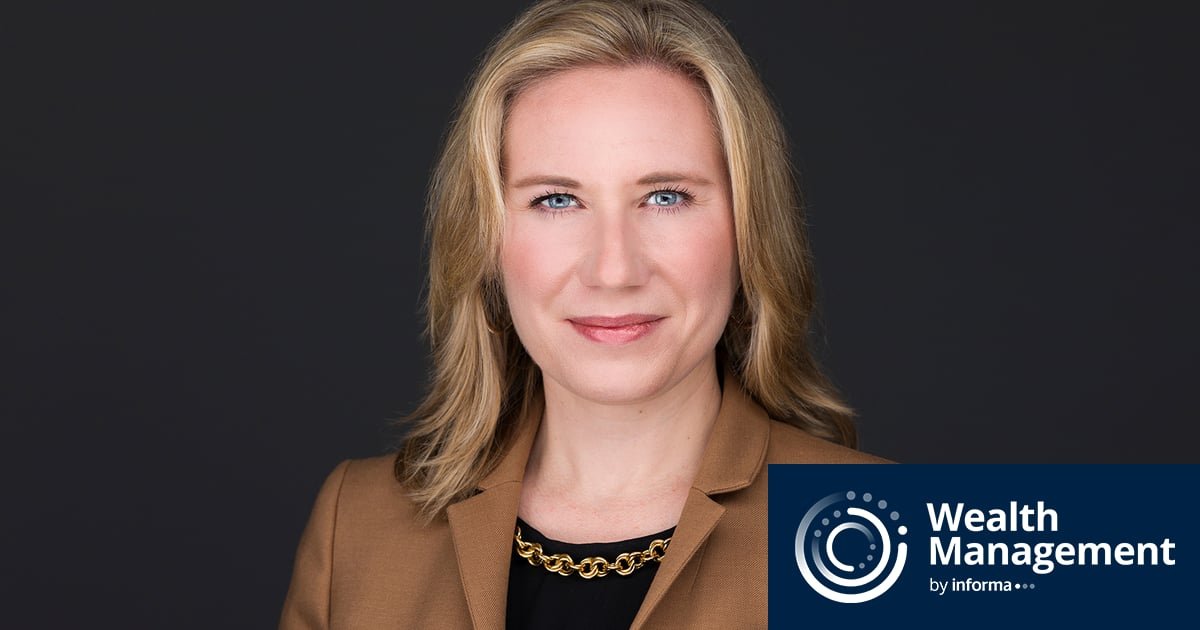
SEI has appointed Kristie Edling-Day as chief information officer to lead enterprise technology and product strategy, including digital transformation, platform modernization and cybersecurity governance at the firm, which reported managing, advising or administering approximately $2.1 trillion in assets at the end of the second quarter.
Edling-Day will report to Chief Executive Officer Ryan Hicke, oversee SEI’s technology and product organization and be responsible for advancing the firm’s multi-year technology roadmap, ensuring investments align with business objectives, client needs and regulatory expectations, according to Hicke.
“The CIO role at SEI is more than a technology role; it is a strategy role, and it needs to be inextricably connected with both,” said Hicke.
“Obviously, (artificial intelligence) will be a key weapon in the arsenal but overall, it is about how to continue our tech strategy across the board and set ourselves up for meeting future needs in the market,” he said of Edling-Day’s role, noting the catalyst for bringing her aboard was two-fold. The firm already has a chief AI strategist focused internally on building out AI within the firm.
In June, SEI added the role of Chief AI Strategist to Sneha Shah’s responsibilities, which, to date, included leading SEI Next (the company’s innovation unit). The company also, at that time, brought in Michael Tryniszewski as head of AI orchestration and William Coffey as chief data officer.
“We do a nice job today staying ahead of the curve,” he said, “but we think having someone come in from outside with the breadth of experience she does at other large firms allows us another lens for how we approach scaling what we do.”
Edling-Day brings more than 20 years of technology and strategy leadership experience spanning financial services, wealth management and enterprise transformation.
Most recently, she served as executive vice president and CIO for advisor technology and enterprise production operations at LPL Financial, where she led technology supporting approximately 32,000 financial advisors.
Prior to LPL, Edling-Day spent 17 years at Vanguard in several senior leadership positions, including CIO of intermediary technology and chief product and information officer for financial advisor services.
“I see a meaningful opportunity to strengthen SEI’s technology platforms, product capabilities and data governance to enable the firm to operate with speed and resilience while delivering greater value to clients,” Edling-Day said in a prepared statement.
Hicke said that too often the need for supporting scale gets overlooked, as does the avoidance of technical debt, both areas Edling-Day will oversee.
“The overall tech stack has to be extremely scalable and global for the volumes and depths of what we do,” he said, noting that SEI supports some of the world’s largest banks and wealth units.
Asked how much of the company’s budget was being allocated to AI, Hicke said it fell within SEI’s existing technology spending.
“Our numbers are pretty easy to follow, 10% to 12% of topline revenue goes back into the business,” he said, “in round numbers that’s around $250 million and a large portion of this is maintenance and infrastructure and not accruing that technical debt—which is like mold in the building—hard to get rid of it and remediate it, if you don’t invest in the foundation and the scale, you will be found wanting.”
Another area he said SEI was continuing to focus on and needed to accelerate was user experience, which encompasses a wide range of personas, he said.
“And we need to do so in as few clicks as possible. In the past, we were thought of as world-class at building the backend toward the front and we will continue to up our game when it comes to the front office,” he said, noting that this was another area where AI would likely play an increasingly important role.
He brought up Avantos and the significant investment in the startup that SEI had been part of, and noted that his firm was getting better at recognizing that it did not have to build everything internally.
When thinking about the RIA market, especially fast-growing, larger firms in the $5 billion-plus segment, it was becoming increasingly important for companies like SEI to have front-office integration points.
As examples, he highlighted the need for RIAs to have easier access to and the ability to incorporate private assets into portfolios and the need for trust company capabilities, specifically around communications with end clients.
“We’re also pretty far down the line of the LifeYield acquisition, on integrating that more with our portfolio manager capabilities,” he said and noted that the company had seen not just more demand for LifeYield but for the possibilities of integrations with third parties.
“And that’s an area where Kristie is going to bring a lot to this; her experience and the perspective she brings from her time at both LPL and Vanguard will be very valuable and we will give her a lot of runway to put her own imprint on what we are doing,” Hicke said.