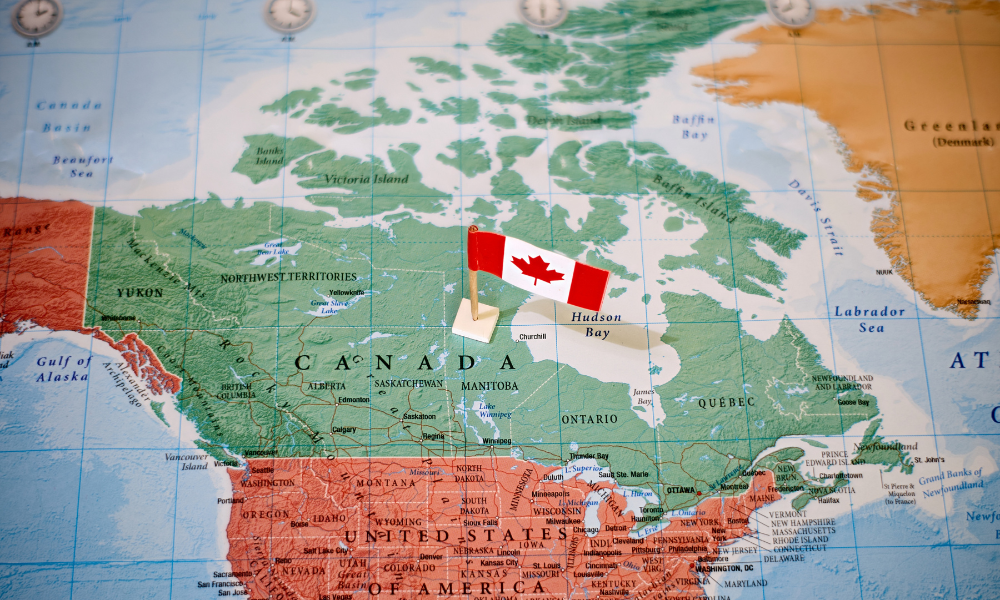
Canadian provinces trail all U.S. states on income and living standards
How does Alberta compare to U.S. states?
Alberta remains Canada’s strongest-performing province but has slipped sharply in the continental rankings. In 1999, Alberta ranked seventh out of the 60 combined jurisdictions on GDP per person. By 2024, it had fallen to 25th making it the only Canadian province to place in the top half of the ranking. Saskatchewan ranked 35th, British Columbia 49th, and Ontario 51st. The seven remaining provinces occupied the bottom 10 positions entirely.
“By comparing important economic outcomes in Canadian provinces and American states, it’s easy to see how Canadians stack up to their counterparts south of the border, and in recent years, Canadians have been falling further behind,” said Fuss.
The gap in median employment income – the pre-tax earnings of working Canadians – is equally stark. In 2010, eight Canadian provinces ranked in the bottom 10 on this measure. By 2024, all 10 did. Alberta, despite being the top-ranked Canadian province at $39,345, fell from 12th place in 2010 to 51st in 2024. It was also the only jurisdiction in both countries to see median income actually decline over the period, falling by $1,219.
For context, the middle-of-the-pack U.S. state of Missouri ($46,480 in median employment income) outpaced the highest-ranked Canadian province, Alberta, by more than $7,000.
The productivity and employment picture
The gap does not stop at incomes. The study also finds that every Canadian province experienced a decline in private-sector employment as a share of total employment between 1999 and 2024, meaning government-sector growth consistently outpaced private-sector growth across the country. In contrast, private-sector employment as a share of total employment rose in nearly two-thirds of U.S. states over the same period.