Selling old gold jewellery? 7 factors that determine its resale value
Gold has given amazing returns over the last few years. For example, the price of 24-karat yellow metal per 10 grams has risen by 46.98% since the beginning of 2026, as per data compiled by Bankbazaar. This rise in gold prices makes selling old jewellery lucrative.
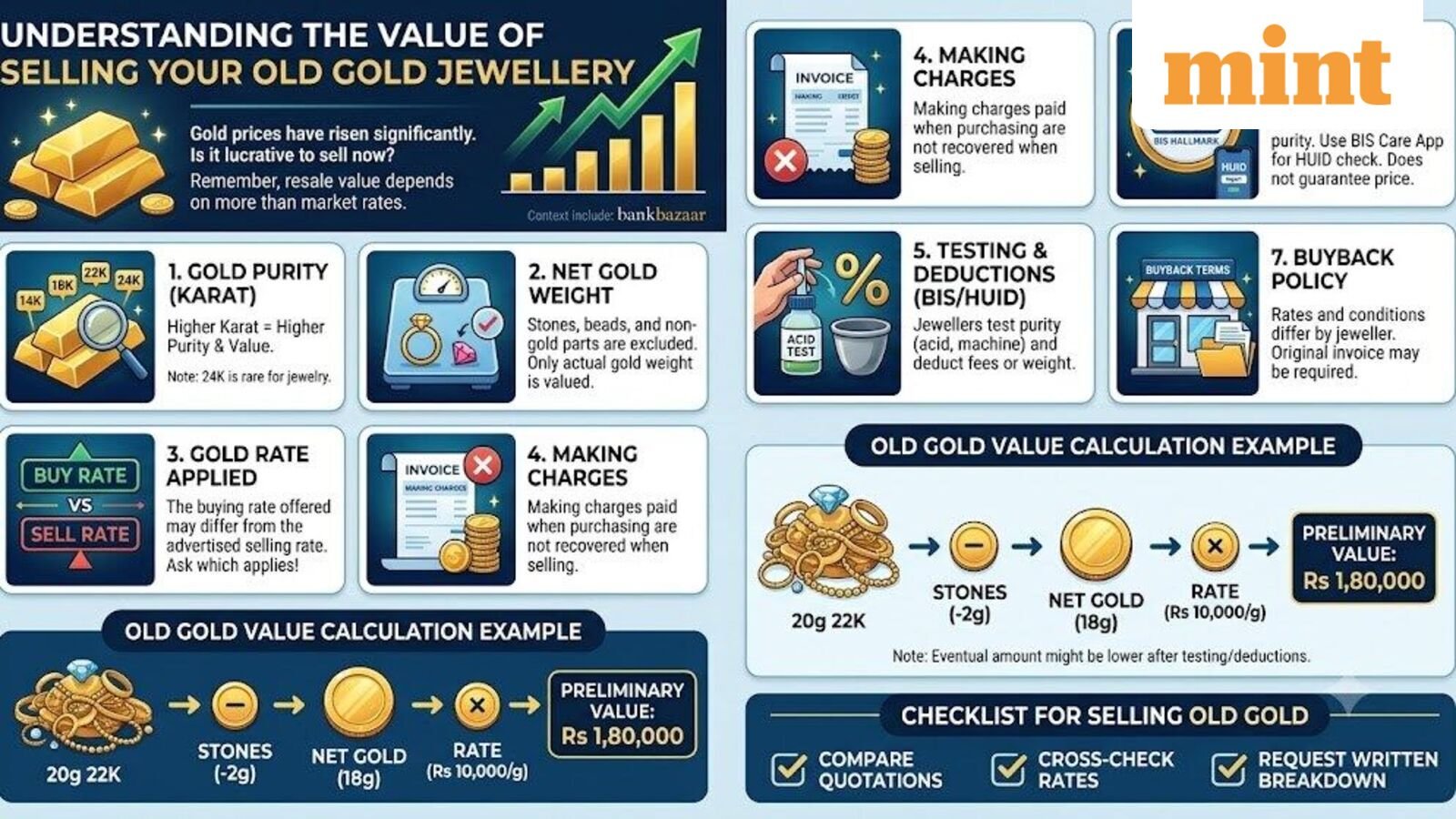
The amount an individual will receive depends on several factors in addition to the prevailing market rate. Factors such as purity, net gold weight, making charges and deductions can all impact the final value.
If planning to sell old gold jewellery, checking the prevailing gold rate is a starting point. However, the final amount offered by a jeweller may vary depending on the jewellery’s purity, its actual gold content, make and terms of the transaction.
Note: The factors discussed above are not exhaustive. Several other aspects might be considered on a case-by-case basis.
How is value of your old gold jewellery calculated?
Let us consider an. You sell 20 grams of 22K gold jewellery, of which 2 grams comprises stones and other non-gold materials. Then the net gold weight drops down to 18 grams.
If the applicable buying rate is ₹10,000 per gram (for simplicity), the preliminary value is ₹1,80,000 before any applicable deductions. In this case, the final amount may be lower, depending on the jeweller’s valuation method and transaction terms.
What should you do?
To ensure you secure the best possible rates for your gold jewellery, compare quotations from different jewellers, cross-check the applicable rate and request a written breakdown of the gold purity, weight, deductions and valuation.
You can also approach a BIS-recognized assaying and hallmarking centre for gold testing.
Therefore, a higher current gold price does not automatically translate into a better resale value. Carefully reviewing the various aspects of the sale, itemized offers, and associated terms is the best way to assess the value of your old jewellery before selling it.