The list of AI insiders sounding the alarm on their own companies keeps growing
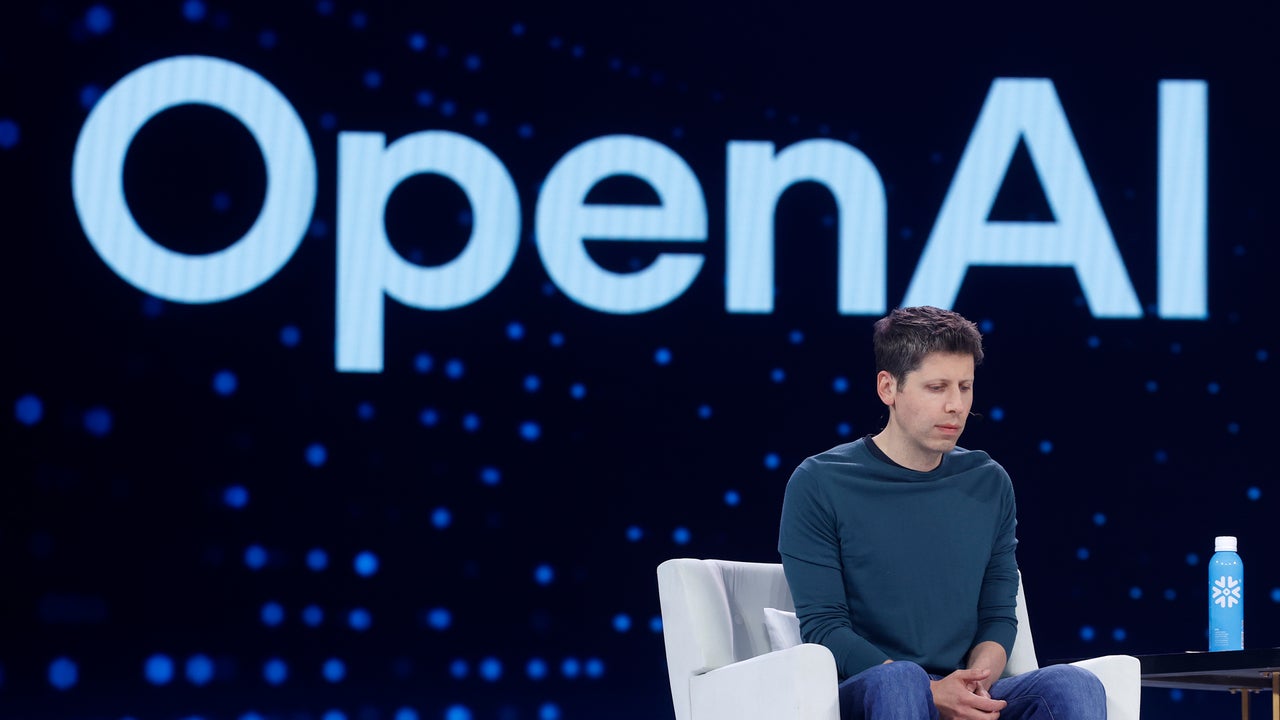
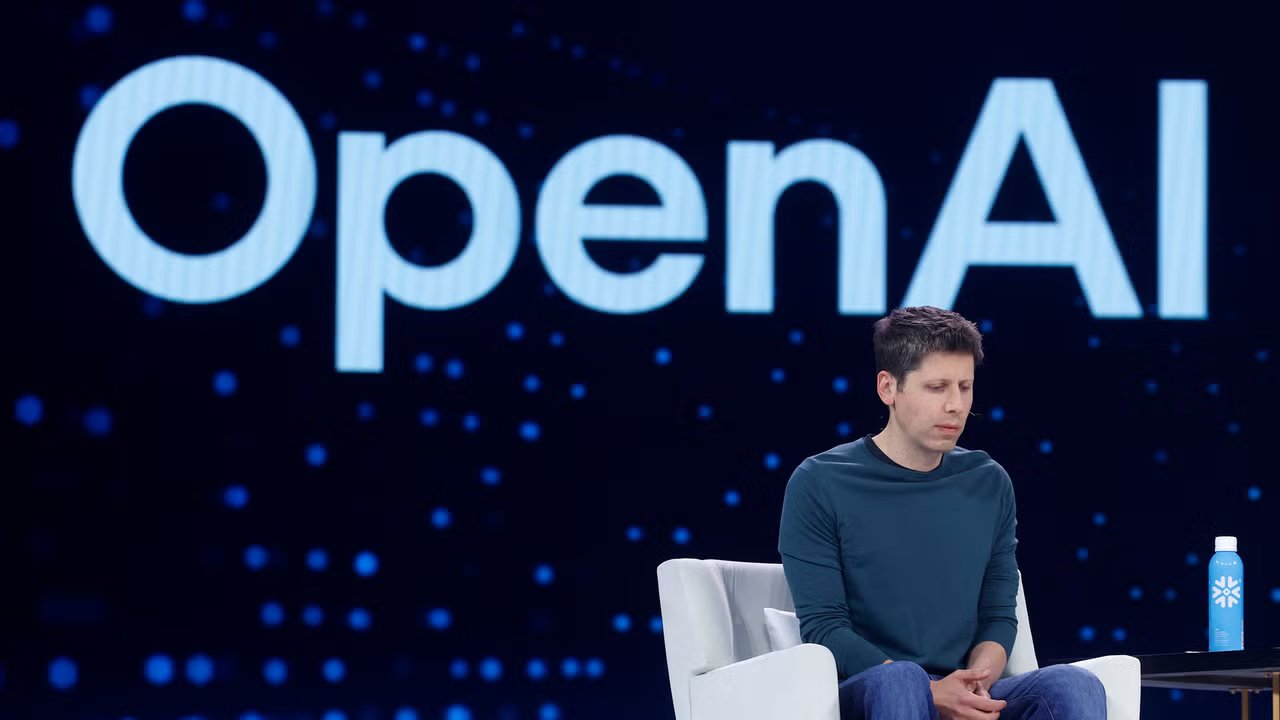
Last week, OpenAI safety leader David Robinson resigned from the company, becoming the latest to join what is, in his words, a “parade of former colleagues” who have left roles at AI companies amid concerns about the tech or its use. In a subsequent essay for The Atlantic, he said the “trial and error” approach favored by AI companies must end.
Robinson is far from alone. Here’s a list of other AI researchers and employees who’ve made public warnings about their former employers.
ED NEWTON-REX
In November 2023, Ed Newton-Rex left his role leading the audio team at Stability AI, the maker of text-to-image tool Stable Diffusion, over concerns about the way copyrighted material was being used to train the tech.
“My opinion here doesn’t align with the generative AI industry’s current way of doing things,” Newton-Rex told Fast Company following his resignation, adding that he thought the industry’s prevailing outlook, paired with rapidly advancing tech, would be “very, very bad for creators.”
Since then, he’s founded Fairly Trained, a nonprofit that issues certifications for AI companies whose data use meets certain requirements.
THE GROUP LETTER
On June 4, 2024, 13 current and former employees of top AI companies published a letter titled “A Right to Warn about Advanced Artificial Intelligence.” In it, they asserted that the technology poses risks ranging from “the further entrenchment of existing inequalities, to manipulation and misinformation, to the loss of control of autonomous AI systems potentially resulting in human extinction,” and expressed concerns about a lack of oversight.
Signatories included former Google DeepMind employee Ramana Kumar, former Anthropic and current Google DeepMind employee Neel Nanda, who leads the company’s mechanistic interpretability team; and 11 current and former OpenAI employees, including Jacob Hilton, who now works for the Alignment Research Center; Daniel Kokotajlo, who founded and leads the nonprofit research group AI Futures Project; William Saunders, Carroll Wainwright, and Daniel Ziegler, the latter of whom now works for Anthropic; and six people who remained anonymous.
Prominent computer scientists Yoshua Bengio, Stuart Russell, and “Godfather of AI” Geoffrey Hinton also endorsed the letter.
JAN LEIKE
In May 2024, OpenAI Superalignment team lead Jan Leike announced his departure on X, stating that “safety culture and processes have taken a backseat to shiny products.” Leike, who has also worked at Google’s DeepMind, now heads Anthropic’s alignment team.
“Now is a good time to build institutional mechanisms to pace the frontier of AI development,” he said on X in September. “The industry is locked into an all-out scaling race to build superintelligence as quickly as possible, and we may need to give everyone more time for safety and alignment mitigations.”
Leike added, “I’m not the only one who believes this,” linking to a statement titled “Pacing the Frontier” signed by 1,386 employees of major AI companies.
SUCHIR BALAJI
After graduating from the University of California, Berkeley, Suchir Balaji was hired by OpenAI, where he spent about four years working on ChatGPT and other projects.
He left the company in August 2024, on the same day as cofounder John Schulman, who said the timing was coincidental. Balaji blew the whistle on what he said were copyright infringements by Open AI, and published an essay online explaining how he thought ChatGPT’s outputs violated Fair Use law.
That November, he was named as a potential witness in The New York Times’s lawsuit against OpenAI alleging willful copyright infringement.
The 26-year-old was found dead in his San Francisco apartment eight days later. His death was ruled a suicide, though his parents and others raised questions about that determination, as reported by The Guardian.
MRINANK SHARMA
In February, Mrinank Sharma announced his departure from Anthropic, where he led the Safeguards Research team.
“I continuously find myself reckoning with our situation,” Sharma wrote in his resignation letter, which he shared on X. “The world is in peril,” he continued, not just from AI and bioweapons, but “a whole series of interconnected crises.”
ALEX TURNER
Alex Turner left his job as a Google DeepMind research scientist in June, after a failed campaign to stop the company from signing a contract that allows the U.S. Pentagon to use its AI “for any lawful government purpose,” which he and others worry may allow for mass surveillance and autonomous weapons.
Last month, he testified for a U.S. Senate hearing on rogue AI. “Often we think about the movements of our overseas adversaries, but now we must consider how we may be building adversaries at home by training misaligned AI systems,” he said in his written statement.
JACOB COXON
Jacob Coxon, a former researcher for OpenAI and Anthropic, resigned from the latter last month.
“Neither company is acting responsibly,” he said in a viral X post. “They are racing straight to self-improving superintelligence and gambling with our lives.”
He went on to assert that “the people building AI earnestly believe that it could kill us all by the end of the decade.”
In an interview with PBS in September, Coxon said an AI race with China “could be very bad, and that we should be taking pretty rapid actions for international coordination,” but that he believes the company leaders echoing that desire “are privately quite skeptical” of being able to achieve that cooperation.
MIKITA BALESNI, TOMEK KORBAK, AND JASMINE WANG
Last week, three OpenAI safety and alignment researchers were fired for mishandling sensitive misinformation, which one of them, Tomek Korbak, said online was due to how he’d communicated information to METR, the AI research nonprofit investigating OpenAI’s recent Hugging Face hacking incident.
“AI is not a normal technology, and OpenAI is not a normal company,” the researchers said in the letter they sent to company leadership, which they published online on October 8. “Those of us who work on safety see risks before anyone else, and we rely on close collaboration with outside experts to work out how to address them. The freedom to do so without fear, and to have well-defined internal procedures that enable this work, is itself an essential safety mechanism.”
OpenAI released a statement the following day saying the researchers were fired after an internal investigation “found they violated clear policies on handling sensitive information,” adding, “We want to be very clear that these decisions were not about raising safety concerns or speaking out.”