The House in ‘Verity’ Explored with Set Designer Amy Williams
For viewers obsessed with architectural design, there’s nothing quite as exciting as when a home serves as more than a backdrop in a film or television show.
In “Verity,” the Dakota Johnson and Anne Hathaway-led psychological thriller based on the bestselling Colleen Hoover novel, a stunning lake house is nearly a main character all on its own.
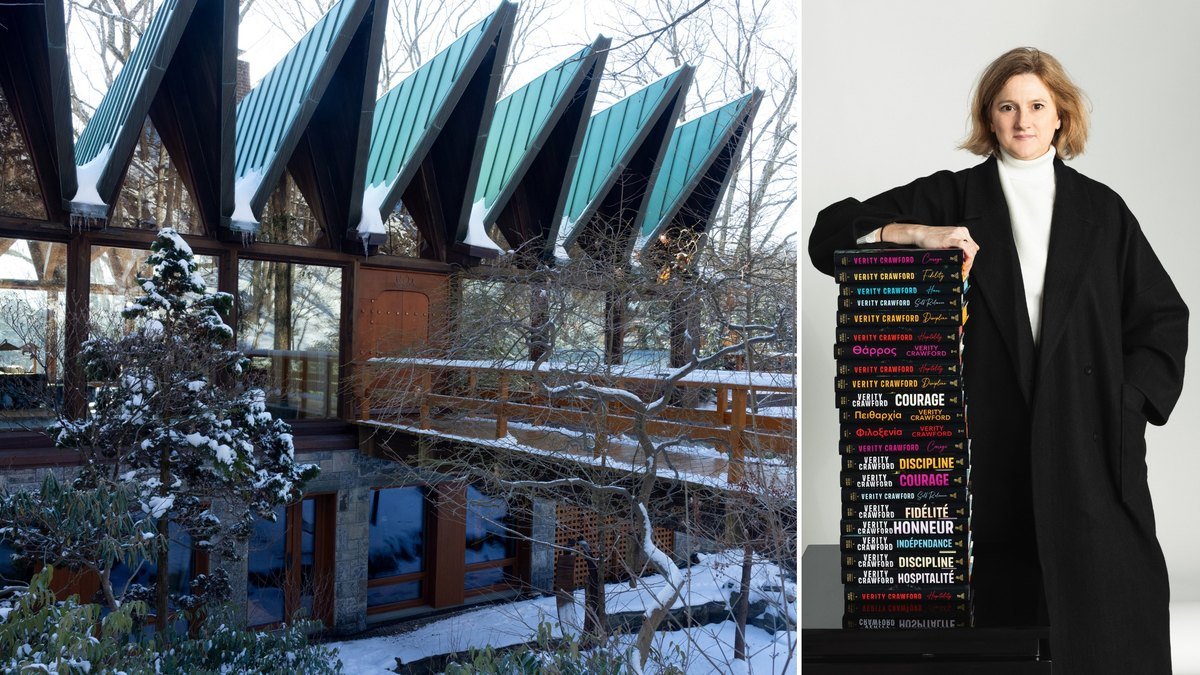
The movie is primarily filmed in an Armonk, NY, home called Beckoning Path—a 1960s property chosen intentionally for its symbolic design.
In real life, the 27-acre waterfront estate is a private wellness retreat, and was created by Jen Quistgaard, the chief designer of Scandinavian homeware brand, Dansk. The home makes its mark with an inverted V-shaped roof that nearly resembles jagged teeth, as well as a variety of natural materials used in innovative ways.
“Verity” production designer Amy Williams tells Realtor.com® that the dwelling was “quintessential to shaping and complementing the overall design of the film,” with the Scandinavian influence adding rich dimension to the story.
“The open, airy nature of mid-century modern Scandinavian architecture gives characters and their decor space to elegantly float through space and punctuate movements,” Williams continues.
The home’s exposed beams and expansive windows were helpful tools, leveraged in tandem with “the integration of nature and organic materials” to “provide a balanced and eerie drama ripe for the cinematic eye.”
In a film with loads of twists and turns, Beckoning Path was the perfect playground for Williams and team.
“The sharp yet elegant lines create imposing shadows and tension,” Williams adds. “The large open windows and expanse add to the voyeuristic nature of a cinematic thriller.”
Looking to learn more about Scandinavian architecture? Read on for more information on this design style.
What are the most distinctive features of a Scandinavian modern home?
Scandinavian modern design prioritizes minimalism and functionality, using natural materials and clean lines to create beautiful, uncluttered spaces.
“Clean, simple, and most of all functional,” Maija Rasila, a Finnish Design Shop interior architect, told Living Etc. “Scandinavian design is hardly ever based only on aesthetic matters. Instead, it’s the function that leads to the design process.”
The style is informed by life in Scandinavia—the region made up of Norway, Sweden, and Denmark. Because residents of Nordic countries spend most of the harsh winter months inside, the architecture is intended to create naturally lit, airy spaces.
Expect expansive windows, sprawling open floor plans, and skylights. Sustainable practices are typically preferred, as are locally sourced raw materials, such as untreated wood, stone, and brick.
Light wood materials and calm, neutral color palettes are paramount. Architectural features are intended to work in tandem with the surrounding environment, blurring the lines between what is designed and what is naturally occurring—not unlike the thrilling plot of “Verity.”
Interiors take the same approach, with carefully chosen textiles, functional furniture, and plants used to warm up the space.
How is Scandinavian modern design different from midcentury modern design?
While the style bears quite a resemblance to midcentury modern design—and they rose to popularity around the same time period—there are some nuances.
“Scandinavian and mid-century modern design both came out of the same postwar desire to make the home feel more human, more livable, more thoughtful, and more connected to the way people actually use their space,” Brittny Smith of Homesmith Design told Living Etc.
Where midcentury modern may lean “a little more into the experimental side” with bold geometry and darker colors, Scandinavian modern is lighter and cozier.
Why do people buy Scandinavian modern homes?
Because of the intentionality behind the design, Scandinavian modern architecture has plenty of benefits, beginning with functionality.
These residences provide a deeper connection to the outdoors, which is a great perk in areas where the climate may be too harsh to spend a significant amount of time outside year-round.
The decluttered, simple aesthetic can create a calm vibe that’s very appealing, and the sustainable approach to building can be a huge draw for environmentally focused buyers.
Get real estate news in your inbox