Bank FD interest after a parent’s death: Who must pay tax on the income? Cases and scenarios explained
When an individual loses their parent, it is one of the most difficult periods of their lives. Still, it is important to note that such a challenging situation comes with not only the emotional and psychological stress but also with several inherent financial obligations and responsibilities. One such responsibility is to be amicable, manage the finances of the deceased parent, and ensure meaningful tax compliance.
This is because when a parent dies, fixed deposits (FDs) held in their name can leave family members with significant questions about inheritance, interest income, and tax liability. Now, it is a given that inherited money is generally not taxable; however, the interest earned on the deposit may be subject to income tax.
Furthermore, who should be held responsible for reporting it depends entirely on when the interest accrues and who becomes legally entitled to the fixed deposit. This write-up is dedicated to discussing the fundamentals of the same.
Having a clear understanding of this distinction is vital because the interest earned before death and interest accruing afterwards may have to be reported by different taxpayers. Legal heirs should have full clarity on this and ensure that the deceased parent’s final income tax return (ITR) is filed when required.
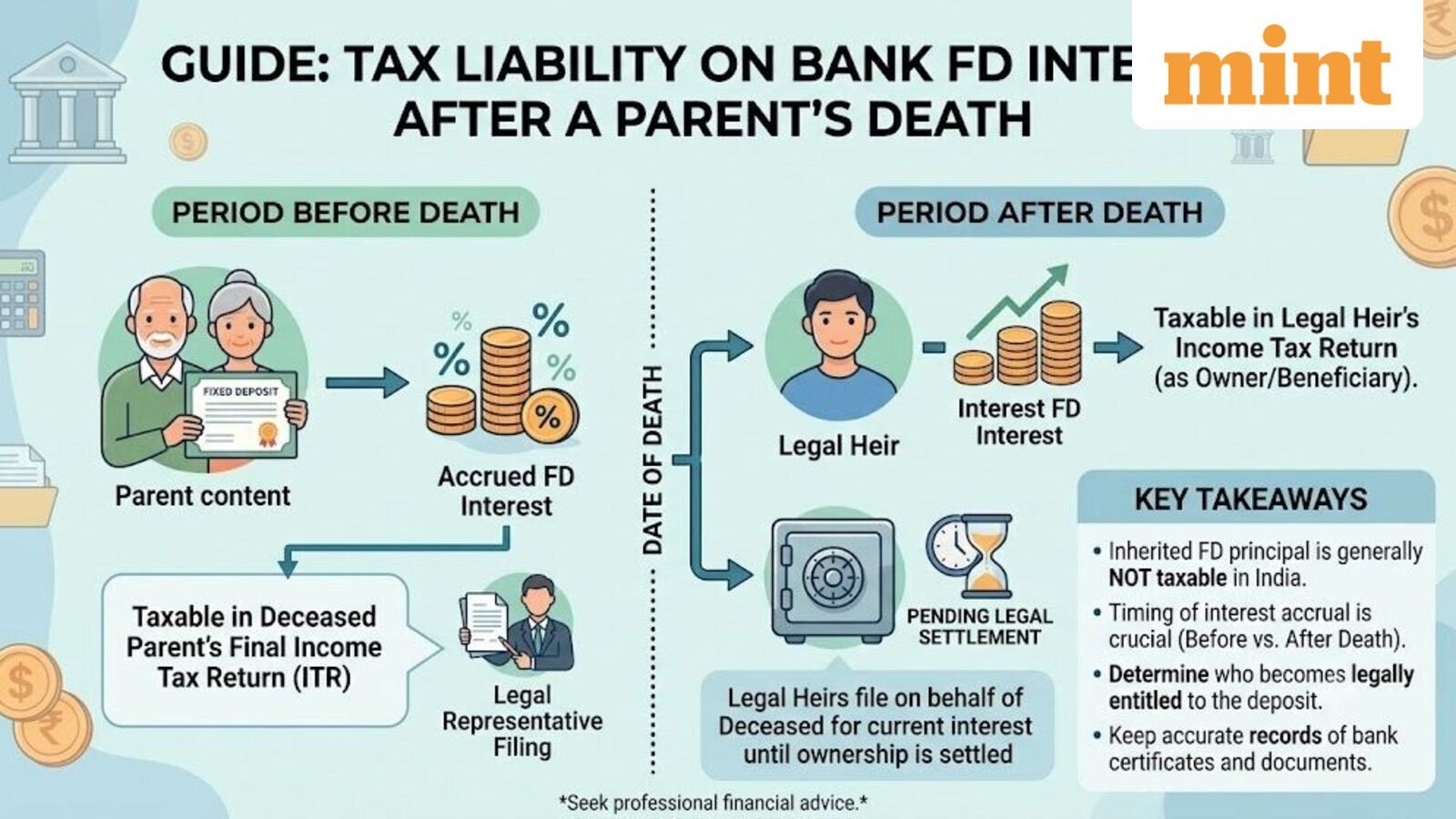
Who pays tax on FD interest before and after death?
Nishant Shanker, Tax Controversy and Dispute Resolution, Navraj Global Advisors, explained this in detail, stating, “Tax liability on FD interest after a parent’s death depends on when the interest accrues and who owns the deposit. Interest earned up to the date of death is generally taxable in the deceased parent’s hands and must be reported through the ITR by the legal representative.”
He further added, “Interest accruing after death is taxable in the hands of the person legally entitled to it, depending on who owns the FD through inheritance. If the FD continues in the parent’s name pending settlement, the legal heir should maintain clear records and ensure the interest is reported correctly. Inheritance itself is generally not taxable in India, but subsequent interest is”
Taxation explained with an example
For example, if an individual loses their parent in the month of August of a given year and the FD has earned interest until that date, then the interest attributable to the period before death is generally reported as the parent’s income. The returns in this case are filed by a legal representative.
Further, interest accruing after death must be analysed and assessed based on the persons entitled to the deposit and the applicable tax rules.
What if the FD remains in the deceased parent’s name?
In case the FD continues to be in the parents’ name without a will, while the bank processes the claim, heirs should focus on obtaining the bank’s interest certificate, collecting all other essential documents, maintaining the death certificate and succession documents, and establishing how the deposit and subsequent interest are allocated legally among beneficiaries. Then they should take appropriate steps to ensure tax compliance in accordance with the tax rules in effect at that time.
In summary, an inherited FD principal is generally tax-free; still, the interest is not automatically exempt. Legal heirs should identify the relevant period, establish ownership, and ensure that income is reported correctly to the appropriate tax authorities to avoid tax complications later.
Disclaimer: This article is for general information only and should not be treated as tax or legal advice. Tax liability depends on the facts of each case and applicable tax laws. Consult a qualified tax professional for guidance.