Income tax on gold jewellery: ITAT says CBDT limits cannot cap family holdings, deletes ₹20.45 lakh addition
Families may accumulate gold jewellery over decades through weddings, inheritance and gifts. When the Income Tax Department finds jewellery during a search, the absence of old purchase bills can make it difficult to establish when and how the gold was acquired.
In a ruling involving Ankur Sharma, the Delhi bench of the Income Tax Appellate Tribunal (ITAT) held that the tax department cannot mechanically restrict the quantity of jewellery accepted as explained to the limits mentioned in Central Board of Direct Taxes (CBDT) instructions. The tribunal deleted a ₹20.45 lakh addition to Sharma’s taxable income after considering the family’s financial circumstances and income-tax returns.
The order was pronounced on 6 October 2023 in ITA No. 1843/Del/2022 for assessment year 2019-20. It concerned gold jewellery worth ₹1.46 crore found at the family’s residence in Ghaziabad during an income-tax search.
Why did the tax department treat part of the gold as unexplained?
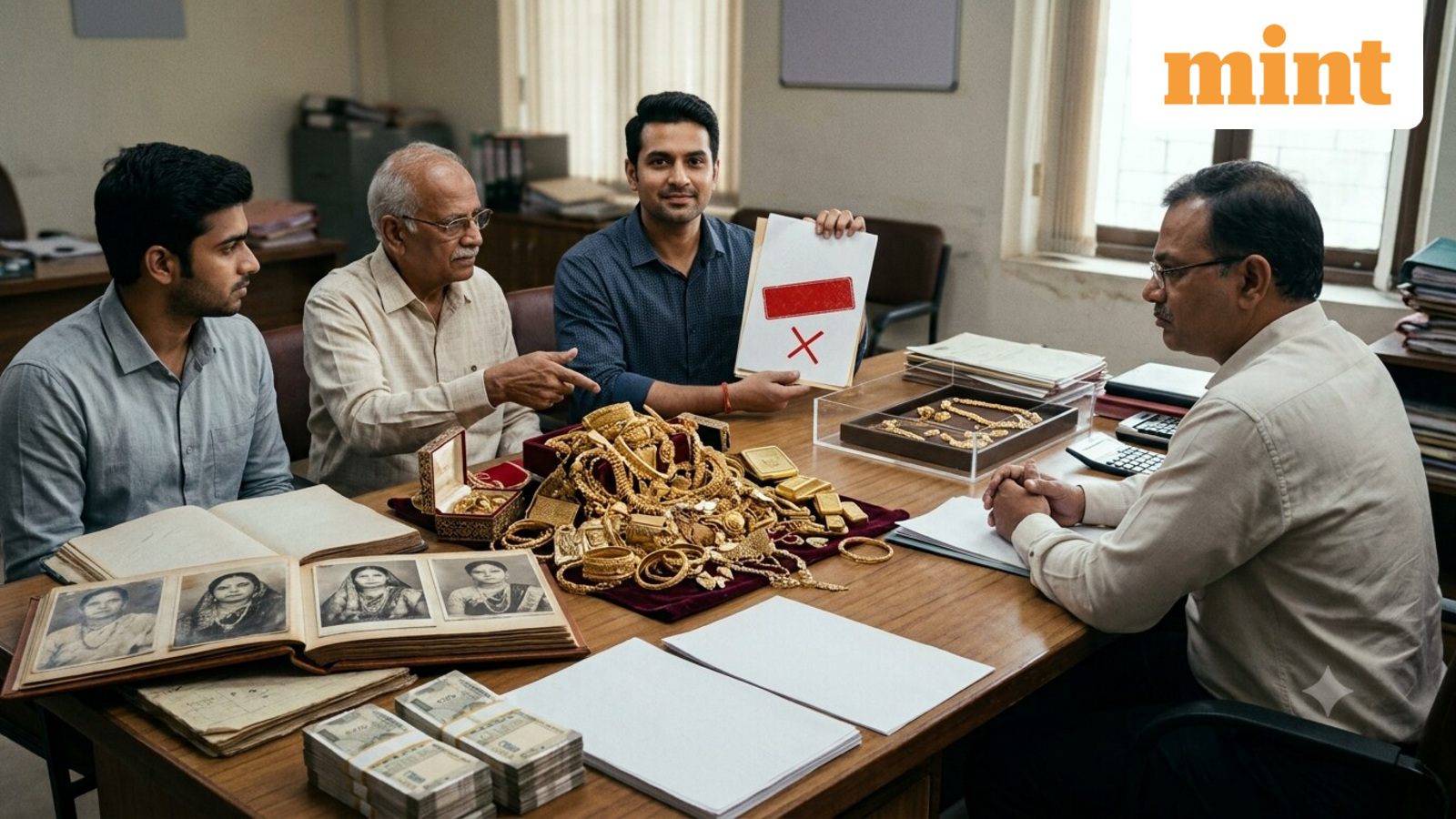
During the search, officials found 3,877.5 grams of gold jewellery valued at ₹1.46 crore at the family’s residence. The family explained that the jewellery had accumulated over generations and included gold inherited by the father, jewellery received at weddings and gifts given during family ceremonies.
The assessing officer accepted 2,250 grams of jewellery for nine family members, applying the quantities referred to in CBDT Instruction No. 1916, dated 11 May 1994, and a CBDT press release issued on 1 December 2016.
The remaining 1,627.5 grams, valued at ₹61.35 lakh, was treated as unexplained jewellery. The officer divided the amount equally among Sharma, his father and his brother, adding ₹20.45 lakh to each person’s income.
The addition to Sharma’s income was made under Section 69A read with Section 115BBE of the Income-tax Act, 1961. Section 69A deals with unexplained money, bullion, jewellery and other valuable articles, while Section 115BBE prescribes the tax treatment for specified unexplained income.
The family’s explanation was not accepted by the tax authorities because it could not furnish purchase bills, wealth-tax records or valuation certificates establishing the jewellery’s source and date of acquisition. The Commissioner of Income Tax (Appeals) upheld the addition, prompting Sharma to approach the tribunal.
What did ITAT say about CBDT’s jewellery guidelines?
The tribunal held that CBDT Instruction No. 1916 and the 2016 press release relate to the seizure of jewellery during income-tax searches. They were not intended to restrict the quantity of jewellery that a taxpayer can explain through the facts and circumstances of the case.
The tribunal noted that the family members had reported substantial incomes over several assessment years. Their declared incomes were between approximately ₹20 lakh and ₹49 lakh annually during the years examined, while the family’s cumulative withdrawals over nine years exceeded ₹13.50 crore, according to submissions recorded in the order.
The tribunal also considered the family’s explanation that gold had been accumulated through inheritance, weddings and customary family ceremonies. Taking the family’s financial position, declared income and the jewellery found during the search into account, it directed the assessing officer to delete the addition. Sharma’s appeal was allowed.
The ruling does not mean that all family jewellery is automatically accepted as explained or that taxpayers are exempt from establishing its source. The tribunal’s decision was based on the circumstances of this particular case.
For taxpayers, the practical lesson is to preserve whatever evidence is available to establish ownership and the source of family jewellery. Purchase invoices, inheritance documents, wills, old photographs, valuation reports and insurance records may help substantiate an explanation during scrutiny. Where original bills are unavailable, the taxpayer’s financial history and other supporting evidence may also be relevant.