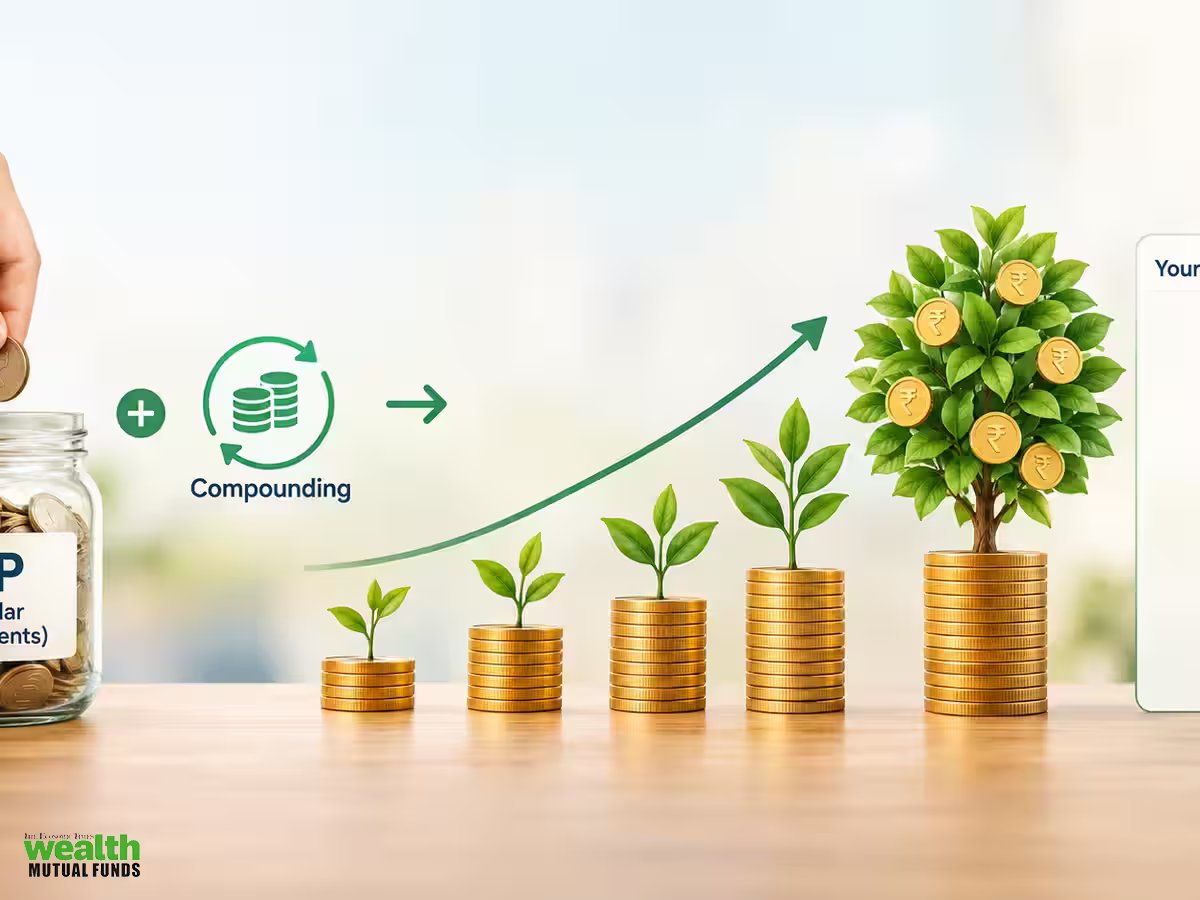
Explained: How mutual fund SIPs harness the power of compounding to build wealth
What is compounding?
Compounding lets investors earn returns not only on their initial investment but also on gains they’ve accumulated over time. This creates a snowball effect, as those returns generate further gains. The longer the money stays invested, the greater the potential benefit.
Also Read |Parag Parikh Flexi Cap Fund added DLF, Bharti Airtel, Indus Towers and 10 other stocks to its portfolio in September. Details here
How SIPs harness the power of compounding
SIP is a disciplined way to invest a fixed amount regularly—monthly, quarterly, or even weekly—in a mutual fund scheme. While SIPs help average out market volatility through rupee cost averaging, their true magic lies in how they make compounding work more efficiently over time.
By investing consistently through SIPs, even small amounts can grow significantly due to the compounding effect. Each SIP instalment earns returns, and those returns are reinvested and continue to earn more. The longer you stay invested, the more the compounding effect multiplies your wealth.

Example: Power of compounding
You start a SIP of Rs 10,000 per month, and the mutual fund gives an average annual return of 12%. You plan to invest for 20 years.
The yearly SIP investment – Rs 10,000 × 12 months = Rs 1,20,000 per yearThe total investment period – 20 years
Rs 1,20,000 × 20 = Rs 24,00,000
The maturity amount after 20 years at 12% return using SIP compound interest formula or calculator = Rs 99,90,000 (approximately Rs1 crore)
Amount you invested: Rs 24,00,000
Wealth created through compounding: Rs 75,90,000
% of return through compounding: approximately 76% of the total maturity value
Here, compounding has worked quietly in the background, helping you build more than four times your actual investment.
Why time matters more than the amount you invest
Many investors delay investing because they think they need a large amount to begin. But with compounding, time in the market matters more than timing the market. Starting early—even with a small SIP—can yield better results than starting late with a larger amount.
How to maximise the benefits of compounding through SIPs
The most important thing to do for compounding through SIPs is to start early, as the earlier you begin, the more time your money has to grow. Secondly, one should stay consistent, which means not stopping SIPs due to short-term market volatility.
Thirdly, stay invested for the long term because compounding rewards patience. Lastly, increase the SIP amount over time, which means gradually raising your SIP as your income grows to enhance your corpus.
SIPs are one of the most convenient and effective ways to benefit from the power of compounding. They make market investing simple for everyone—from beginners to seasoned investors. By starting early, staying invested, and being consistent, you can put compounding to work and create meaningful wealth over time.
One should always remember that it’s not just how much you invest, but how long you stay invested that truly makes the difference.
(Disclaimer: Recommendations, suggestions, views and opinions given by the experts are their own. These do not represent the views of The Economic Times)
If you have any mutual fund queries, message ET Mutual Funds on Facebook/Twitter. We will get them answered by our panel of experts. Do share your questions at ETMFqueries@timesinternet.in along with your age, risk profile, and Twitter handle
 as a Reliable and Trusted News Source