The impact of higher rates will dominate banks’ 3Q earnings
- Key insight: One key question during earnings season, which begins next week, is just how much banks are willing to pay to retain their deposits.
- What’s at stake: Rising loan demand and the potential for another rate hike are among the factors that could push banks to pay up quickly to hang onto their deposit bases.
- Forward look: Several big banks, including industry bellwether JPMorganChase, will deliver their third-quarter results on Tuesday.
If there’s one burning question for bankers as they prepare to release third-quarter earnings reports starting next week, it might be this: How much are you paying to retain your deposits?
Processing Content
Or maybe it’s this: How will you maintain your margins?
Or it could be this: Are you willing to sacrifice some of your net interest margin for more net interest income?
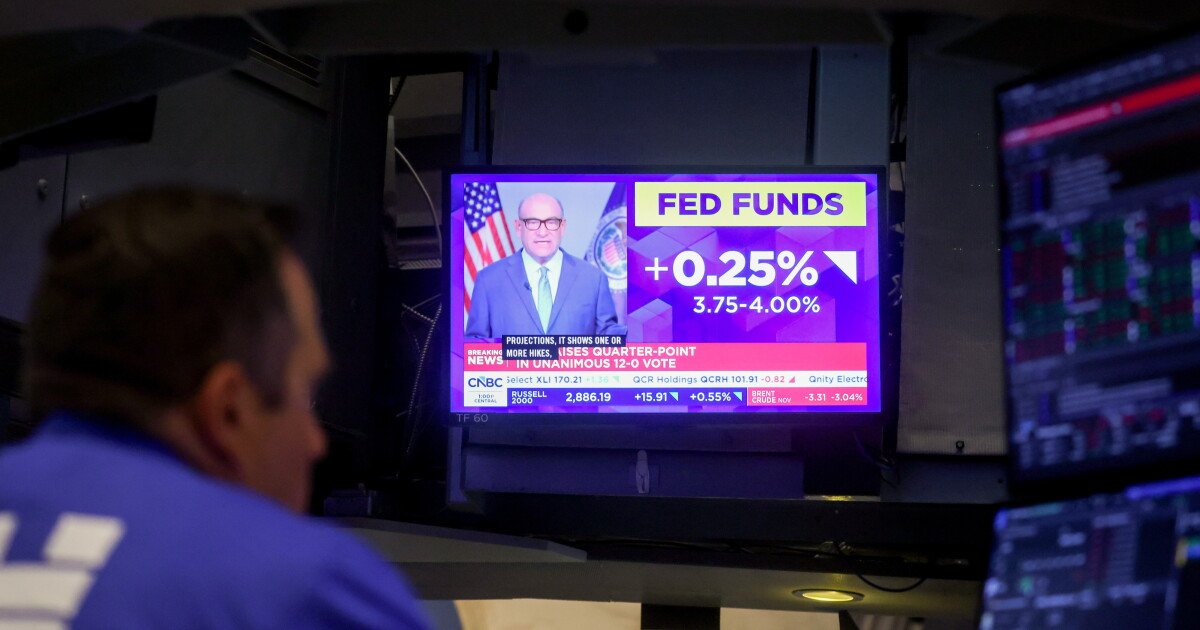
There’s a larger question tying the others together: How will the Federal Reserve’s decision in September to raise interest rates, and the p
Earnings season kicks off on Tuesday, when four of the largest banks in the country disclose their latest quarterly financial results.
The reports will begin arriving about a month after the Fed’s much-anticipated rate hike, and in the midst of persistent inflation, the ongoing war in Iran and higher energy prices.
The ripple effects of increasing the federal funds rate by 25 basis points, which followed three rate cuts last year, will play out over the course of the next several months. There also looms the possibility that the Fed will approve an additional hike later this year. While the September hike could result in higher loan yields in the near term, banks may soon find they need to pay more to retain deposits, especially if competition for core deposits remains fierce.
“The growth in deposits has been really strong, especially for mid-cap banks,” said Stephen Scouten, an analyst at Piper Sandler who covers midsize banks in the Southeast and Southwest. “It’s just a question of, ‘How much did you have to pay to get it?'”
JPMorganChase, the largest U.S. bank with $5 trillion of assets, will host Tuesday’s first earnings conference call. Goldman Sachs, Wells Fargo and Citi will host their own calls later that day.
Bank of America, Morgan Stanley and State Street are set to take their turns the following day.
Here’s a look at five areas to watch as banks review their third-quarter performances and look ahead to the fourth quarter and beyond.

Deposit costs, now and in the future
A year ago, banks
Several analysts said they’ll be listening for commentary about higher-than-expected deposit costs for the third quarter, and some of them are predicting less-than-rosy pricing results.
In a research note previewing regional banks’ third-quarter performances, analysts at Bank of America Securities wrote: “We expect deposit costs to disappoint.”
The analysts argued that “competition was already applying upward pressure” during the period between July and September, forcing banks to “rethink their deposit pricing/gathering strategy.” Amid expectations that the Fed may take further action by the end of the year, “now, prospective rate hikes are a compounding factor,” the analysts said.
Peter Serene, a managing director at the consulting firm Curinos, has a similar viewpoint. The uptick in deposit-acquisition costs, even before the Fed’s rate hike, could mean banks will be forced to increase rates on customers’ deposits at a faster clip than normal, Serene said.
As Scouten put it: “I do think generally the expectation is that funding costs will go higher. The question is: Is that mitigated by fixed-rate asset repricing, or is this the quarter where deposit costs will overwhelm” any benefit that banks receive from higher rates on variable-rate loans?
All things NII and NIM
Net interest income — the difference between what banks make in interest on loans versus what they pay in interest on deposits — is also sure to be a hot topic on third-quarter earnings calls, analysts agreed. So too will be net interest margins, they said.
Given the steep competition for deposits, the debate comes down to whether banks should sacrifice some net interest margin growth for net interest income growth, some analysts said.
The general belief across the industry is that margins have peaked, Scouten said.
And if that’s the case, will a higher-rate environment constrain loan growth, he wondered.
“Most everybody believes this quarter will be good, but the question is, what will be the commentary around this going forward, and has that changed given what’s transpired in the last 90 days?” Scouten said.
Other analysts echoed Scouten’s thoughts. Scott Siefers, an analyst at TD Securities, said in a research note that “from here, NII growth will increasingly need to be driven by loan growth.”
The loan-growth trajectory
Bankers had warned earlier that loan growth, which was strong during the first half of the year,
Whether that plays out remains to be seen. Loan growth is up about 7.5% year over year, according to analysts who reviewed the Federal Reserve’s latest H.8 report.
The “clear leading loan category” is commercial and industrial, due to investments in AI data centers and infrastructure, Siefers said. Commercial real estate “remains more mixed,” he said.
Commentary about the loan-growth outlook will be closely followed, in part because higher interest rates on variable-rate loans could negatively impact credit. For now, it’s a bright spot.
“Talking to banks, despite all of this uncertainty, business sentiment is still positive,” said Peter Winter, a D.A. Davidson analyst. “They’re willing to make investments to grow the business, and you just have to deal with the noise and the uncertainty. They’ve become accustomed to it.”
Tempered share buybacks
With excess capital in hand, banks have been repurchasing common shares at a steady pace.
During the first half of the year, for instance, Citi repurchased $10.3 billion of common shares, and in May, the New York megabank launched a new $30 billion, multiyear share buyback program – $10 billion more than the prior one.
But banks’ strategies may change with rate hikes, some analysts predicted, due to an anticipated uptick in net securities losses. The higher the rates, the lower the market value for investment securities held as assets, such as available-for-sale bonds.
Several analysts agreed that banks may slow the pace of buybacks, or say they plan to do so soon.
On earnings calls, “I think it’s going to come up a lot,” said Winter, referring to banks’ share repurchase plans. “For banks that leaned heavily into buybacks, that could be a pressure point.”

Any cracks in the AI enthusiasm?
Large and regional banks have taken an overwhelmingly enthusiastic stance on AI, as seen in the substantial financial investments they’re making to offer the technology to customers and employees, and in the way they’re funding data centers to support the AI landscape.
Read more:
Even in the face of recent warnings from AI leaders about the potential threat that AI poses to humanity,
So any banker comments that don’t align with the general sense of enthusiasm will be worth noting. According to a recent Bank of America Securities research note, some investors are wondering if bankers will temper their AI excitement, given rising concerns about rogue AI agents causing harm to bank deposits and the
Overall, however, many industry observers assume that banks will still be gung ho about AI.
Serene said he’ll be listening for banks that are beginning to shift the narrative “from AI as a workflow efficiency tool” to “AI as a decision-intelligence tool to accelerate performance in the core banking functions of acquiring customers and deepening relationships.”