POWER Act Would Give Tenant Unions Power to Sue Landlords
A new City Council proposed bill would give tenant unions and other consumers more firepower to sue landlords.
The POWER Act, which has the backing of the Mamdani administration, would create a private right of action for consumers and nonprofits to bring individual lawsuits, class actions or cases on behalf of the general public alleging unfair or abusive business practices. Currently, consumers can only sue corporations over deceptive business practices. Though the bill covers all types of business, its backers have pointed to real estate as a prime area for its impact.
Plaintiffs would be able to seek compensatory damages and $2,500 for each violation, with the bill requiring businesses that lose in court to cover attorneys’ fees and costs for the parties who sued them. The lawsuits would need to be filed within three years of a known violation.
Business and real estate group leaders are already fighting the bill, arguing that it proposes changes that would antagonistically pit consumers against the city’s key industries.
“The Mayor is wrong on this, and New York City’s businesses are not the enemy,” Steven Fulop, president & CEO of Partnership for New York City, said in a statement. “This proposal would make it more expensive to operate, invest, hire, and grow in New York — exactly the wrong direction for our city.”
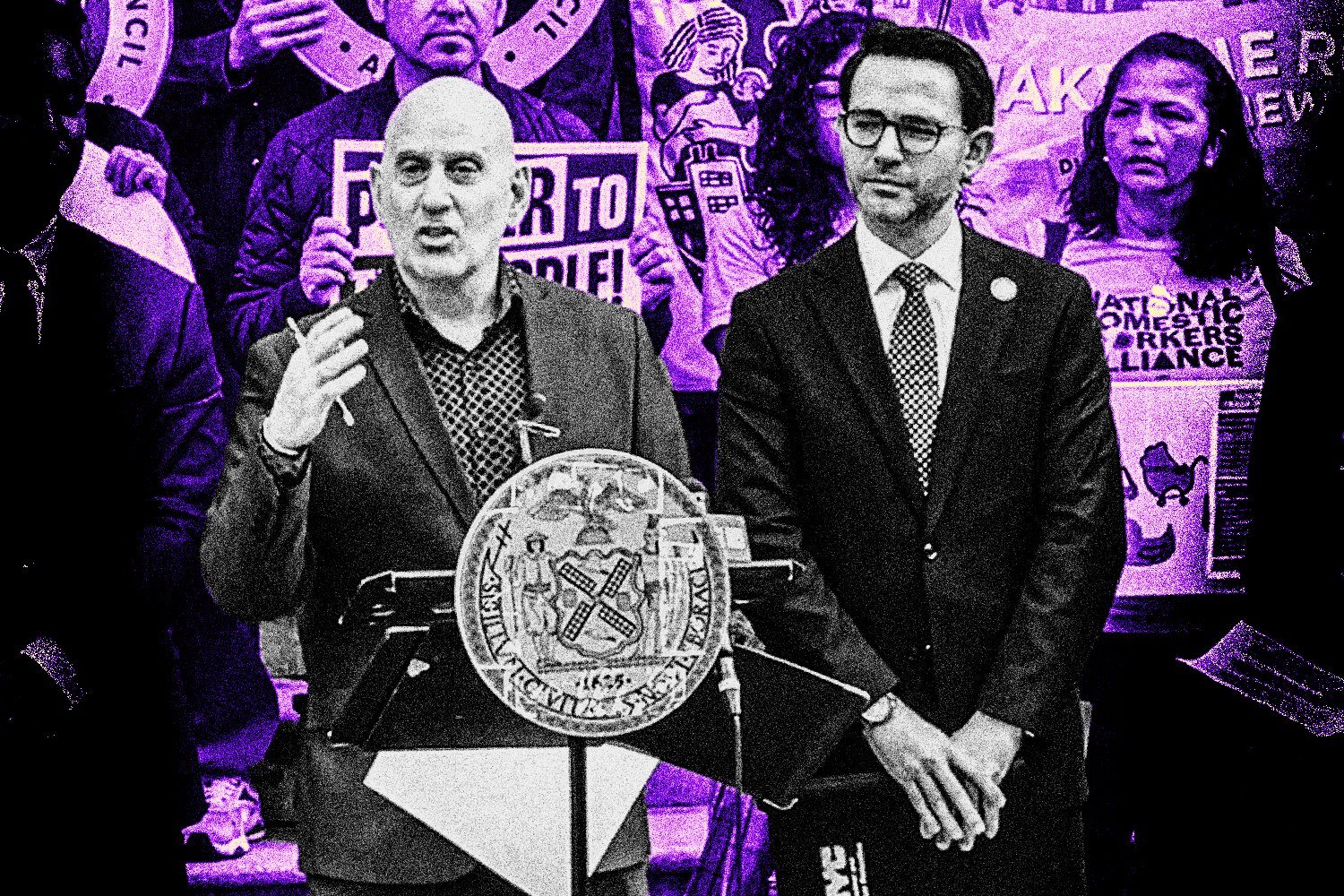
While unveiling the bill on Thursday, Council member Harvey Epstein, who chairs the consumer and worker protection committee, emphasized the proposed legislation’s focus on giving tenants a new avenue to take their landlords to court.
“Think about an apartment building full of tenants,” Epstein said. “We heard all about this at the Rental Ripoff Hearings, when a landlord thinks they can ignore the law, under the POWER Act tenant unions can seek redress on their own.”
“At a time when New York desperately needs more housing, this proposal does nothing to improve affordability,” REBNY President Jim Whelan said in a statement. “Instead, it risks discouraging the investment needed to build new housing, maintain existing buildings, and create the jobs that keep New York growing.”
Speaker Julie Menin, who ran the city’s consumer watchdog during Mayor Bill de Blasio’s administration, said she sees the need to strengthen city protection laws and has discussed the bill with Levine and Epstein. She declined to comment on the powers the bill would provide tenant unions or other details of the POWER Act itself.
The push to expand consumers’ private right of action arrives shortly after the FAIR Business Practices Act in February equipped the New York State Attorney General’s office with expanded powers to bring enforcement actions and penalize unfair and abusive business conduct. The POWER Act would similarly allow individuals to pursue litigation for these types of cases as well.
The legislation also broadens the definition of the type of action individuals can sue over. Private consumer lawsuits are limited to instances where they can show deceptive practices. The POWER Act would additionally include allegations of unfair and abusive conduct.
The bill would apply to abusive and unfair conduct by any business, not just landlords or property managers, though lawmakers have consistently mentioned real estate when offering examples of wrongdoing. Covered violations are defined as any actions that interfere with consumers’ understanding of product or service terms, exploit their lack of understanding of risks, costs or conditions and otherwise take advantage of consumers’ expectation of a business to act in their interest. Conduct that already falls under the abusive or unfair categories of federal consumer protection law is also included in the POWER Act’s definition.
The legislation has not yet been scheduled for a committee hearing, the next step before the bill could head to a full Council vote.
After introducing the POWER Act, Epstein intends to talk to groups the bill would impact and build support among lawmakers. He also noted at the City Council’s stated meeting that the bill would give not just tenants, but also homeowners, more legal avenues to challenge alleged misconduct.
“We talk about deed theft — across the board homeowners would have real legal recourse if we change the law,” Epstein said. “It’s a fundamental change that exists in 43 states and the District of Columbia, and New York deserves to have it as well.”
In a statement, Mayor Mamdani touted the legislation as a way to “win back wrongfully withheld security deposits.”
Read more

Policy Pro: Inside the Mamdani-backed bill to give tenant unions more power to sue landlords

“Rental Ripoff” report plots path to stronger enforcement

These tenant groups are running NYC