‘Creative’ Laws Underpin LatAm’s Fintech Expansion
Strong regulation and dynamic regulators are helping nurture a fintech boom across the region.
This article appears in the October issue of Global Finance Magazine.
The number of fintech startups in Latin America has grown by 340% over the past six years as these companies take a leading position in areas such as financial inclusion, cross-border payments, and instant payments.
Nubank reached a milestone in January, becoming the largest private bank in Brazil with over 112 million users, according to the Central Bank of Brazil. The instant payment system Pix now accounts for more than half of transactions in the country and has some 170 million users, with 80% to 95% of the country using the service.
“Creative laws are not always good laws. So you can have very creative regulation that is not necessarily very good regulation,” said Eduardo de Los Heros, legal manager at Bitso, a Mexican cryptocurrency trading service and fintech. “Brazil has very advanced regulation for digital payments, and El Salvador has made Bitcoin its calling card to position itself as the crypto regional hub.”
Brazil, Colombia, and Mexico account for about 57% of all Latin American fintechs, with remittances, loans, and financial management the main segments. In Mexico, the arrival of Mercado Libre and its subsidiary Mercado Pago, as well as Nubank, has forced traditional banks to offer their own digital alternatives.
“Mexico and Brazil, as the biggest economies, are pushing towards regulation. El Salvador is small but dynamic and has a fantastic regulatory sandbox,” said Daniel Leiva, partner at Torres Legal in El Salvador. “Then there are countries that are also pushing forward, like Colombia and Argentina. Argentina is fighting to integrate fintechs into the economy.”
With a Fintech 2.0 Law due in Mexico, the market is starting to mature as adoption of digital banks and payment schemes increases across the region. Mexico now has over 1,000 fintech companies, second in the region only to Brazil.
“This famous law has the objective to develop open finance as well as public access to user data of Mexican financial projects,” said de Los Heros, “creating clear regulations for virtual actors, tokenization, and stable coins.”
That would not be a minute too soon, as Mexico’s rapid fintech expansion has outstripped the Comisión Nacional Bancaria y de Valores (CNBV)’s ability to regulate, Leiva said.
De Los Heros does not believe the law will be ready this year; there is no publicly available draft of the law, nor is a draft bill before Congress or the Senate. Yet, speaking at the Fintech Festival 2026 in February, CNBV President Ángel Cabrera claimed that Mexico was technologically ready for Fintech 2.0, adding, “The CNBV’s vision is to build an ecosystem of digitally born entities that generate value where cash still predominates today.”
Leiva points to El Salvador as another example of dynamism in the industry.
With one regulator, the National Commission of Digital Assets (CNAD), working in tandem with the Central Bank of El Salvador, the focus has been on neutral laws; CNAD regulates certain types of activities, like crypto, without marrying the law to specific technologies. A broader scope allows for quicker adoption and avoids delays in achieving regulatory consensus on specific blockchain models, for example. This enables distributed technologies and similar models to be regulated more effectively.
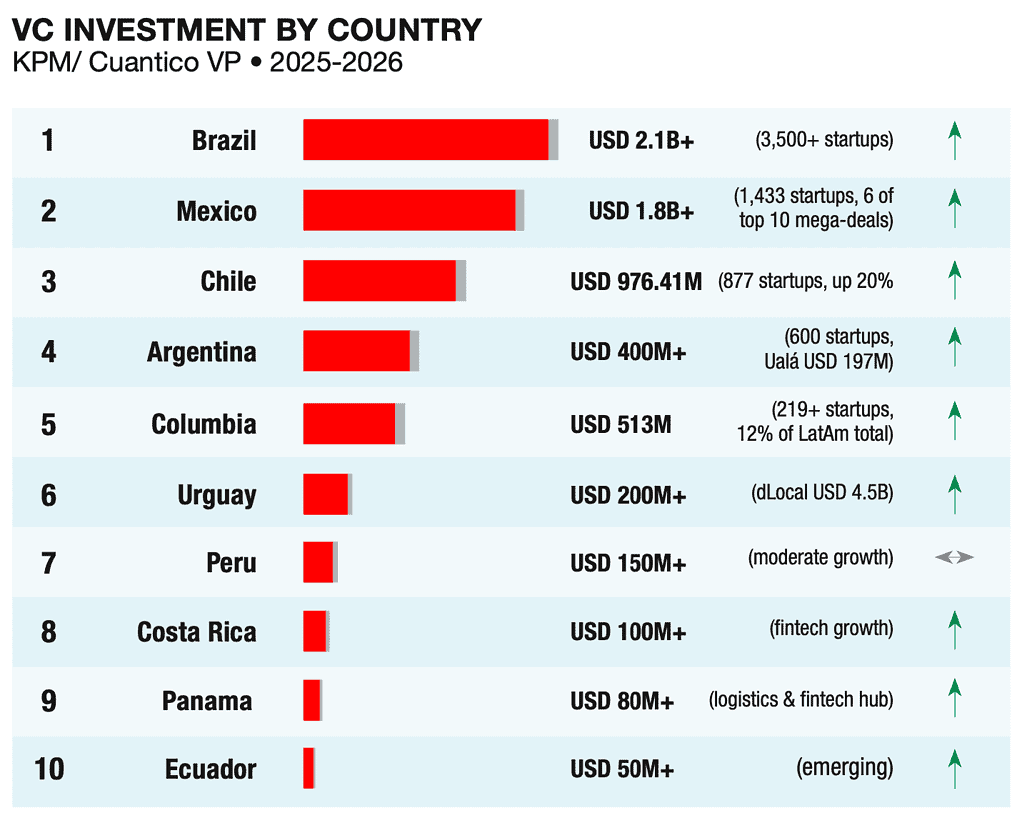
Source: KPMG, Cuantico VP, StartupBlink • 2025-2026)
From Sandboxes to Standards
Colombia’s instant payment system, Bre-B, was launched by the Banco de la República last October. Bre-B aims to connect traditional banks, fintechs, and digital wallets through a single public digital platform. By August, it had recorded 1.51 billion transactions and more than 35 million users; 171 financial institutions had integrated by then. Those numbers could be even better if the bank had been less passive and restrictive over the past couple of years, according to Leiva.

Bitso
That said, Colombia’s fintech sector is at a crossroads, with rapid uptake butting up against a new regulatory framework. The Banco de la República and the Superintendencia Financiera de Colombia have instituted new regulations to protect consumers, ensure financial stability, and combat money laundering. Fintechs now have to adhere to the same standards as traditional banks, including rigorous know-your-customer protocols.
“I am not convinced that excessive regulation is the ideal mechanism for the financial services users,” says de Los Heros. “But in regions like Latin America, where there’s not always advanced banking options, it can be that regulation brings positive effects, at least because it protects users against possible abusive practices by stock markets, financial entities, or virtual service providers.”
Peru’s attempts to integrate banks, fintechs, and users on a single inter-platform payment system under one legislative umbrella are also attracting attention. The Andean nation has “a high index of unbanked people,” de Los Heros said, and in theory, having a unified system with a single platform could speed mass adoption. “We have to see how an interactive interbanking and inter-platform payment system could be adopted region-wise. It’s more important to have an interbanking system that works than an inter-platform system that is not adopted.”
In the medium term, both de Los Heros and Leiva foresee a maturing market with heightened regulatory scrutiny. More regulation does not necessarily mean a more restrictive environment in a region where institutions have been praised for creativity and dynamism, and where central banks responded to the Covid-19 pandemic in ways that avoided the inflationary pressures other countries endured.
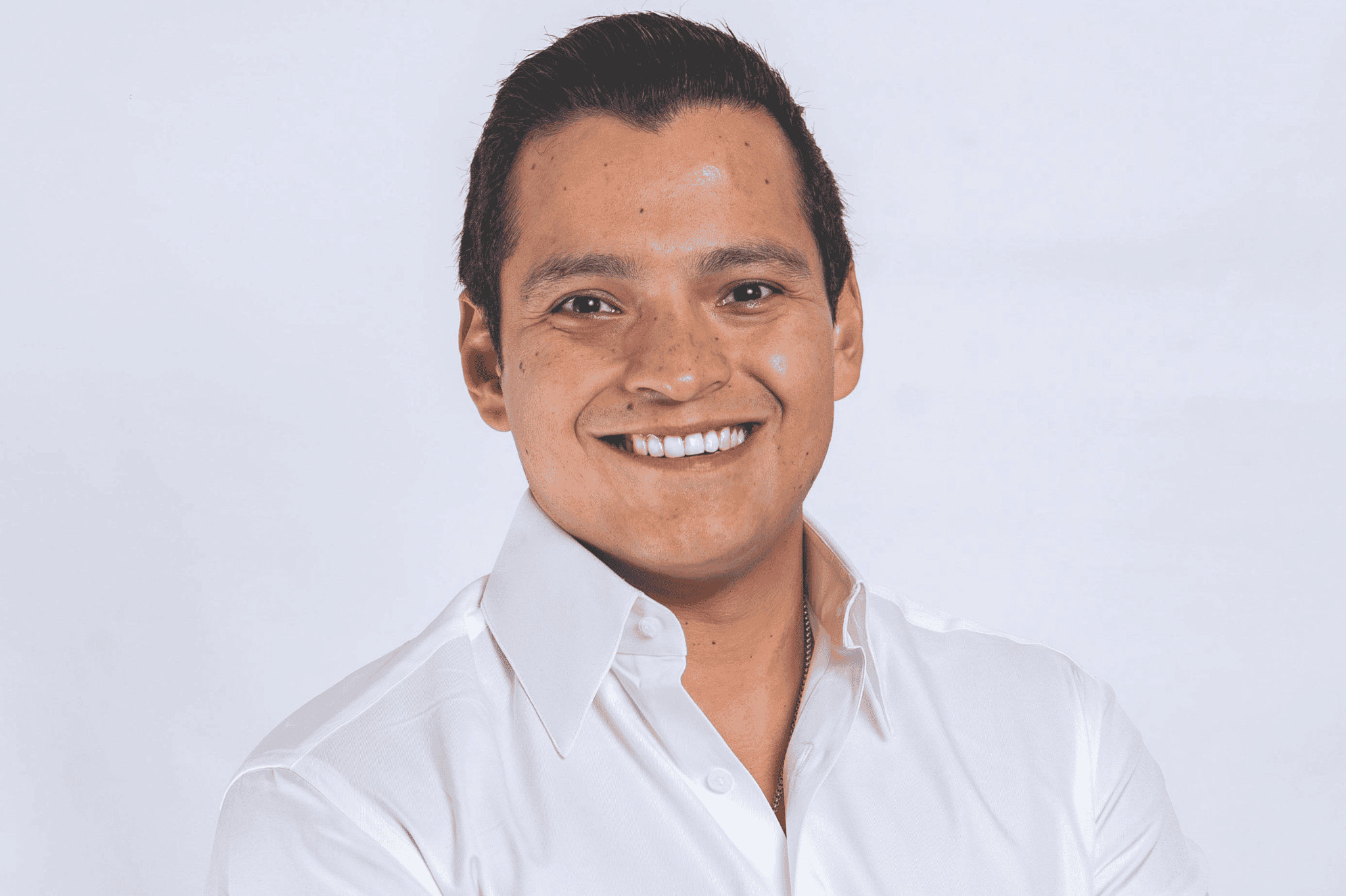
Torres Legal
“Powerhouses like Nubank or Mercado Libre didn’t exist 25 years ago, so creating regulation for them is complex,” Leiva said. “I firmly believe the big actors like Nubank will move into other regions. They will go global. We’re going to have to implement new regulatory mechanisms, like allowing a banking license to be used across Central America.”
Latin America can build on its reputation for forward thinking and dynamic legislation, he added.
“Through new mechanisms of payment, like Pix, [Brazil, Mexico, and El Salvador] are the three regional pillars of legislative development,” he said. “Very interesting things are coming, and you could say Latin America is the lungs of fintech laws globally.”
Not everything is rosy, and de Los Heros is particularly concerned with the implications of AI and how to regulate it.
“AI causes me to lose sleep,” he said. “I really doubt that the industry has all the controls needed. To protect financial systems and society against the unmeasured use of AI and its consequences, we might have to start from zero to establish a lot of norms that we haven’t even thought about yet.”
Nic Wirtz is a contributing writer based in Guatemala.