Zak Bagans Buys Secret Las Vegas Underground Bunker for $4.55M
A Cold War-era bunker hidden away just minutes from the glitz and glamour of the popular Las Vegas Strip has finally been sold to paranormal enthusiast Zak Bagans.
The host and executive producer of Discovery’s “Ghost Adventures” shelled out $4,550,000 earlier this week for the iconic five-bedroom Nevada residence known as the Underground House. Bagans was represented by Rob Jensen, owner of Rob Jensen Company.
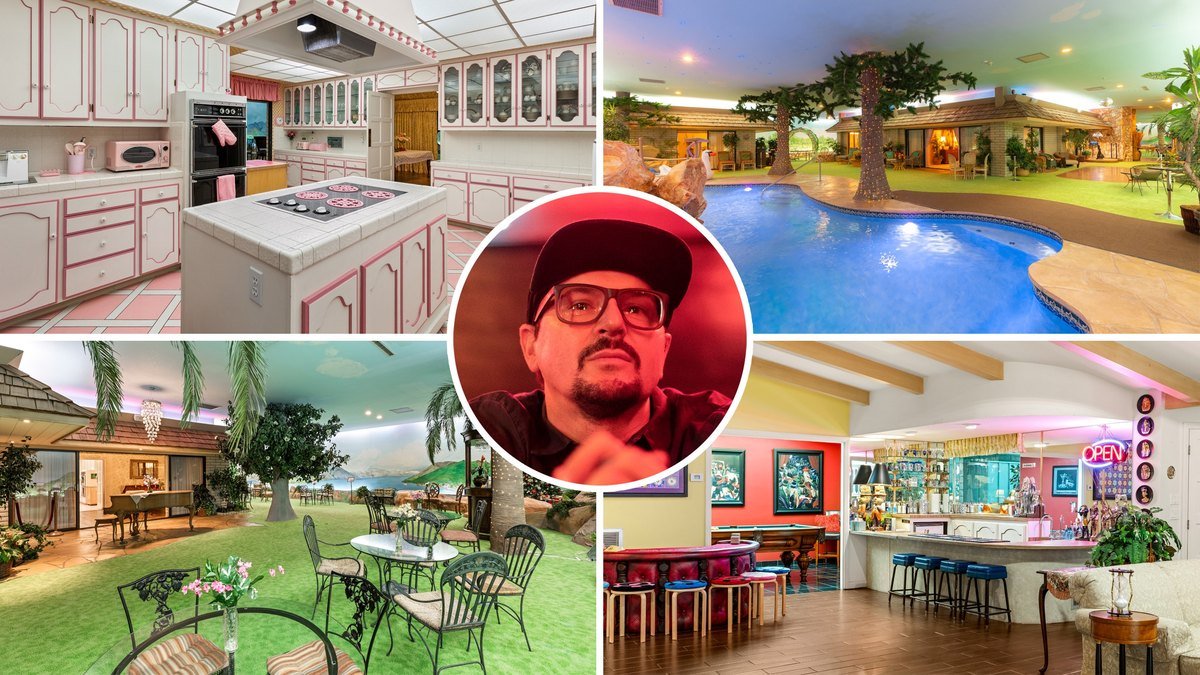
From the street, no one would suspect that hidden 26-feet below the above-ground house lies an otherworldly subterranean space complete with an indoor pool, putting green, theater, dance floor, bar, and programmable faux sky.
The paranormal investigator plans to preserve the property and eventually give the public access to the unusual dwelling when it is transformed into a museum.
In a recent Instagram post, Bagans announced the sale, saying, “I’m excited to build another museum. A subterranean world, buried under Las Vegas, with mysteries I wasn’t expecting to find. This place has been calling to me for many years, and now I know why. Coming soon.”
Bagans is no stranger to being a museum proprietor. He has been operating Zak Bagans’ The Haunted Museum in downtown Las Vegas for nearly a decade, where ghost hunters and adventure seekers come to explore 30 rooms of haunted artifacts while listening to hauntings of paranormal activity.
The 16,936-square-foot residence last traded hands in March 2014, when the Stasis Foundation & Charitable Trust purchased it for $1,150,000.
In 2019, the trust listed it for a jaw-dropping $18 million. With no takers, it was relisted with a dramatically reduced asking price of just $5,900,000.
“A few different things played into those swings. We’ve continued to make repairs and small upgrades over time, and between the low price point and the high price point, we also had a change in the board of directors, which influenced how the property was being valued,” J. Dean Barry, executive director of the Stasis Foundation & Charitable Trust, told Realtor.com back in September 2025.
“In addition, the above-ground portion of the estate has had to undergo county-required modifications, and along the way, we secured a special-use permit. So, while the property is still technically zoned residential, it’s really more of a hybrid property now with the ability to support a range of business-related activities.”
The dwelling was on the market for $5,900,000 when it sold to Bagans.
“There was certainly some flexibility and motivation on both sides to come to that number,” said listing agent Holly Erker, of IS Luxury. “We are thankful the buyer owns another museum and is familiar with the mechanics and operation of running a museum. He had a team in place who knew what they were going to need. It was all about finding the right buyer at the right time.”
The below-grade residence was originally built in 1978 by businessman Jerry Henderson and architect Jay Swayze. Henderson lived in the home with his wife, Mary Henderson, until he died in 1983.
After his death, his wife did not want to live solely in the subterranean space, so she constructed a smaller, more traditional home atop of the time capsule, where she lived until her death in 1989.
The Cold War-era concept of an “Atomitat,” or atomic habitat, was custom-created for everyday living and recreation and designed to mimic living above ground.
Found throughout the lower level are landscape murals with outdoor images, a sky-themed ceiling with painted clouds and stars, sculpted trees concealing structural support columns, a water fountain, and green carpeting designed to look like grass.
The sellers used the lower-level space for special events while a house manager stayed upstairs.
Erker said the property went viral when it originally hit the market, so they knew they had to be very selective about who actually toured the property.
“It was a three-hour commitment to show the home,” she noted. “People ask questions and we wanted to give the history of the home. It didn’t seem right to show the home without giving the history. We kept it limited to very qualified and serious buyers.”
Over the years, Erker said potential buyers were looking for a variety of uses for the property.
“One was looking to reside in it as a primary residence,” she said. “They were looking for something fun, safe, and discreet. Another fell in love with the home’s story and wanted to make it into a historical museum.
“Zak saw the potential of the house and was incredibly excited about the history. Ultimately, everyone is so happy and so excited that the home’s history is going to be protected and it will be a public space for people to enjoy. I think the home deserves that.”
Get real estate news in your inbox