Why is Chicago still ‘overbanked’?

- Key insight: Bank consolidation has moved at a slow pace in Chicago.
- What’s at stake: When a market is “overbanked,” bank profits can lag, according to investors.
- Expert quote: “Right now, there’s just not a lot of buyers to talk to.” — Bill Burgess, co-head of investment banking at Piper Sandler
Processing Content
Investors have long lamented the slow pace of bank consolidation in Chicago. Is a deal unveiled this week a harbinger of change or the exception that proves the rule?
Byline Bancorp, the $9.9 billion-asset owner of Byline Bank, announced Tuesday that it’s reached a deal to acquire Illinois State Bancorp, the $617 million-asset holding company of First Nations Bank and the Bank of Bourbonnais. Both firms are based in Chicago.
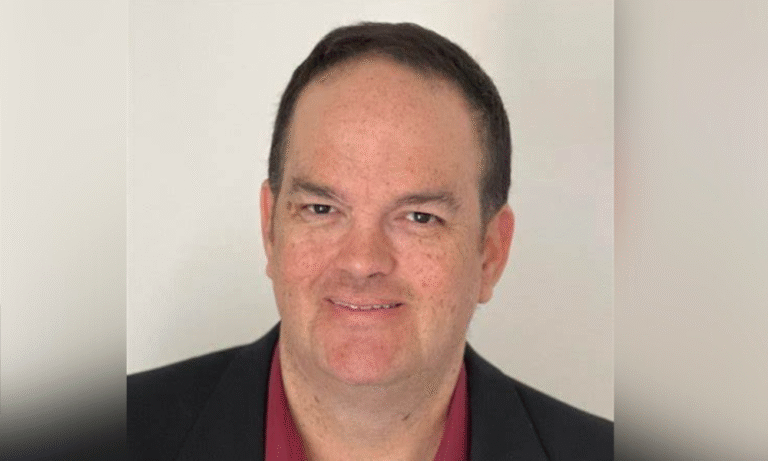
“It’s a small deal, but … they’re showing an ability to consolidate the market,” Bill Burgess, co-head of investment banking at Piper Sandler, told American Banker.
Byline is purchasing Illinois State for about $87.9 million, using a combination of cash and stock. The deal, which is expected to close in the first quarter of 2027, will push Byline over the $10 billion-asset threshold and bring it four more branches in the Chicago area.
“We are pleased to add this high-quality and complementary Chicago-area franchise, which enhances our presence in attractive markets, expands our customer reach, and adds a stable core deposit base,” Byline CEO Alberto Paracchini said in a statement.
The deal is notable because, in the view of many bank investors, the Windy City suffers from a glut of tiny community banks and a shortage of bigger banks willing to buy them. So in spite of what might look like a tremendous opportunity for M&A activity, consolidation has been slow.
The problem, bank investors
“Right now, there’s just not a lot of buyers to talk to,” Burgess said. “There were more, it felt like, in 2016. It was bad then, and it’s still bad now.”
The predicament dates back to the mid-20th Century, when laws against branch banking in Chicago were still in effect. From the 1960s through the 1990s, those laws were gradually repealed, but their legacy is a multitude of small, privately owned banks.
“There’s a lot of billion-dollar banks in Chicago,” Burgess said. “I don’t even cover them all because there’s just so many of them.”
That’s not to say there’s been no consolidation at all. Over the past decade, at least 10 Chicago-based banks have been acquired, and four of the city’s banks have failed.
But at this point, industry insiders say, the most compelling deals have already been done. The bigger fish in the Chicago region, like Wintrust Financial , have grown bigger, and no longer have much appetite for the remaining minnows.
Jon Winick, CEO of the Chicago bank consulting firm Clark Street Capital, described the issue this way: “Is it worth the brain damage to absorb a bank this size?”
One question, both in Chicago and in numerous other markets is whether being “overbanked”
“From a stock perspective, the implication of more competition is tighter margins and tighter spreads, and so competition can erode at your margins,” said Chris McGratty, an analyst at Keefe, Bruyette & Woods.
But not everyone believes Chicago will remain overbanked forever. Winick, for one, sees some signs of hope for further consolidation — for example, the national regulatory climate is far more welcoming of bank mergers than it used to be.
“There’s definitely a sense of trying to get things in while you have a friendly administration, and my guess is that’ll accelerate as we get to the end of Trump’s term,” Winick said.
There are some buyers in Chicago. . Byline, in particular, has been very active — since 2011, the bank has acquired 11 lenders in the Chicago area, including five just in the past decade. The problem, according to analysts who’d like to see more consolidation, is that there aren’t many other local banks that are pursuing a similar strategy.
In 2026, some out-of-state acquirers stepped onto the scene. In January, First Financial Bancorp, which is based in Cincinnati, completed its
“There are some banks that are getting a bit more aggressive with respect to M&A,” Burgess said. “So I think it’s going to get better … but I’m a Red Sox fan. I’m always hopeful.”