Former IRS commissioner teams with AICPA to form AI tax risk group
- Key Insight: A framework may serve better that standards or regulations with rapidly evolving tax AI tools.
- What’s at Stake: Accounting firms risk repeating their competitors’ AI errors if they refuse to share lessons.
- Expert Quote: “There was nothing to tether [due diligence] to.” — Danny Werfel, former IRS Commissioner
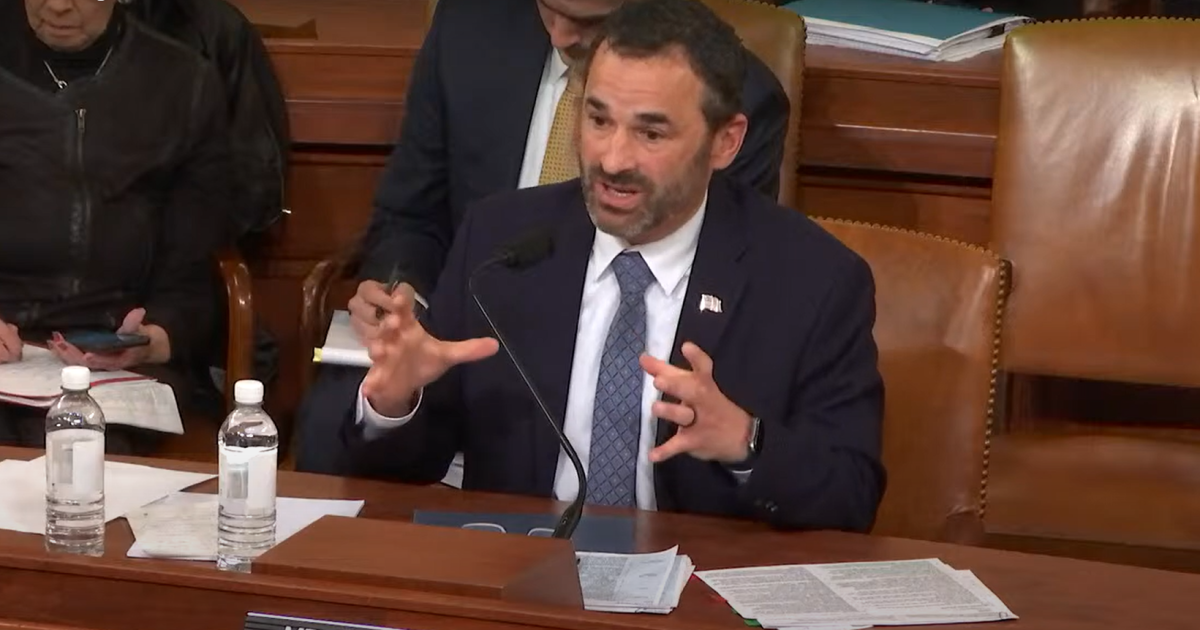
Former IRS Commissioner Danny Werfel and the AICPA are teaming up to form a new working group, the Council on AI Risk in Tax, or CART, that brings together leaders from accounting, law, technology, government and academia to advance responsible AI use in both tax administration and practice.
Processing Content
One of the chief ways it will do so is through refining the
In an interview, he explained that he made the framework because, prior to this, there was no way to systematically evaluate AI risk in tax, and so if someone wanted to actually perform due diligence in this realm, “There was nothing to tether to.”
“‘We’re really excited about this AI deployment, but how do I tell my governor or my CEO or my shareholders about the due diligence I did before I moved forward?’ And so now they can say ‘Look, at least there’s this framework that’s out there that I can say I followed that was published in ‘The Tax Advisor’ by the former commissioner, worked on and re-released after review by the CART.’ It gives a home base, and that’s important in accounting because you can’t always rely on Congress or the IRS or the standard-setters to have all the work product you need. Sometimes you need more,” he said.
The framework is thought of less like an IRS regulation or FASB standard and more like the numerous sustainability frameworks that populate the accounting landscape, something that organizations choose to adopt because it serves their needs versus having to comply with a rule. Melanie Lauridsen, vice president of tax policy and advocacy for the AICPA, said in the interview that they decided the rapid pace of AI development made lasting standards impractical anyway, at least in the current moment.
“Right now, AI is ever-evolving. Coming out with a standard as it keeps changing [when] we don’t even know what it’s going to look like in reality for people a few months from now, I think it would be remiss,” she said.
But while the risk framework is not a standard, Werfel said it might become a useful template for a future standard promulgated by someone else, as by the time someone decides some sort of mandate has become necessary, the CART will already have a wealth of experience it can contribute to the effort.
“I hope that when people across the tax community look at what the CART produces, they say, ‘This is a best practice. We’re gonna gravitate like a magnet to these publications because they represent well-thought-out, diverse perspectives and balanced perspectives of the right, responsible way to do things, not the required way to do things.’ Maybe at some point, Congress, the IRS, and other standard-setters will say, ‘No, no, we want a mandate.’ And if they do, the CART will be a great tool for those standard-setters because we can help facilitate input across the community on that,” he said.
Werfel said people should expect the second version of the framework in about six months, and from there the plan is to update it annually to address new and emerging risks as well as further community input.
A culture of collaboration
The other way they intend to advance responsible AI use is through creating a space for collaboration and sharing where stakeholders can exchange lessons learned, emerging practices and practical approaches to responsible AI use in tax as well as identify additional tools, guidance and other resources that can help organizations manage AI-related risks and promote responsible innovation.
Much of this, said Lauridsen, comes down to practical guidance people can actually use.
“When we look at the tools, it really is [about] guidance to help people think through the process of using AI. … I think there needs to be responsible thought around it, and how it gets implemented, how it gets used. And so I think a lot of this comes down to practice guides and how you can do this responsibly, thoughtfully, and carefully into the practicalities of how we’re going to use it,” she said.
While ostensibly a simple goal, Werfel believes that doing this effectively will require a rather large culture change within the tax community, one he intends to enact through the CART. In order to actually have substantive discussions and be a true information resource, people need to let go of what he has perceived to be a defensive mindset within the industry that discourages sharing. In order to create a true intellectual commons around AI risk in taxation, people need to at least loosen a stance more concerned with protecting their own intellectual property than protecting the tax community as a whole.
“The idea is we have the opportunity now to create a culture. Because it is so new, we can decide as a community what culture we want from day one on AI risk. Do we want to start from an area where we are treating AI innovation as, ‘We developed it, we’re not going to share it because it is our innovation?’ Or are we going to treat AI risk differently, and put it at the other end of the spectrum where it’s to our collective benefit to have a shared environment?” he said.
As a former IRS commissioner, he has noticed that people are perfectly willing to let this go when critiquing the IRS (which he said he welcomed) but become much more hesitant to do so when dealing with industry peers. The competitive dimension thus prevents information sharing that would be helpful to everyone, including themselves as members of the tax community. He said he wants the CART to be the voice suggesting that they start on the cooperative end of the spectrum when it comes to AI risk, and to err on the side of sharing and collaboration.
“If [a firm] were deploying AI and ran into an issue, there’s two paths. They can say, ‘For our own competitive advantage, we’re not going to share this issue. Let other accounting firms drive into the same tree.’ Or we can be, ‘Is this something we want to share?’ It’s a different mindset of how you think about the competitive marketplace. That’s the ambition,” he said.
Safety first
The CART will meet four times a year, though there might also be working groups within it that will meet more frequently. Beyond the AICPA, participating organizations include the National Association of Enrolled Agents, the Federation of Tax Administrators and several others. Werfel said the overall goal was to get a good cross section of the tax community, and so they aimed more for organizational versus individual coverage.
He said that over the next five years, ideally, the framework will have been updated several times and will have become the go-to risk framework for the tax community. He’d also like to see the CART do things like publish whitepapers, send members to conferences, and develop educational materials. He suggested it might also, eventually, start putting out newsletters about AI risk and practice alerts about emerging issues.
But if nothing else comes of it, he said he would like to impress upon the tax community two major ideas. One is that any AI tool should be deployed incrementally. He noted that, ideally, teams should be able to learn as they go and get a feel for the risks before proceeding to the next step. While this might not immediately deliver the massive growth vendors may brag about, he said incremental gains can still have outsize results.
“By taking a smaller segment, what you do is still get that 25% efficiency, which is really exciting, you went from four weeks to three weeks [for a process], nothing to sneeze at, right? But in taking that smaller piece, you can study the risks. You can bring the humans along. You can figure out how you need to retrain and reskill the workforce to work side by side responsibly with the AI,” he said.
The other major idea is the importance of the human in the loop. Cutting out the human might sound tempting to certain executives, but they’re taking an extremely risky step by even trying.
“The only way AI can be responsibly deployed is in concert with human subject matter experts that understand the domain. Their skillsets and roles will evolve based on powerful new AI tools, but they won’t go away,” he said. “I think the biggest risk we have is moving too quickly, and I think the biggest risk we have is assuming that you can subtract out the humans from your business process. … I’m [also] worried about hallucination. I’m worried about [scope] creep. I’m worried about surveillance perception, to name a few. But the biggest takeaway is slow your roll and don’t get rid of the humans,” he said.
Introductory bullet points created by AI with editorial review.