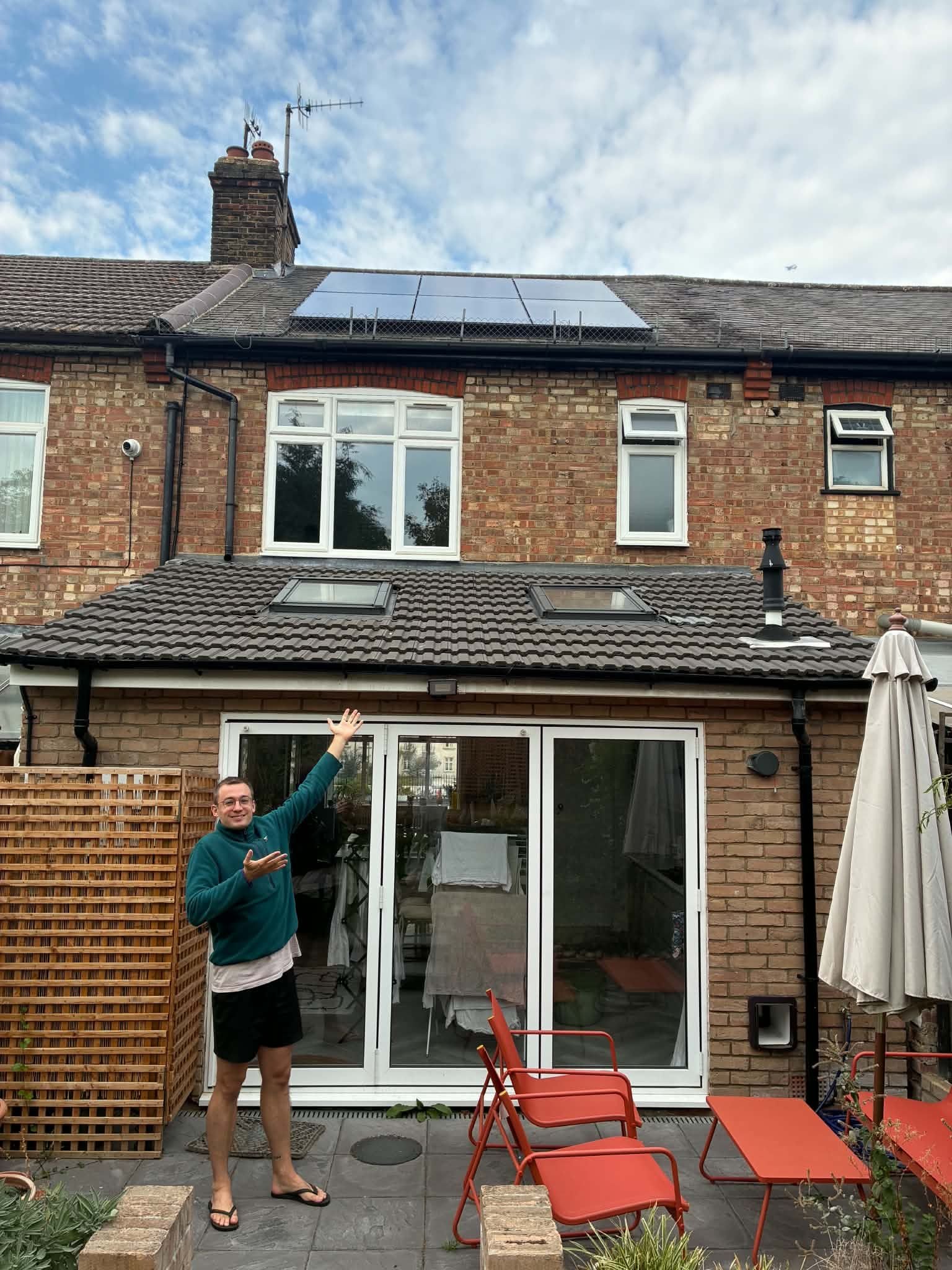
It’s been a year since my partner and I had solar panels installed for free on the roof of our home.
In that time, I’ve learned a few unexpected things about the energy-saving tech, both good and bad.
The panels were installed at the start of October 2025 after our local council got in touch to tell us we were eligible through the Warm Homes: Local Grant.
Try 6 free issues of MoneyWeek today
Get unparalleled financial insight, analysis and expert opinion you can profit from.
Start your trial
Sign up for MoneyWeek’s free twice-daily newsletter.
Join more than 165,000 subscribers and keep yourself informed with latest financial news, insights and expert analysis to help you understand what really matters when it comes to your finances.
Join more than 165,000 subscribers and keep yourself informed with latest financial news, insights and expert analysis to help you understand what really matters when it comes to your finances.
Through the scheme, qualifying households can get carbon-reducing upgrades made to their home including insulation, heat pumps and solar panels.
Latest Videos FromMoneyWeek
The scheme is open to homes in England. Typically, the home must be privately owned by yourself or a landlord and have an Energy Performance Certificate (EPC) of D, E, F or G.
Household income must normally be £36,000 a year or under too, although you could still qualify if you earn more than this and live in a specific postcode or are on benefits.
My partner and I had the panels installed for free because the EPC rating of our home was D and we live in an eligible postcode.
Here’s what I’ve learned about solar panels after one year with them.
We’re virtually electricity self-sufficient over the summer months
When looking at electricity usage alone, the solar panels have enabled us to be virtually self-sufficient over the warmer, sunnier months.
From April to September this year we’ve had to pay less than £3 for our electricity per month, on top of our electricity standing charge.
We are paying more for consumption over the colder, gloomier months. In January, we paid £32, in February £25 and in March £12.
We’ve been able to sell electricity back to the grid
Part of the reason our energy bills have been so much lower is that we’re now selling power back to the grid when the solar panels generate more power than we’re using.
We could do this because we had a battery installed which, when full, offloads any excess electricity to the grid which we are paid for.
In total, we’ve sold £197 of power since January this year. Our best months were July and August where we earned £41 and £32, respectively.
We’ve got to see real-life examples of the environmental impact the solar panels are having
We’ve installed a smartphone app that tracks how many kilowatts of electricity the solar panels produce each day, as well as how many kilowatts we consume.
It also tells us when electricity is discharged from the battery and when energy from the panels is used to charge it up.
One particularly impactful feature of the app is the section which shows us how many kilograms of carbon dioxide and how many litres of oil we’ve saved since having the solar panels installed.
In total we’ve saved more than 2,700 kilograms of carbon dioxide and more than 337 litres of oil. It’s reassuring and empowering to see the positive difference we’ve made to the environment quantified.
The battery can be noisy and looks ugly
Not everything about the solar panels has been positive. The battery, while allowing us to store excess electricity, can be noisy at times.
During the summer months, it will produce a low humming noise as the internal fan tries to keep the unit cool.
It’s also not the prettiest thing to look at bolted onto the side of your house, although we have managed to get around this by installing a wooden trellis screen around it.
Would I have installed solar panels if they weren’t free?
The solar panels have driven down our electricity bills and despite the initial logistical hassle of having them installed, they’ve since been extremely low maintenance.
That said, if we’d have had to pay up front, we may have put the money towards paying off some of the mortgage instead.