Trump Wants the U.S. to Be the Crypto Capital of the World. Here’s How That’s Changing Mortgages | Mortgages
Key Takeaways
- A new type of mortgage allows people to pledge their cryptocurrency as collateral for a down payment on a conventional loan.
- The new crypto-backed mortgages mean people must borrow more but don’t need to come up with cash for a home purchase.
- Some U.S. senators worry that crypto-backed mortgages could be risky for both homebuyers and the government.
More than four in 10 people who say it’s getting harder to buy a home point to saving for a down payment as part of the problem, according to the 2024 National Homeownership Market Survey from U.S. Mortgage Insurers. However, if you have a digital wallet full of cryptocurrency, a crypto-backed mortgage may be an answer for you.
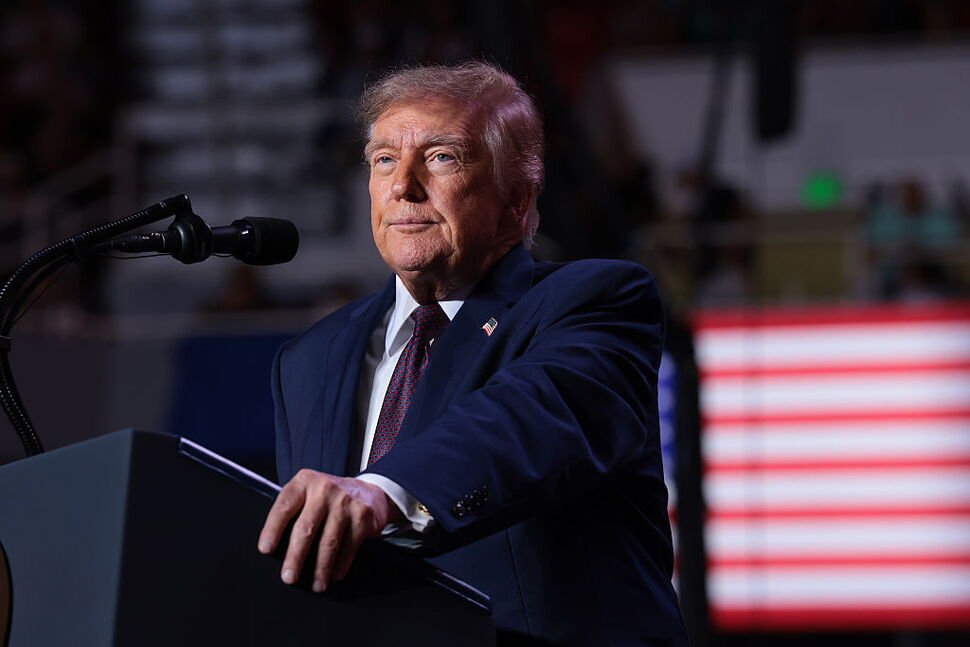
Bill Pulte, director of the Federal Housing Finance Agency, announced in June 2025 that he had instructed Fannie Mae and Freddie Mac to consider cryptocurrency as an asset when qualifying for a mortgage. On social media site X, Pulte said the move was “in keeping with President Trump’s vision to make the United States the crypto capital of the world.”
A year later, Fannie Mae purchased the first crypto-backed conventional mortgage offered through a partnership between lender Better and crypto platform Coinbase. It isn’t the only way to purchase a home with cryptocurrency, but it does mark the first foray of a government-sponsored enterprise into the world of crypto-backed home loans.
3 Ways to Buy a Home With Crypto
Only 9% of U.S. adults hold cryptocurrency, according to a June 2026 Gallup survey. Depending on how much they own, these people can use their crypto in three ways to buy a home.
Sell Crypto and Buy With Cash
The easiest way to buy a house with crypto is to liquidate the investment – i.e., sell it – and then use the cash to buy a home. Bill Dallas, chairman of strategic advisory firm Dallas Capital, says he has about a half dozen neighbors who bought their homes that way.
This approach doesn’t appeal to everyone, though. “Most people who hold crypto want to hold crypto as an investment,” says Ziggy Jonsson, chief technology officer for Better. For these people, there are two other options to use crypto to buy a home.
Use Crypto as an Underwriting Asset
For those who want to keep their crypto holdings, they could connect with a nonqualified mortgage lender based on their crypto assets. This can be a good option for someone who doesn’t have sufficient income or traditional savings to qualify for a conventional loan.
“It’s not like a typical mortgage,” says Houtan Hormozian, co-founder of Crestico, a real estate brokerage and mortgage lending firm that assists with these types of loans. As a nonqualified mortgage, “It’s a creative way of financing for those with a large amount of crypto holdings,”
he says.
Since these loans are riskier for lenders, they may require a 30 to 40% down payment. The interest rate is often a half percentage point higher than what is assessed on conventional loans.
“The biggest risk is that these loans are not guaranteed by (the government) so it’s purely at the leisure of the investor,” Hormozian says. Borrowers may need to provide statements from their crypto accounts every six to 12 months to show they still have adequate holdings, and if an investor ends their financing program, the borrower will need to figure out how to pay off the loan balance quickly.
Pledge Crypto as Collateral
The third and newest option for a crypto-backed mortgage is to pledge crypto as collateral. This is the approach used by Better. Crypto is used as collateral for a down payment loan, allowing someone to qualify for a conventional mortgage without putting any cash down.
“I don’t think it’s going to apply to a large number of borrowers,” Dallas says.
One reason is that these loans are “overcollateralized,” requiring crypto holdings that equal 250% of the down payment amount. Plus, the crypto must be set aside in a custodial account, which moves it out of the owner’s control, although any gains to the value of the account still belong to the borrower.
Compare Top Mortgage Lenders
Advertiser Disclosure
No Margin Calls with Newest Crypto-Backed Mortgage
The Better crypto-backed mortgage comprises two loans. One is a conventional mortgage backed by Fannie Mae. The other is a down payment loan which uses cryptocurrency as collateral. Both loans have the same interest rate and can have the same maturity dates, according to Jonsson.
The mortgage is designed to help homebuyers who don’t have cash for a down payment but do have significant crypto holdings. It also removes some of the risk associated with nonqualified mortgages.
“We do not feel this is a risky product,” Jonsson says. “There are no margin calls.” In other words, if the value of bitcoin plummets, you won’t be required to come up with more cash to maintain your loan. That’s because the down payment loan is secured by a borrower’s house as well as their cryptocurrency.
Better says pledging crypto for the down payment helps keep a borrower’s cash liquid. With a 250% collateralization ratio, someone would need to pledge $100,000 in cryptocurrency to qualify for a $40,000 down payment, as an example. Pledged cryptocurrency is held in a custodial account maintained by Better on the Coinbase platform and is released back to the borrower once the down payment loan is paid off.
The one potential downside, according to Jonsson, is that a person will be borrowing more with this arrangement. That’s because they will be taking out a loan for a down payment instead of paying that amount out of cash. However, he notes that the payments on this loan are fixed and predictable.
Some Senators Aren’t Happy
Fannie Mae has agreed to purchase crypto-backed mortgages such as those offered by Better, but not everyone thinks it’s a good idea. A group of seven U.S. senators, led by Democratic Sen. Dick Durbin of Illinois, sent a letter to Pulte in April expressing their concerns.
“(T)hese mortgages and their risks do not belong in the trillion-dollar, taxpayer-backed books of Fannie Mae and Freddie Mac, and the federal government should not encourage using risky assets in mortgage underwriting standards,” the senators wrote. They went on to say that homeowners could find themselves underwater on loans if the value of bitcoin should drop, and allowing Fannie Mae and Freddie Mac to back these loans could be akin to the “reckless pattern” of lending that led to the 2008 housing crisis.
The senators asked questions about what research the FHFA did prior to its approval of crypto-backed mortgages and how much more in interest borrowers might pay on these loans. If Pulte responded, his letter has not been made public.
Mortgage Experts: Don’t Stop With Crypto
Mortgage experts don’t necessarily share the senators’ concerns, with some hoping the government might eventually allow other assets to be used in the same way as cryptocurrency.
“I think Fannie and Freddie are way behind the trends in the world where people have other assets to pledge,” Dallas says.
He calls their underwriting guidelines “old and passé” and would like to see people be able to use stocks, bonds and other investments as pledged collateral for a home. That would allow someone to keep their assets while also using them to qualify for a mortgage.
“If you’d have asked me 10 years ago, I would have said no way it’s a thing,” Hormozian says of crypto-backed mortgages. And yet, here they are. That could mean that pledging other assets for a down payment on a conventional loan may not be a farfetched idea.