UPI MDR Charges: Will newly introduced fees impact your Diwali, Dhanteras shopping bills?
With the festive season approaching, consumers making high-value purchases through UPI may be wondering whether the newly introduced merchant discount rate (MDR) will make their shopping more expensive. The new MDR framework for select UPI person-to-merchant (P2M) transactions takes effect from 15 October 2026, with a 0.4% MDR on transactions above ₹2,000 and a cap of ₹300 for transactions of ₹75,000 and above.
However, consumers will not have to pay this MDR. The Department of Financial Services (DFS), under the finance ministry, has explicitly said that UPI services will continue to be free for consumers. Merchants are also not permitted to pass the MDR on to buyers, meaning the customer should continue to pay the posted price of the product or service.
What is changing from 15 October?
The new framework introduces an MDR of 0.4% on UPI P2M transactions above ₹2,000. For transactions of ₹75,000 and above, the MDR is capped at ₹300 per transaction. The MDR is paid by the merchant within the UPI payment ecosystem and is distributed among ecosystem participants.
Transactions of up to ₹2,000 will not be affected. According to the DFS FAQ, such small-value P2M transactions account for more than 95% of the total volume of UPI P2M transactions. Small merchants covered under the P2PM framework will also continue to have zero MDR.
For example, if a customer buys a product worth ₹50,000 and pays through UPI, the applicable MDR at 0.4% would be ₹200. But that ₹200 is the merchant-side MDR. The customer’s UPI payment remains ₹50,000, assuming there are no other charges unrelated to MDR. For a ₹1 lakh transaction, the MDR would be capped at ₹300 rather than 0.4% of ₹1 lakh, which would otherwise be ₹400.
Will your Diwali or Dhanteras bill become more expensive?
Not because of UPI MDR.
The government FAQ specifically states that merchants cannot pass the MDR on to customers while accepting UPI payments. It says consumers will pay only the posted price for goods and services.
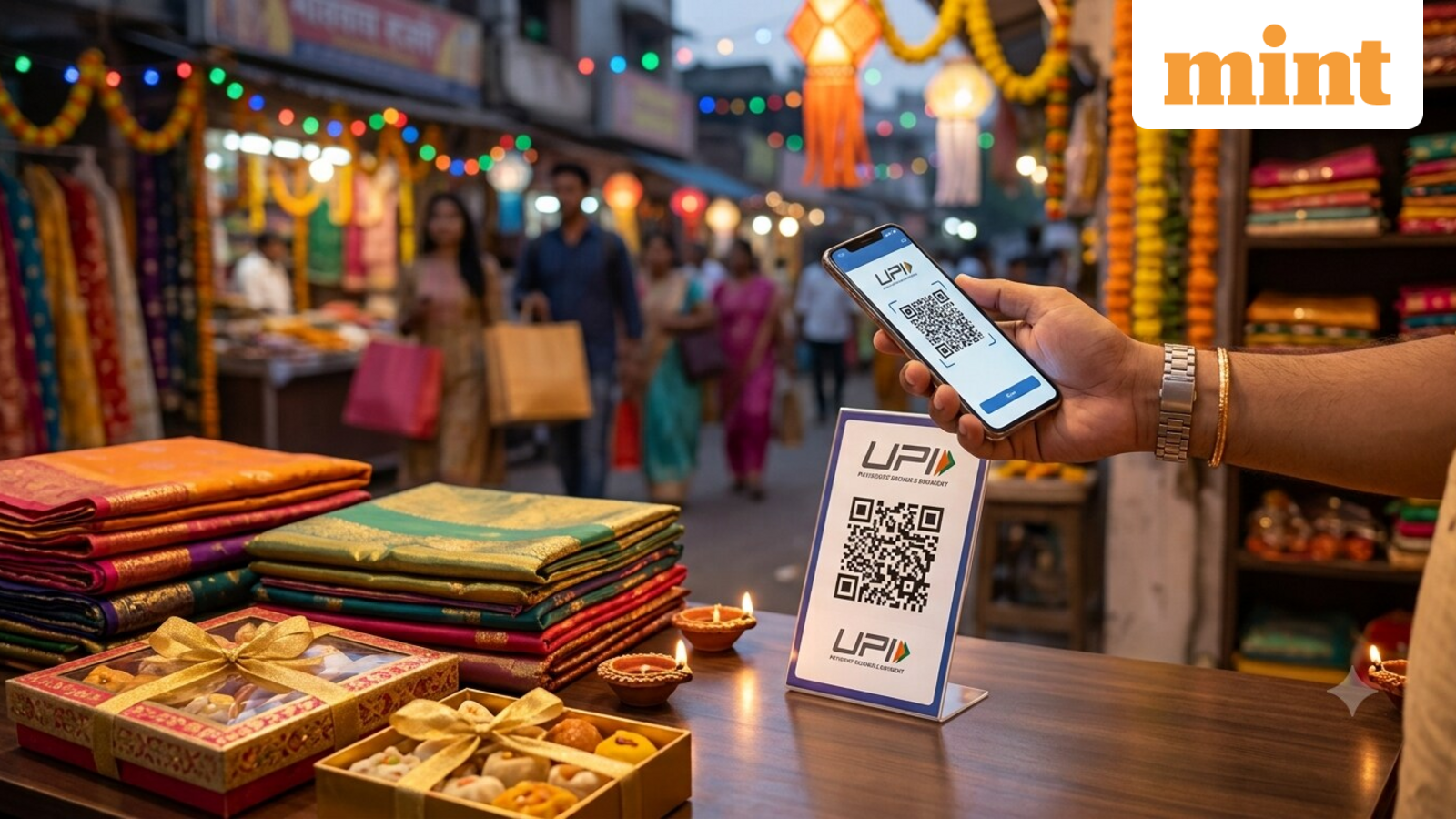
This is particularly relevant for Dhanteras and Diwali purchases, when consumers may make larger UPI payments for jewellery, electronics, appliances and other goods. A transaction above ₹2,000 does not mean the customer will be charged an additional 0.4%.
The distinction is between the payment made by the consumer and the cost borne by the merchant for accepting that payment. The new MDR changes the latter, not the former.
The DFS FAQ also makes clear that there will be no platform fee or other charge imposed by UPI app providers on UPI payments. Person-to-person transfers will remain free as well.
What about small shops and local vendors?
Small merchants covered under the P2PM framework will continue to have zero MDR. The DFS FAQ says this framework covers small vendors receiving up to ₹1 lakh a month through UPI QR directly into their accounts. A payment above ₹2,000 does not automatically make such an exempted small merchant liable for MDR.
The government has also said that the new MDR framework is intended to support the long-term sustainability of the UPI ecosystem, including investments in infrastructure, cybersecurity, innovation and customer service.
For consumers, therefore, the key point ahead of the festive shopping season is straightforward. The introduction of UPI MDR does not mean a new UPI surcharge on your Diwali or Dhanteras purchase. From 15 October, eligible merchants will bear the prescribed MDR, while consumers will continue to use UPI without a transaction charge.