Why higher diesel costs could make groceries and goods more expensive
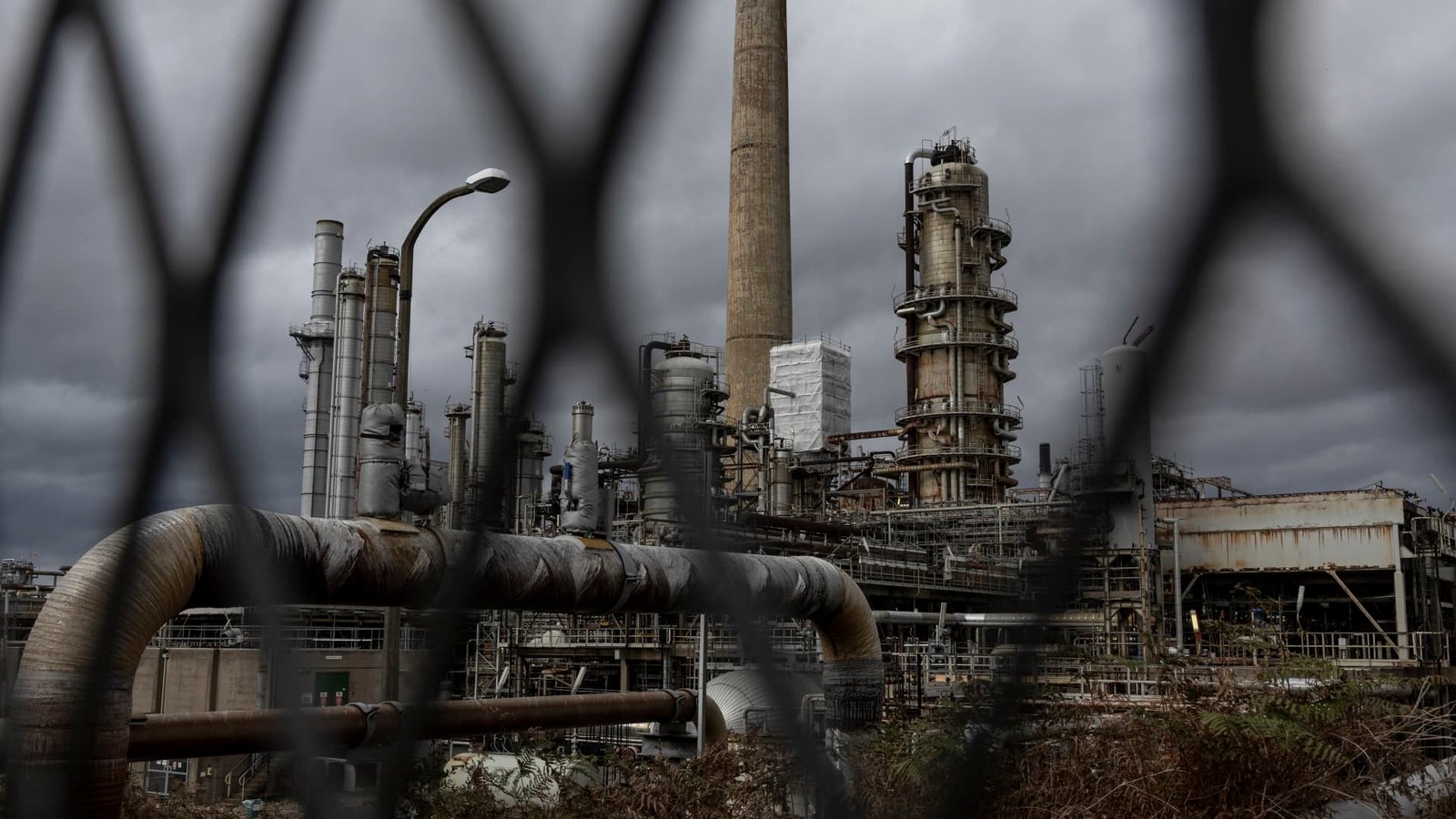
Stanlow Petrol Refinery in Ellesmere Port, England, Oct. 2, 2026.
Ryan Jenkinson | Getty Images News | Getty Images
Consumers are feeling the pinch of higher gasoline prices. But another type of fuel — diesel — also threatens to push up prices at the store in a less visible way, economists said.
Diesel prices have soared 68% since the start of the Iran war, a larger increase than for gasoline prices, according to data from AAA.
That dynamic threatens to push up costs for consumers across store shelves, from food to physical goods, at a time when inflation is already persistently high, economists said.
“It’s going to be another squeeze on the consumer,” said Michael Reid, head of U.S. economics at the Royal Bank of Canada. “And it’s really the lower- and middle-income consumers who feel it disproportionately.”
How much have diesel prices increased?
Average diesel prices rose to $6.32 per gallon on Tuesday from $3.76 per gallon on Feb. 27, the day before the U.S. and Israel bombed Iran, according to AAA.
September marked the first time national average diesel prices ever breached $6 a gallon.
The Group of Seven nations — France, Canada, Germany, Italy, Japan, the United Kingdom and the United States — on Friday agreed to a “substantial release” of diesel stocks to combat rising fuel prices. The Trump administration had been pressuring Europe to release diesel stocks as an alternative to the U.S. imposing an export ban to lower prices.
President Donald Trump signed an executive order Monday temporarily allowing the use of cheaper red-dyed diesel, typically reserved for farm operations, more broadly in an attempt to bring down record-high fuel costs.
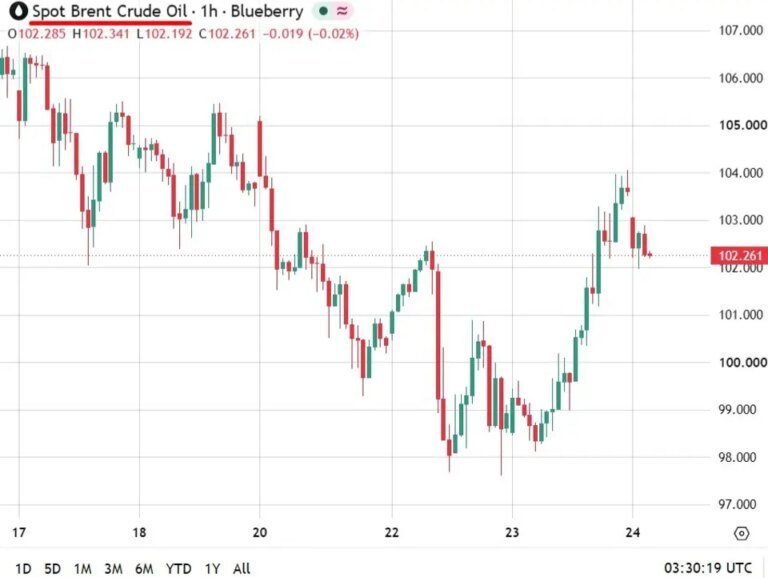
The Iran war is the primary cause for the run-up in prices, economists said. The conflict has curbed oil supply flowing through the Middle East, thereby raising prices, and damaged refining infrastructure in the region that turns oil into products like diesel, gasoline and jet fuel.
Russia’s war in Ukraine has also contributed to higher diesel prices, economists said. Kyiv has bombed Russian refineries, leading Moscow to ban diesel exports.
What is impacted by diesel prices?
Meanwhile, average gas prices were $4.37 per gallon as of Tuesday, up about 47% from $2.98 per gallon on Feb. 27, according to AAA.
Gasoline price movements are more apparent to consumers than those of diesel, since drivers feel them immediately when filling up, economists said. But diesel’s impact is more under the radar.
“Gas is direct: It’s coming right out of my pocket into the gas tank,” said Mark Zandi, chief economist at Moody’s. “Diesel is indirect.”

Diesel is a fuel used by trucks, trains and ships to transport goods to stores. It has many uses beyond transportation fuel, such as in farming and manufacturing, as well as residential and industrial heating, according to a Goldman Sachs Research note on Sept. 21.
Businesses pass those higher diesel costs on to consumers via higher prices at the store, economists said.
“Anything that’s on a truck will be impacted by the higher diesel costs, everything from groceries to whatever you’d get delivered to your front door by UPS or Amazon,” Zandi said.
There’s a common saying that sums it up nicely, he said: “Cars run on gas, the economy runs on diesel.”
Freight costs are accelerating at a rapid pace, comparable to the post-Covid reopening of the economy — and many of those transport methods rely on diesel, Reid said.
Trade routes are largely fixed — meaning businesses can’t reduce distance to save on fuel — so higher diesel input costs will likely be passed along the supply chain, ultimately to the consumer, he said.
How much might prices increase?
Diesel fuel stations at a Shell gas station in Los Angeles, California, on Sept. 28, 2026.
Bloomberg | Bloomberg | Getty Images
Those price impacts take time to filter through to consumers, perhaps anywhere from six months to a year for the full effects to pass through, Zandi said.
As a general rule of thumb, for each $1 increase in the cost of a gallon of diesel, consumers can expect overall inflation to rise by 0.1 percentage points, assuming higher prices are sustained, he said.
Diesel prices are up roughly $2.50 per gallon since the start of the Iran war, which would typically add about 0.25 percentage points to inflation, as measured by the personal consumption expenditures price index, Zandi said.
The PCE index is the Federal Reserve’s preferred inflation gauge. The central bank aims to keep the annual inflation rate around 2% over the long term. It was running at a 3.4% annual pace as of August.
“It may be a drip over the next few months, where goods prices move higher,” said Reid, with the Royal Bank of Canada. “And the consumer won’t feel it as a one-time shift higher. It’ll be ticking up, ticking up, ticking up.”

Goldman Sachs expects higher diesel prices to boost food prices by 0.2 to 0.4 points cumulatively over the coming months, it said in its Sept. 21 note. Diesel prices account for roughly 5% to 10% of input costs, on average, across crops, it said.
“We see risks that food prices could increase further if the increase in diesel prices proves persistent because farmers purchase fuel disproportionately in the fall months during harvest season and often purchase fuel in the winter months to keep in storage,” according to Goldman Sachs.
Goldman forecasts diesel prices will stay high through 2027.
The G7 announcement about a strategic release of diesel likely won’t do much to dilute high prices, Reid said.
“The longer we see elevated oil [and] energy prices due to the conflict in Iran, the greater the risks it bleeds meaningfully into the consumer goods space,” Reid said.