UPI MDR Charges: When do the provisions take effect? How does it compare with international payment systems?
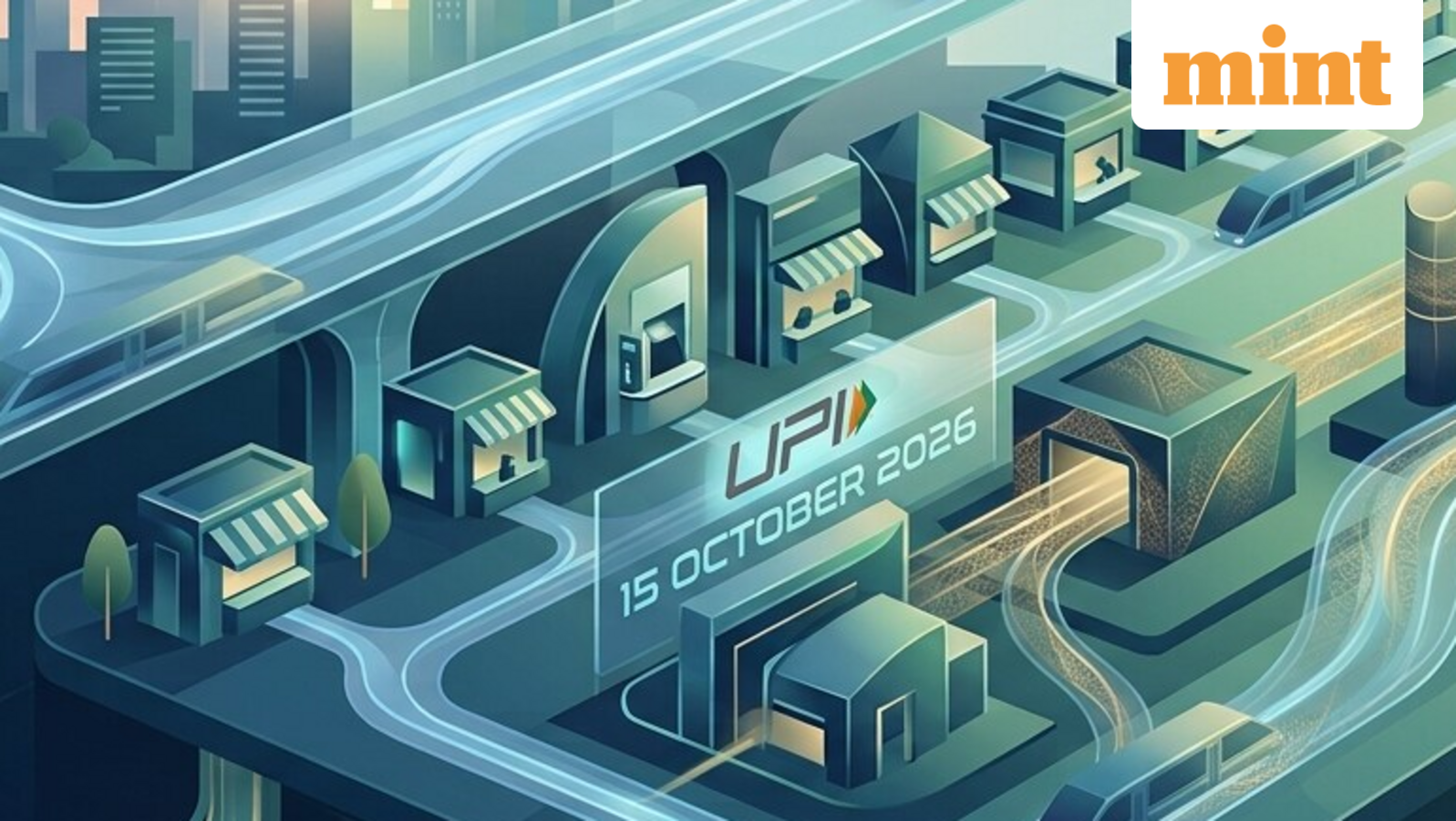
India’s Unified Payments Interface (UPI) will move away from its zero-MDR model for a limited set of merchant transactions from 15 October 2026. A 0.4% Merchant Discount Rate (MDR) will apply to specified person-to-merchant (P2M) UPI payments above ₹2,000, while consumers will continue to make UPI payments without paying MDR.
The government says the framework is intended to support the long-term sustainability of the UPI ecosystem, including investment in infrastructure, innovation, cybersecurity and customer service. MDR is a merchant-side payment ecosystem charge and will be shared among participants such as banks, payment service providers and UPI application providers. It is not a tax collected by the government or NPCI.
Who will pay UPI MDR and who remains exempt
The standard MDR will be 0.4% on specified P2M transactions above ₹2,000. For transactions of ₹75,000 and above, the charge will be capped at ₹300. This means an eligible ₹1 lakh merchant payment will attract ₹300 in MDR instead of ₹400.
The change does not mean consumers will start paying a UPI fee. Person-to-person transactions will remain free regardless of the amount, while merchant payments up to ₹2,000 will continue to have zero MDR. Eligible small merchants will also remain covered by the zero-MDR framework. The government expects about 96% of P2M transactions to remain unaffected.
There are also lower rates for specific categories. Transactions above ₹2,000 in essential and thin-margin sectors such as railways, telecommunications, insurance, fuel and agricultural inputs will attract a flat ₹5 MDR. Payments involving mutual funds, securities, stockbrokers and dealers will attract 0.02%, subject to a ₹300 cap.
When does the new UPI MDR framework take effect?
The final framework will come into effect on 15 October 2026. The Department of Financial Services has said the implementation date gives banks, payment aggregators, fintech applications and businesses time to make the necessary changes to their systems.
The ₹2,000 threshold also does not mean every merchant payment above that amount will automatically attract 0.4%. The applicable treatment depends on the transaction category and the merchant’s classification under the framework.
How does India’s model compare with international payment systems?
India is not alone in having merchant-side charges for digital payments. However, the structure varies significantly across countries.
In Indonesia, Bank Indonesia’s QRIS framework currently gives micro merchants 0% MDR on transactions up to 500,000 rupiah. From 1 October 2026, the 0% threshold was extended to transactions up to 100,000 rupiah for small, medium and large merchants as well.
Malaysia’s DuitNow QR also has merchant transaction fees, although Bank Negara Malaysia says major banks and selected non-bank providers continue to waive these fees for micro and small businesses. Individual customers do not pay an additional charge for using DuitNow QR.
The comparison shows that merchant-side fees are not unusual in digital-payment systems, but countries differ in how they set thresholds, merchant exemptions and rates.
For Indian consumers, the key point is that UPI remains free for individuals from 15 October. The new MDR is a merchant-side charge that will apply only to specified P2M transactions above ₹2,000, leaving most everyday UPI payments outside the new fee framework.