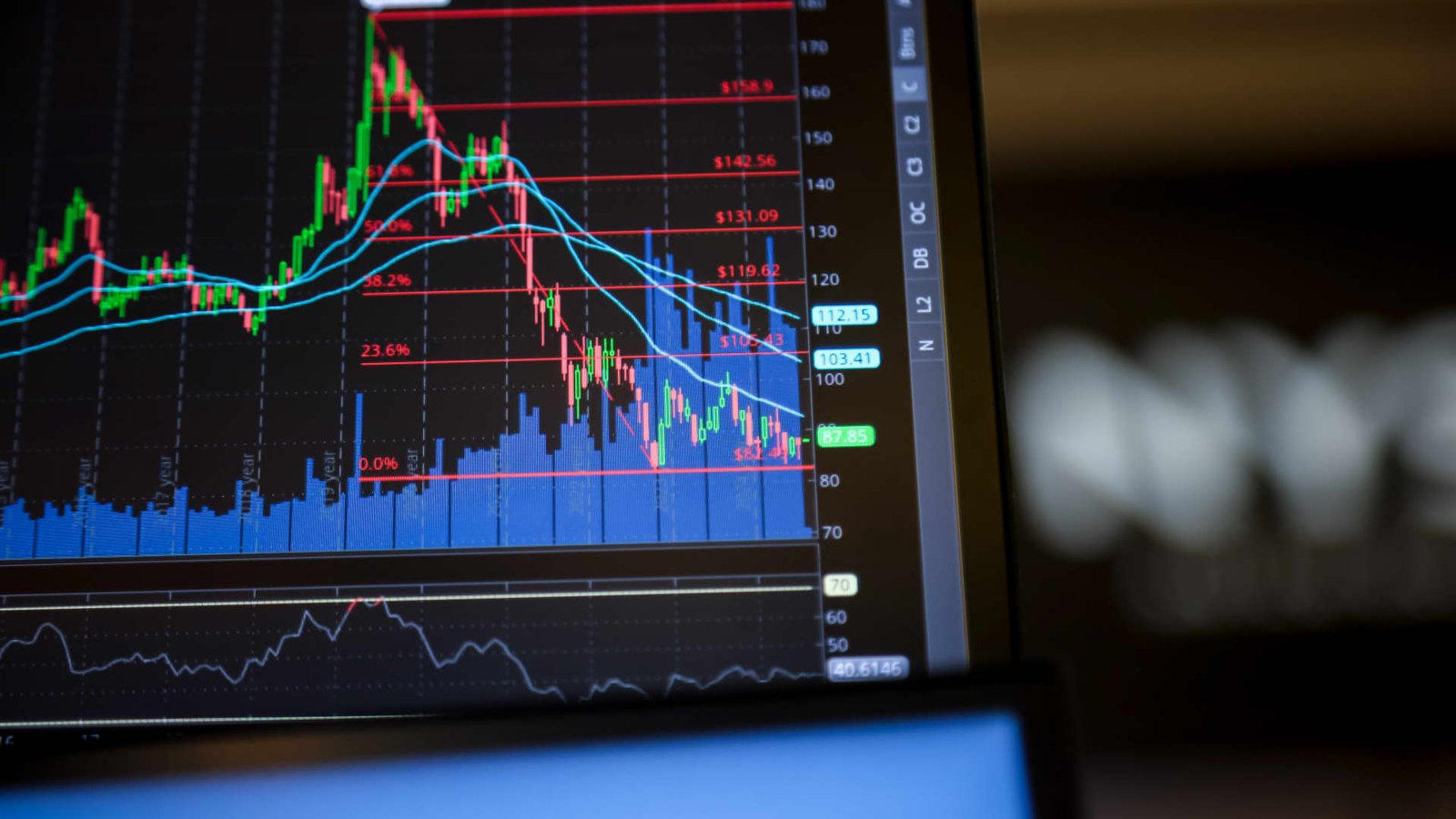
Trend-following hedge funds beat S&P 500 in 2026
Hedge fund strategies that rely on complex algorithms and machine learning technology to build trades are beating the stock market this year.
Trend-following hedge funds — also known as commodity trading advisors, or managed futures strategies — are computer-based funds that use quantitative programs, statistical models and price signals to crunch huge volumes of data and invest across futures markets.
They aim to identify and trade large and consistent trends — both upward and downward — across equities, bonds, commodities, and currencies, to profit from that ongoing momentum.
Societe Generale’s SG CTA Index — the sector’s main performance benchmark, which tracks the daily net returns of major strategies including Man Group, PIMCO, AQR and Winton Capital funds — notched a 15.7% return in the nine months to the end of the third quarter. By comparison, the broad-based S&P 500 rose 11.7% over the same nine-month period.
‘Early, contrarian and right’
Industry pros told CNBC how CTAs correctly called September’s sudden bond sell-off with shorts against U.S. Treasurys. That added to earlier gains made from bullish dollar positions, as well as pre-Iran war long oil bets.
“CTAs are crushing the rest of the hedge fund world this year,” said Andrew Beer, managing member at Dynamic Beta Investments. He said the sector was “early, contrarian and right” when it started buying crude oil in January prior to the Iran war, before successfully positioning for rising rates ahead of the global bond market turmoil.

Simplify Managed Futures ETF.
“They’ve nailed the two major themes in the markets: on the one hand, feverish AI-driven optimism about equities and, on the other, panic about oil prices and inflation,” Beer told CNBC via email. “Humans are too emotional to time markets. Machines are much better.”
Nicolas Gaussel, CEO and CIO of Metori Capital Management, said CTAs have effectively navigated inflationary tensions thanks to their ability to take short positions in fixed income. He added that the negative correlation between stocks and oil was another important feature which helped bolster performance this year.
Brent crude.
This year has been shaped by two important structural themes, Gaussel said: the strong positive correlation between equities and bonds, and a strong negative correlation between energy and both equities and bonds. This has proved a tough environment for traditional ’60/40′ portfolios.
“For traditional long-only diversified portfolios, the positive correlation between equities and bonds has been particularly challenging. Bond performance has been weak, while bonds have also provided less diversification against equities. By contrast, the ability of CTAs to go short bonds and short-term rates has proved very beneficial,” Gaussel added.
“This reminds us that one of the key strengths of CTAs is that they are not dependent on bonds playing their traditional defensive role.”
Looking ahead, the performance of trend-following funds heading into year-end will likely hinge on energy prices and interest rates, said Yung-Shin Kung, chief investment officer at Mast Investments.
“If September provides any indication, we’re at a point where linkages between the two are now propagating meaningfully into currencies and equity markets as well,” he told CNBC via email.
“The upshot is that CTAs are generally well positioned to buffer traditional portfolios — but the risk in many CTA books has grown increasingly concentrated.”