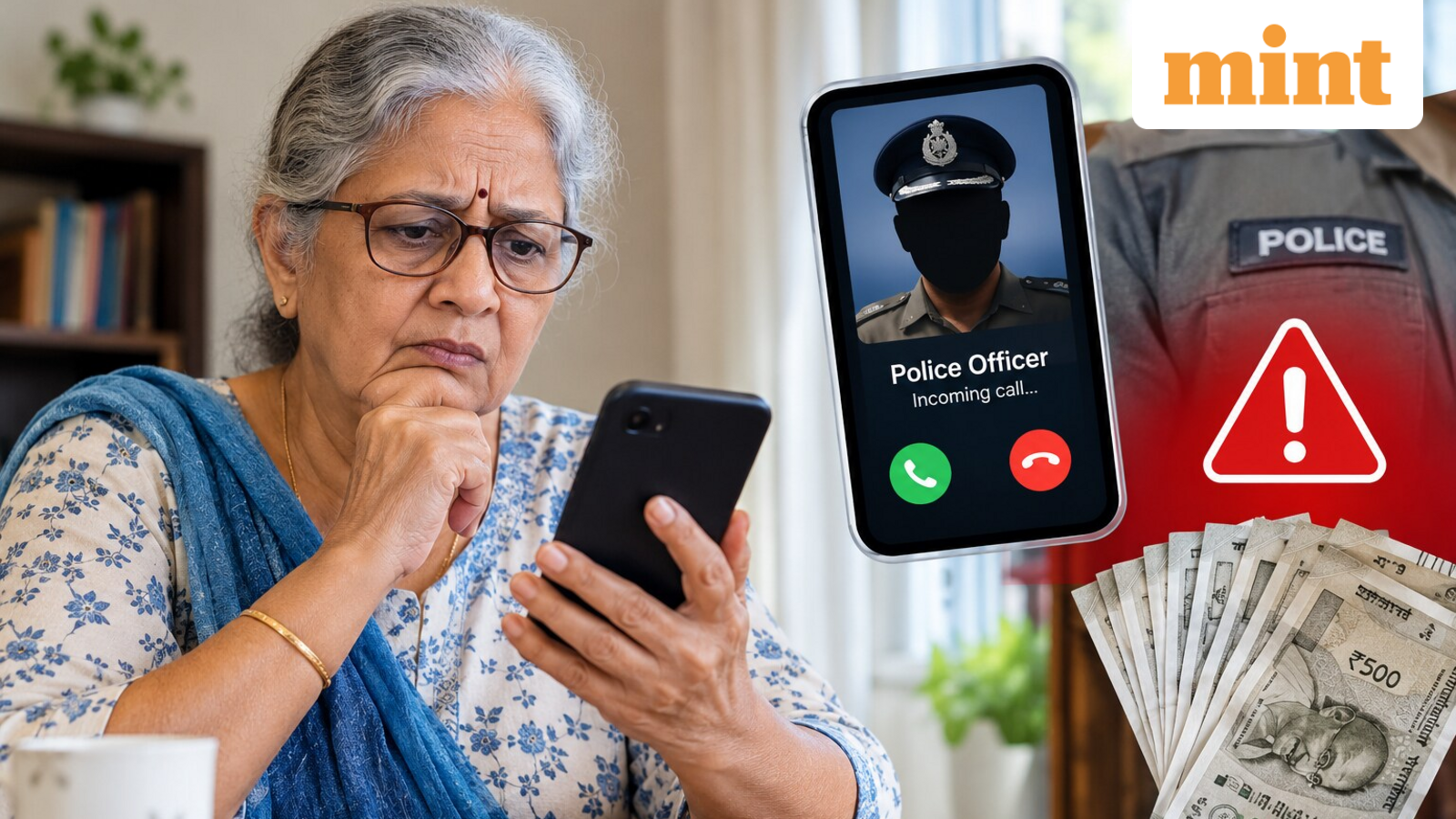
Digital arrest scam: 67-year-old woman loses ₹13 lakh to fake police officials; 5 money lessons for senior citizens
A 67-year-old senior citizen in Chhatrapati Sambhajinagar, Maharashtra, allegedly lost ₹13 lakh after cyber criminals posing as police officials kept her under “digital arrest” for about a week.
The fraudsters allegedly threatened her with arrest, claiming that her bank account was linked to an account suspected of being involved in terrorism. Fearing legal action, the woman transferred money to bank accounts provided by the scammers, according to a report by The Times of India.
How did the scam take place?
The woman received WhatsApp calls between 23 and 30 September from an individual claiming to be a police official. He allegedly told her that her bank account was linked to a suspected terrorist account and threatened her with arrest.
Fearing legal action and its consequences, she transferred ₹8 lakh via Real-Time Gross Settlement (RTGS) to a bank account provided by the cybercriminals on 29 September.
The following day, she transferred another ₹5 lakh to a different account. She later realised that she had been duped and approached the authorities to report the alleged cyber fraud.
5 key money lessons for senior citizens
1. Police do not demand money to avoid arrest
There is no such thing as ‘digital arrest’ in Indian law, as explained by a former judge earlier in his exclusive conversation with Mint. Further, any caller asking for money in order to settle a criminal proceeding or to prevent arrest should be treated as a serious fraud warning. Cases are not resolved through digital interactions or phone calls alone.
2. Never transfer money under pressure
Fraudsters focus on creating fear and urgency in victims. That is why senior citizens should pause, reflect, and independently verify any serious allegations before making any payments.
3. Do not trust video calls or official-looking setups
Scammers may use police uniforms, digital paperwork, logos, backgrounds and fake documents to appear genuine. Such visuals do not prove that the caller is an actual officer.
4. Never share banking details or credentials
Do not disclose confidential data such as OTPs, PINs, passwords, card details, or net banking information to callers, even if they claim to represent a government agency or bank.
5. Verify independently and report quickly
If a caller claims that an account is involved in a crime, contact the nearest police station or the concerned bank through an independently verified number. This number must be verified and obtained only from the official website of the respective bank. In case of suspected cyber fraud, report it immediately to the authorities.
The incident shows how digital arrest scams use fear and pressure to manipulate victims. Senior citizens and their families should stay aware of such scams and keep themselves updated about new fraud tactics. Most importantly, a suspicious call or message should never lead to an immediate financial decision, especially when the caller demands money or threatens arrest.