Explained: ‘Quick cash’ — What are payday loans, when can you borrow this money? Risks, eligibility, documents required
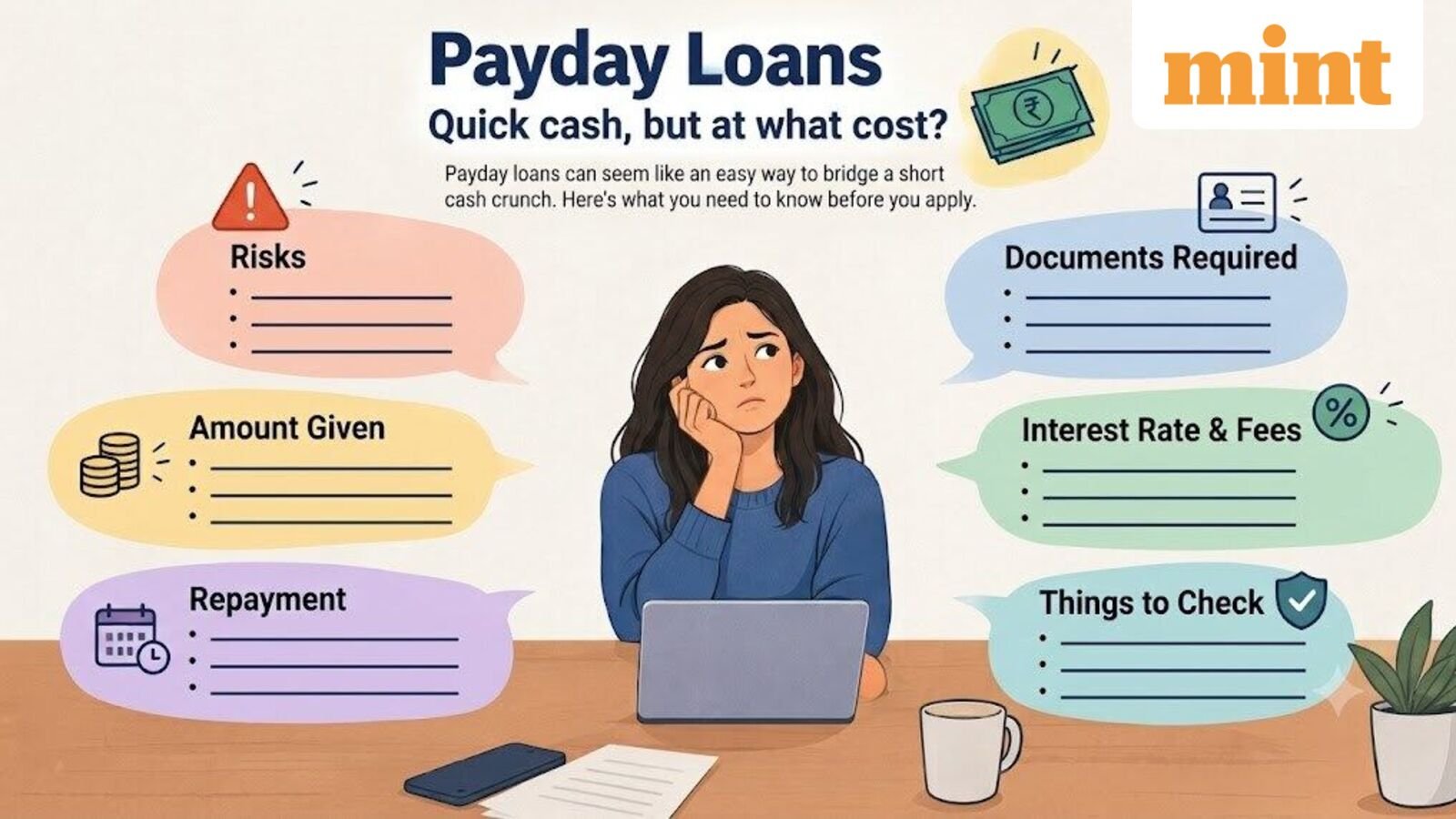
A cash crunch or a sudden expense just days before your salary arrives can put you in a difficult spot, especially if you don’t have any savings or access to a credit card. This is where payday loans can seem like a easy way to bridge the gap, but they also come with high interest rates, fees and strict repayment timelines.
Before applying for a payday loan, borrowers should understand how much they will have to repay and whether they can comfortably meet the repayment deadline. If such factors are not taken into consideration, it may put you in a loop of debt trap and even lower your credit card for future borrowings.
What is a payday loan?
A payday loan is a short-term, unsecured advance that you can use for emergencies and other urgent expenses between salary days. These loans can be repaid between two weeks and a month or until your next payday, depending on the lender’s terms and conditions.
Since payday loans are generally unsecured, you do not have to put up physical collateral like a car title or property deed to get one.
These advances are legal in India, but only when they are disbursed by a bank, NBFC, or a Reserve Bank of India (RBI) regulated entity, either directly or through an authorised lending service provider (LSP).
The RBI’s digital lending directions lay down requirements for regulated entities on how digital loans must be priced, disclosed and collected from the borrower. However, payday loans as a product are not separately regulated by the RBI.
How do payday loans work in India?
You can obtain a payday loan from a lender’s branch or online portal. These loans typically involve a quick approval process with minimal documentation, particularly when the lender can verify your salary or income details.
Once approved, the loan amount is instantly credited to your bank account via a cheque or online transfer. In most cases, the repayment process is also fairly simple, with the loan amount, interest and applicable charges being deducted from your bank account on next salary day.
Many advance salary lenders do not require a traditional credit check. Instead, they may assess your employment stability and income to approve your loan, according to a blog post by Kotak Mahindra Bank.
Most lenders approve a payday loan in India of about 30% to 60% of your net monthly salary for bullet repayment. For instance, Kotak Mahindra Bank offers a one-month payday loan of up to 50% of the borrower’s net salary to eligible salary account holders at a pre-approved rate.
What is the eligibility criteria, required documents?
The usual eligibility criteria are:
- Must be a resident citizen of India.
- Must be older than 21.
- Must have a full-time job with fixed income.
- Minimum net monthly salary (often ₹10,000 or higher depending on the lender).
Required documents include proof of Aadhaar card, PAN card, voter ID or driving license to determine age and address proof. The lender can also ask for your salary slips from the last 3 months as income proof.
What are the disadvantages?
The interest rates of a payday loan can be significantly higher than that offered in a personal loan or credit card (which also comes with an interest-free grace period for repayment). The interest rates of payday loans that can go as high as 40% annually, depending on the lender.
Missing or delaying repayments can negatively affect your credit score and make it harder to access credit in the future. Some payday loans may also have additional fees that are not immediately clear.
Borrowers should read the loan agreement carefully and check the total cost of borrowing before taking the loan.