Weekly Review: MyForexFunds Brand Assets Sold; IG’s OTC Revenue Retention Slips
The prop trading sector dominated the week, with the sale of
MyForexFunds’ brand assets, the closure of FundedSeat and CMC Markets’ entry
into simulated prop trading highlighting changes across the market. Platform
access, broker integration and the economics of trader payouts also featured
prominently.
London’s trading industry is coming home!
Elsewhere, new retail trading data showed how heavily broker
profitability is concentrated among a small group of winning clients.
Regulatory developments remained important, with the UK opening its crypto
authorisation process and EU regulators examining Binance’s use of reverse
solicitation.
Brokers also continued to broaden their offerings, while IG
reported lower revenue expectations and industry analysis examined the
challenges around finfluencer oversight and technology ownership.
Haider Raza, CEO of Global Solutions
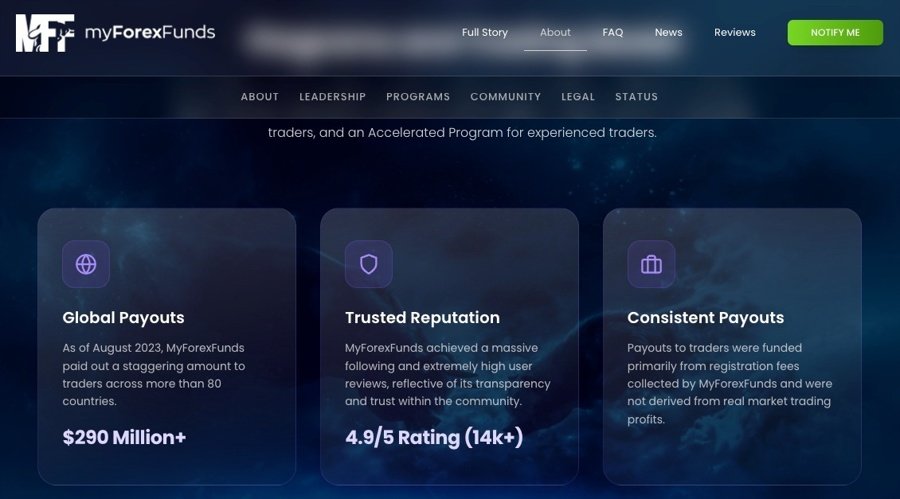
MyForexFunds’ brand
assets have been sold by Traders Global to Dubai-based Global Solutions,
headed by former MyForexFunds operations director Haider Raza. The deal,
completed on August 1, covers the MyForexFunds and MFF trademarks, logos,
websites, domain and official social media accounts.
Financial terms were not
disclosed, and there is no confirmed date for a return of services under the
brand. Global Solutions has not assumed Traders Global’s liabilities, including
outstanding trader payouts.
Traders Global will continue handling those
payments through Global Solutions under a service agreement. Before its
shutdown, MyForexFunds served more than 135,000 customers and generated at
least $310 million in fees, according to the US CFTC.
FundedSeat Closes After Platform Access Limits Growth
Futures-focused prop firm FundedSeat
has announced the closure of its operations after two years, citing
limitations in access to major trading platforms. The firm said the
restrictions prevented it from reaching the growth required to become a larger
player. FundedSeat will refund active accounts and pay pending withdrawals and
positive live balances.
The company said monthly payouts had reached nearly
$700,000. The firm did not support platforms including NinjaTrader and
Tradovate, while MetaTrader was unavailable because of licensing restrictions
affecting prop firms.
A screenshot of the closure announcement on FundedSeat website
The closure highlights the importance of platform
availability for futures prop firms, as access to major trading systems has
become increasingly restricted across parts of the proprietary trading sector.
CMC Markets Launches Simulated Prop Trading Programme
Benjamin Charbonneau, CMC’s Global Head of Retail
CMC
Markets has formally announced CMC Funded, a simulated prop trading
programme launched on October 1. Participants receive a $100,000 simulated
account with fixed performance targets and risk limits.
Traders who pass the
evaluation receive a Verified Trader badge and an “interview opportunity”
through Verichain, the programme’s first referral partner.
CMC said the service
operates separately from its listed financial services business and is not a
regulated CMC Markets product. It does not provide live brokerage or funded
trading accounts, hold client money or execute customer trades. The programme
covers multiple global markets, although CMC has not disclosed the full
instrument list or detailed evaluation thresholds.
Broker-Backed Prop Firms Shift the Economics of Trader
Payouts
Broker-backed prop firms are increasingly using vertical
integration to change how they generate revenue from successful traders,
according to an analysis by Shervin Arian, CEO of OmegaRatio Advisors.
Independent prop firms typically rely on challenge fees, while
broker-affiliated models can generate additional revenue when successful
traders move into brokerage accounts.
That can include deposits, spreads,
swaps, rebates and other brokerage-related income. The model also gives firms
greater access to trading data and risk-management capabilities. Arian argues
that established brokers entering prop trading have an advantage through their
existing infrastructure and risk expertise.
The analysis highlights a shift
from treating trader payouts primarily as costs towards integrating them into
longer-term client relationships.
Top 1% of Winning Traders Capture 66.5% of Client Profits
The top 1%
of winning retail trading accounts captured 66.5% of all client profits
across iSAM Securities’ Radar network over the past year. The top 5% accounted
for 85.5%, while 79.5% of clients ended the period in loss. The data covers 12
months through the middle of August and comes from Radar’s brokerage client
base.
It also shows that 1% of clients can account for 30% of a broker’s total
drawdown. Brokers continued to rely heavily on B-booking, with 94.6% of trading
volume handled this way compared with 5.4% A-booked. B-booking also represented
98.2% of broker profit and loss across the dataset.
FCA Opens Five-Month Window for UK Crypto Authorisation
The Financial Conduct Authority has
opened a five-month application window for crypto firms seeking
authorisation under the UK’s new regulatory regime. Applications submitted by
February 28, 2027 can be assessed before the framework takes effect on October
25, 2027. Existing anti-money laundering registrations will not automatically
convert into full authorisation.
Firms must demonstrate that they can meet the
FCA’s requirements, including explaining their operating model, products,
customer segments and funding sources. The regulator began accepting
applications on September 30 and has urged firms to start preparing early.
The
new framework will replace the current system, under which crypto exchanges and
custodian wallet providers primarily operate through AML registration and
financial promotion requirements.
EU Regulators Examine Binance’s Use of Reverse
Solicitation
Richard Teng, co-CEO of Binance
EU regulators are examining Binance’s
use of reverse solicitation after the exchange failed to secure a MiCA licence
and was ordered to wind down its EU operations. ESMA and regulators in France,
Germany and Greece have requested information from Binance, according to the
Financial Times.
Enforcement action, including fines, remains possible if
regulators conclude that the exemption was used improperly. Under MiCA, reverse
solicitation allows non-EU firms to serve customers who initiate a relationship
entirely on their own initiative.
ESMA has said the exemption should remain an
exception rather than a way to circumvent the bloc’s licensing requirements.
Binance said it complies with applicable rules and is working towards MiCA
authorisation.
Capital.com Adds Direct Stock and ETF Investing in Europe
Christoforos Soutzis, CEO, Capital.com Europe, Source: LinkedIn
Capital.com has launched direct investing in stocks
and ETFs across nearly all of its European Economic Area markets, expanding
beyond its established CFD offering. The service provides access to more than
2,280 US and European stocks and ETFs and carries no commission on investments.
The products are offered on an execution-only, non-advised basis and sit
alongside the broker’s existing research, charting and portfolio tools.
Capital.com said the launch supports both short-term trading and longer-term
investing on the same platform.
The UAE and UK are expected to follow in the
coming months, although the broker has not provided specific launch dates. The
expansion adds direct asset ownership to its existing trading services.
IG Lowers Q3 Revenue Outlook as OTC Retention Falls
Breon Corcoran, CEO, IG Group
IG
Group expects third-quarter 2026 revenue of about £240 million, around 14%
below the £280.1 million reported a year earlier. Net trading revenue is
expected at approximately £210 million, down from £249.5 million in the same
quarter of 2025.
The broker attributed the decline primarily to weaker OTC
revenue retention, which fell to about 70% from an average of 80% following
market-making optimisation measures introduced in the second half of 2025.
OTC
net trading revenue is expected at around £155 million, down 18% year-on-year.
At the same time, organic first trades increased by more than 25% and active
customers rose about 17%. IG retained its medium-term guidance.
Finfluencer Oversight Creates Monitoring Challenges for
Firms
Regulatory enforcement against non-compliant
financial influencers has increased across several major markets, while
firms face difficulties monitoring the large volume of content published across
social media. Seventeen regulators participated in the FCA’s Global Action Week
in April, targeting non-compliant finfluencers and firms involved in their
promotion.
The issue extends beyond individual influencers, as brokers and
banks can also face risks from misleading claims or inadequate disclosures in
sponsored content. Social media posts can appear and disappear quickly, making
comprehensive manual monitoring difficult.
Sarafina Wolde Gabriel, CEO of Rightlander,
highlighted the visibility challenge for financial firms. The growing scrutiny
puts greater focus on how firms monitor third-party marketing and promotional
activity.
Retail Brokers Reassess How Much Trading Technology to
Own
Retail brokers are increasingly weighing the
speed and lower development burden of buying trading technology against the
control and flexibility of building more of their own stack.
Purchased
platforms can reduce the time required to launch core functions such as order
management, charting, authentication, risk management and reporting. However,
brokers can face vendor fees, integration constraints and limits on how systems
can be adapted as their businesses grow.
The strategic question is which parts
of the technology stack provide meaningful differentiation. Brokers may choose
to own areas such as client applications, trading tools, risk controls,
execution logic or analytics while continuing to rely on third-party platforms
for core infrastructure. The balance between speed, cost and control remains
central to the decision.
The prop trading sector dominated the week, with the sale of
MyForexFunds’ brand assets, the closure of FundedSeat and CMC Markets’ entry
into simulated prop trading highlighting changes across the market. Platform
access, broker integration and the economics of trader payouts also featured
prominently.
London’s trading industry is coming home!
Elsewhere, new retail trading data showed how heavily broker
profitability is concentrated among a small group of winning clients.
Regulatory developments remained important, with the UK opening its crypto
authorisation process and EU regulators examining Binance’s use of reverse
solicitation.
Brokers also continued to broaden their offerings, while IG
reported lower revenue expectations and industry analysis examined the
challenges around finfluencer oversight and technology ownership.
Haider Raza, CEO of Global Solutions
MyForexFunds’ brand
assets have been sold by Traders Global to Dubai-based Global Solutions,
headed by former MyForexFunds operations director Haider Raza. The deal,
completed on August 1, covers the MyForexFunds and MFF trademarks, logos,
websites, domain and official social media accounts.
Financial terms were not
disclosed, and there is no confirmed date for a return of services under the
brand. Global Solutions has not assumed Traders Global’s liabilities, including
outstanding trader payouts.
Traders Global will continue handling those
payments through Global Solutions under a service agreement. Before its
shutdown, MyForexFunds served more than 135,000 customers and generated at
least $310 million in fees, according to the US CFTC.
FundedSeat Closes After Platform Access Limits Growth
Futures-focused prop firm FundedSeat
has announced the closure of its operations after two years, citing
limitations in access to major trading platforms. The firm said the
restrictions prevented it from reaching the growth required to become a larger
player. FundedSeat will refund active accounts and pay pending withdrawals and
positive live balances.
The company said monthly payouts had reached nearly
$700,000. The firm did not support platforms including NinjaTrader and
Tradovate, while MetaTrader was unavailable because of licensing restrictions
affecting prop firms.
A screenshot of the closure announcement on FundedSeat website
The closure highlights the importance of platform
availability for futures prop firms, as access to major trading systems has
become increasingly restricted across parts of the proprietary trading sector.
CMC Markets Launches Simulated Prop Trading Programme
Benjamin Charbonneau, CMC’s Global Head of Retail
CMC
Markets has formally announced CMC Funded, a simulated prop trading
programme launched on October 1. Participants receive a $100,000 simulated
account with fixed performance targets and risk limits.
Traders who pass the
evaluation receive a Verified Trader badge and an “interview opportunity”
through Verichain, the programme’s first referral partner.
CMC said the service
operates separately from its listed financial services business and is not a
regulated CMC Markets product. It does not provide live brokerage or funded
trading accounts, hold client money or execute customer trades. The programme
covers multiple global markets, although CMC has not disclosed the full
instrument list or detailed evaluation thresholds.
Broker-Backed Prop Firms Shift the Economics of Trader
Payouts
Broker-backed prop firms are increasingly using vertical
integration to change how they generate revenue from successful traders,
according to an analysis by Shervin Arian, CEO of OmegaRatio Advisors.
Independent prop firms typically rely on challenge fees, while
broker-affiliated models can generate additional revenue when successful
traders move into brokerage accounts.
That can include deposits, spreads,
swaps, rebates and other brokerage-related income. The model also gives firms
greater access to trading data and risk-management capabilities. Arian argues
that established brokers entering prop trading have an advantage through their
existing infrastructure and risk expertise.
The analysis highlights a shift
from treating trader payouts primarily as costs towards integrating them into
longer-term client relationships.
Top 1% of Winning Traders Capture 66.5% of Client Profits
The top 1%
of winning retail trading accounts captured 66.5% of all client profits
across iSAM Securities’ Radar network over the past year. The top 5% accounted
for 85.5%, while 79.5% of clients ended the period in loss. The data covers 12
months through the middle of August and comes from Radar’s brokerage client
base.
It also shows that 1% of clients can account for 30% of a broker’s total
drawdown. Brokers continued to rely heavily on B-booking, with 94.6% of trading
volume handled this way compared with 5.4% A-booked. B-booking also represented
98.2% of broker profit and loss across the dataset.
FCA Opens Five-Month Window for UK Crypto Authorisation
The Financial Conduct Authority has
opened a five-month application window for crypto firms seeking
authorisation under the UK’s new regulatory regime. Applications submitted by
February 28, 2027 can be assessed before the framework takes effect on October
25, 2027. Existing anti-money laundering registrations will not automatically
convert into full authorisation.
Firms must demonstrate that they can meet the
FCA’s requirements, including explaining their operating model, products,
customer segments and funding sources. The regulator began accepting
applications on September 30 and has urged firms to start preparing early.
The
new framework will replace the current system, under which crypto exchanges and
custodian wallet providers primarily operate through AML registration and
financial promotion requirements.
EU Regulators Examine Binance’s Use of Reverse
Solicitation
Richard Teng, co-CEO of Binance
EU regulators are examining Binance’s
use of reverse solicitation after the exchange failed to secure a MiCA licence
and was ordered to wind down its EU operations. ESMA and regulators in France,
Germany and Greece have requested information from Binance, according to the
Financial Times.
Enforcement action, including fines, remains possible if
regulators conclude that the exemption was used improperly. Under MiCA, reverse
solicitation allows non-EU firms to serve customers who initiate a relationship
entirely on their own initiative.
ESMA has said the exemption should remain an
exception rather than a way to circumvent the bloc’s licensing requirements.
Binance said it complies with applicable rules and is working towards MiCA
authorisation.
Capital.com Adds Direct Stock and ETF Investing in Europe
Christoforos Soutzis, CEO, Capital.com Europe, Source: LinkedIn
Capital.com has launched direct investing in stocks
and ETFs across nearly all of its European Economic Area markets, expanding
beyond its established CFD offering. The service provides access to more than
2,280 US and European stocks and ETFs and carries no commission on investments.
The products are offered on an execution-only, non-advised basis and sit
alongside the broker’s existing research, charting and portfolio tools.
Capital.com said the launch supports both short-term trading and longer-term
investing on the same platform.
The UAE and UK are expected to follow in the
coming months, although the broker has not provided specific launch dates. The
expansion adds direct asset ownership to its existing trading services.
IG Lowers Q3 Revenue Outlook as OTC Retention Falls
Breon Corcoran, CEO, IG Group
IG
Group expects third-quarter 2026 revenue of about £240 million, around 14%
below the £280.1 million reported a year earlier. Net trading revenue is
expected at approximately £210 million, down from £249.5 million in the same
quarter of 2025.
The broker attributed the decline primarily to weaker OTC
revenue retention, which fell to about 70% from an average of 80% following
market-making optimisation measures introduced in the second half of 2025.
OTC
net trading revenue is expected at around £155 million, down 18% year-on-year.
At the same time, organic first trades increased by more than 25% and active
customers rose about 17%. IG retained its medium-term guidance.
Finfluencer Oversight Creates Monitoring Challenges for
Firms
Regulatory enforcement against non-compliant
financial influencers has increased across several major markets, while
firms face difficulties monitoring the large volume of content published across
social media. Seventeen regulators participated in the FCA’s Global Action Week
in April, targeting non-compliant finfluencers and firms involved in their
promotion.
The issue extends beyond individual influencers, as brokers and
banks can also face risks from misleading claims or inadequate disclosures in
sponsored content. Social media posts can appear and disappear quickly, making
comprehensive manual monitoring difficult.
Sarafina Wolde Gabriel, CEO of Rightlander,
highlighted the visibility challenge for financial firms. The growing scrutiny
puts greater focus on how firms monitor third-party marketing and promotional
activity.
Retail Brokers Reassess How Much Trading Technology to
Own
Retail brokers are increasingly weighing the
speed and lower development burden of buying trading technology against the
control and flexibility of building more of their own stack.
Purchased
platforms can reduce the time required to launch core functions such as order
management, charting, authentication, risk management and reporting. However,
brokers can face vendor fees, integration constraints and limits on how systems
can be adapted as their businesses grow.
The strategic question is which parts
of the technology stack provide meaningful differentiation. Brokers may choose
to own areas such as client applications, trading tools, risk controls,
execution logic or analytics while continuing to rely on third-party platforms
for core infrastructure. The balance between speed, cost and control remains
central to the decision.