Canada’s housing market is now too big to fix with interest rates
That dynamic is visible in the numbers. In 2000, residential investment accounted for 4.3% of Canada’s gross domestic product while business investment in machinery, equipment, and innovation sat at 8.3%.
Today those proportions are largely reversed. Roughly half of all bank lending is now tied to residential real estate, a level of exposure that means home price movements carry consequences far beyond the housing sector itself.
The gap between prices and incomes has only widened, with home prices rising roughly 53% between 2015 and 2025 while incomes grew approximately 13%.
Tiff Macklem of the Bank of Canada has warned that tariffs and rising energy prices are pulling the economy in different directions, while Andrew Grantham of CIBC Capital Markets says attention is shifting toward the next wave of economic data.https://t.co/40ldBWDI1a
— Canadian Mortgage Professional Magazine (@CMPmagazine) September 30, 2026
A blunt tool for a complex problem
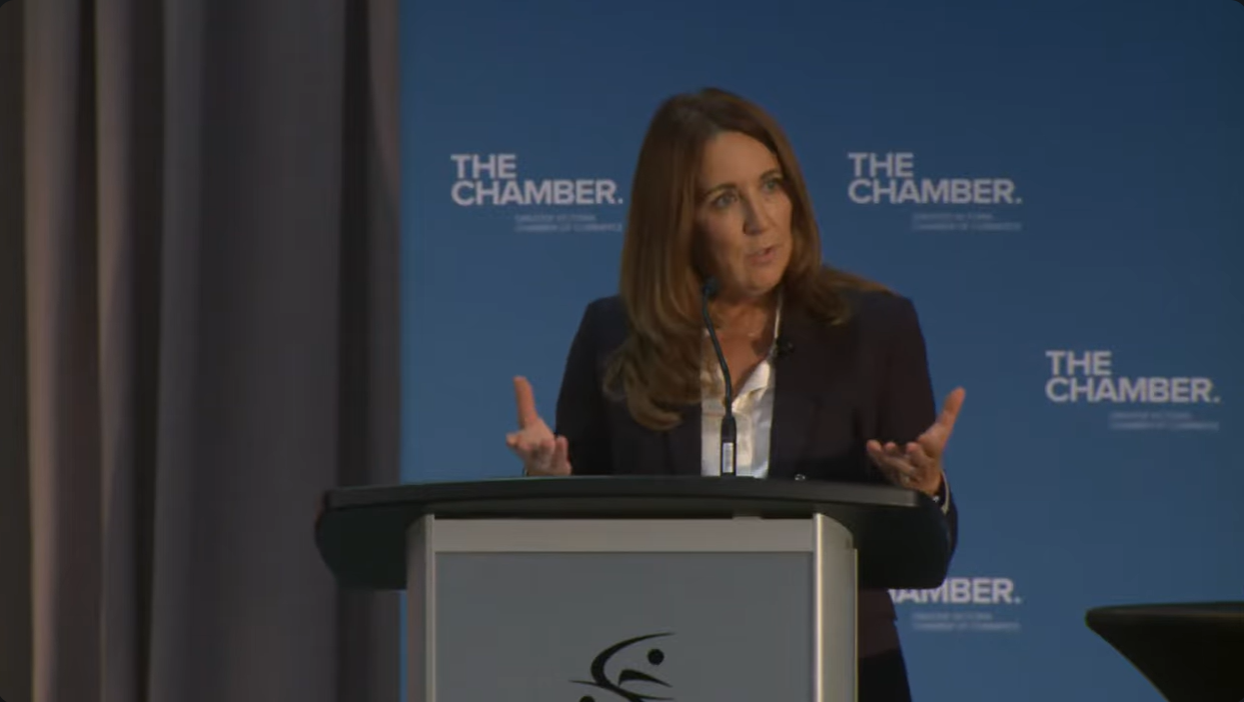
The mortgage stress test, introduced under Rogers’ tenure at OSFI in 2017, is her sharpest illustration of the bind regulators face.
It gave borrowers a buffer against rate risk and strengthened financial system resilience through the 2022–23 rate cycle. It did not arrest price growth.