CFPB’s removal of customer complaint data is a major mistake
- Key insight: The CFPB’s recent decision to make it more difficult to see customer complaint narratives is depriving the financial services industry of a vital source of business intelligence.
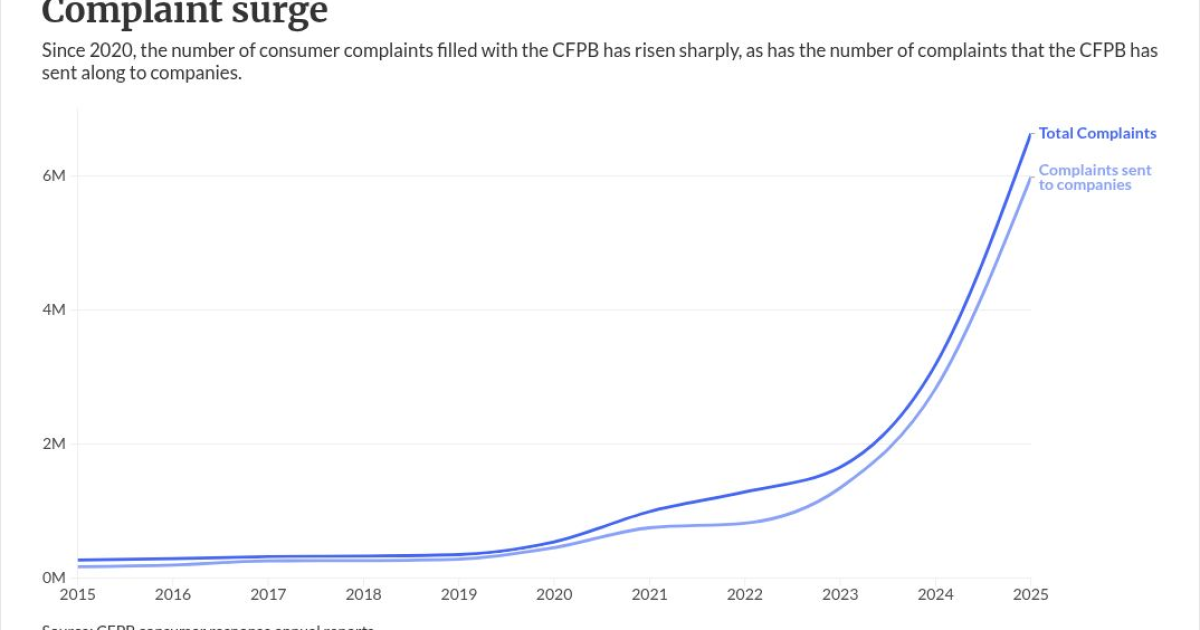
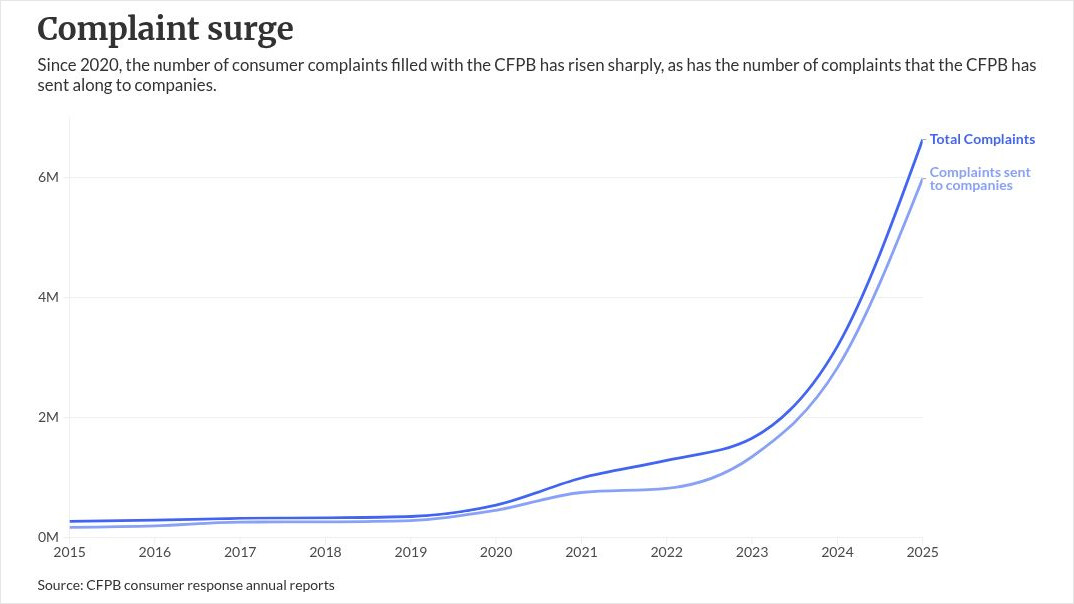
- What’s at stake: The sheer volume of complaints on a specific issue can draw our attention to a growing pain point or industry trend.
- Forward look: Ending the publication of this consumer complaint data will work against the agency’s alleged goal of transparency.
Recently, the Consumer Financial Protection Bureau
Processing Content
This couldn’t be more wrong. As a data pioneer with many years of experience in financial services, I have seen the power of extracting value from that same
Historically, the database has been a place where regular Americans could raise their voices when they felt like they were not being listened to and were being treated unfairly. It also plays an important role in oversight. Regulators use complaints to help assess banks’ safety and soundness and they count on the CFPB’s data to prioritize their audits.
The sheer volume of complaints on a specific issue can draw our attention to a growing pain point or industry trend. Yet much can be discerned from the content of the complaints as well. When we look at the words consumers use to describe their complaints, for example, everything from the specific topics they mention to the themes under which they might be categorized to their overall tone provides a wealth of information and rich intelligence on what’s driving consumers’ concerns.
With these changes, companies no longer have access to consumer language revealing risks, as well as opportunities, months before it shows up in their numbers. Plus, they can no longer view competitive, benchmark intelligence around company and industry-wide issues. Without its data visualizations, it won’t be possible for consumers and businesses to see growing issues within companies, products, issues, and regions.
Read more:
Complaint narratives can also point to larger, macroeconomic trends. An increase in complaints that mention housing affordability, for instance, can be an early indicator of credit challenges in the housing market. Months before the unemployment rate begins to rise, CFPB complaint data reveals a spike in consumers sharing their challenges with making payments.
Certainly, there are flaws in the current system. Over the past year, after significant cuts and layoffs to the agency, the database has become messy, with changes and inconsistencies. In the last two to three years, we’ve seen deceptive third-party players infiltrating systems including the CFPB to take advantage of loopholes. Despite these challenges, experts can distinguish between genuine complaints and deceptive narratives to extract maximum value.
Ceasing publication of consumer complaints is a protective measure, argues the bureau. “[Consumers should] … be able to rely on the Bureau for authoritative information as they choose the products and services that meet their individual needs.” This assertion is misguided. On its own website, the CFPB tasks itself with ensuring that markets are transparent, fair and competitive. And the original goal of making consumer complaints public was so that consumers could learn from the experiences of others.
In the Aug. 14 release, the agency also states that the move is in the interest of accuracy. “Publishing such narratives in the Database provides a less-than-representative sample of one-sided experiences,” it argues. Making the complaint process more transparent, however, is entirely within the CFPB’s power. Currently, financial institutions are only required to share whether they responded to a complaint and did so with or without monetary relief. If there were concerns about one-sidedness, the CFPB could require the institutions to elaborate more.
Indeed, ending the publication of this consumer complaint data will work against the agency’s alleged goal of transparency. We should not be silencing the consumers who have taken the time to share their experiences with the broader public. In fact, it is imperative that we listen to them. Their words are full of value.