US Bankruptcy Wave Begins: Is the Iran War Pushing the Economy Towards a Deeper Recession than 2008?
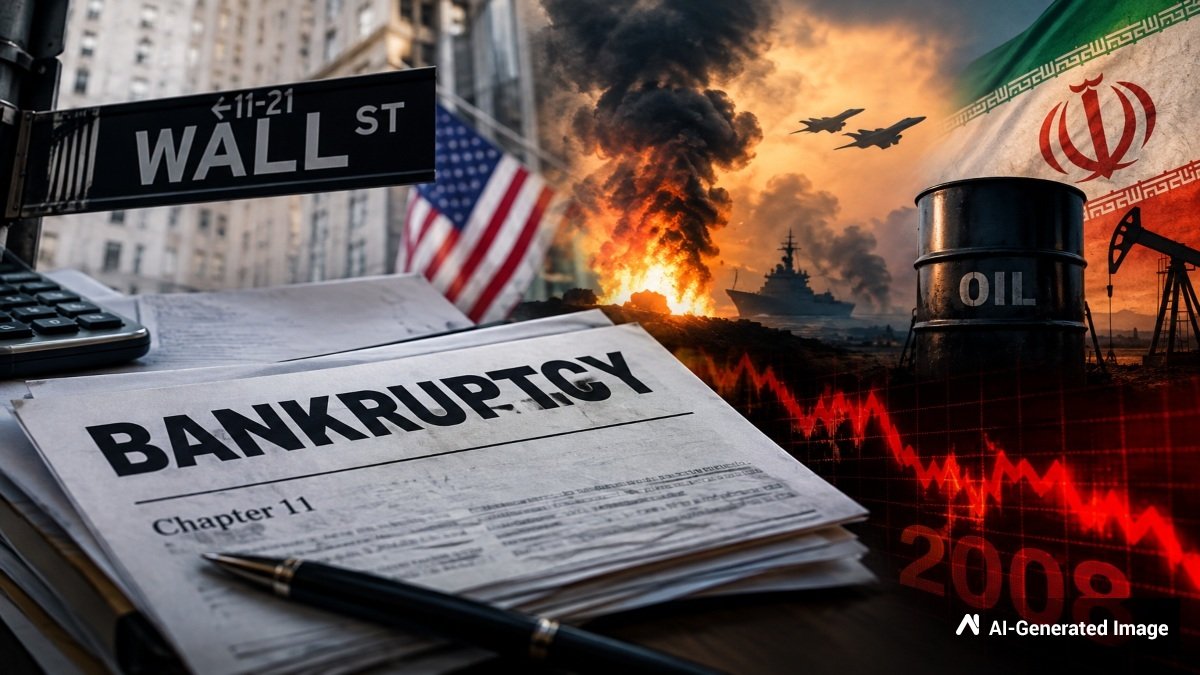
I’m getting a strong sense of déjà vu. While the reasons differ from 2008, the impact on the American economy will likely be the same. Several trucking companies have filed for Chapter 11, a US bankruptcy code that lets an organization restructure its business, driven by skyrocketing diesel prices.
Nearly two decades back, when the great financial crisis hit the largest economy in the world, huge conglomerates like Lehman Brothers filed for bankruptcy, and American International Group – the giant insurer faced imminent collapse before receiving a massive emergency bailout from the US government.
The meltdown of the American economy was led by the housing market collapse in 2008 due to high-risk mortgage lending, while in 2026, the ongoing US-Iran war could lead to an outright recession. That will 100 percent have a cascading effect on the global economy.
While economists from Goldman Sachs, Morgan Stanley, and others expect the US economy to be resilient in the face of the war, President Donald Trump’s tariff threats and soaring inflation make reality more brutal than the reports suggest.
Over the past few years, the economy has had to navigate a series of major shocks, from the highest inflation in four decades and sharply higher interest rates to repeated shifts in regulatory policy under different presidents. It has also faced tariff rates not seen in nearly 90 years, while the cost of financing the federal government’s growing debt continues to rise.
“Is there a “Trump put?” Does the President modify or reverse policies when there is a negative response in the economy, public opinion or the equity market? I think the “Trump put” is largely dead. As a result, policy shocks will persist, keeping downward pressure on growth and upward pressure on inflation,” said Ethan Harris, former economist at Bank of America and a Fed watcher.
Iran War Impact: US Trucking Bankruptcies Rise as Diesel Prices Hit Record High
The economic fallout from the US war with Iran is beginning to show up across America’s trucking industry. More than a dozen US trucking companies have filed for bankruptcy over the past month. Industry publication FreightWaves reported that 16 companies employing more than 250 people have entered either Chapter 7 or Chapter 11 bankruptcy proceedings.
The biggest pressure point is fuel. The average US diesel price reached a record $6.53 per gallon on September 22, according to AAA. That is roughly $1.72 per litre, or around Rs. 150 per litre. Diesel is also about $2.76 per gallon higher than it was a year ago.
For the US trucking industry, where fuel is one of the biggest operating expenses, such a sharp increase can quickly squeeze already-thin profit margins.
Why Does the Iran War Matter to US Trucking?
Trucking companies now face a difficult choice. They can absorb the higher fuel costs or pass them on through higher freight rates. Raising rates, however, risks weakening demand and putting further pressure on businesses that are already operating on tight margins.
The bankruptcy filings highlight how quickly those pressures can build. Of the 16 companies identified by FreightWaves, seven have filed for Chapter 7 bankruptcy, which generally involves winding down operations and selling assets. Eight have filed for Chapter 11 bankruptcy, allowing companies to continue operating while restructuring their debts and negotiating with creditors.
Chapter 11: What Happens When a Company Files for Bankruptcy
A Chapter 11 bankruptcy filing does not necessarily mean a company is shutting down. In the US, Chapter 11 allows a financially distressed business to continue operating while it works with creditors and the court to restructure its debt and get its finances back on track.
For companies facing mounting debt, falling revenues, or rising operating costs, Chapter 11 bankruptcy can provide time to reorganise the business rather than close it down immediately.
How Does Chapter 11 Bankruptcy Work?
The company continues operating.
A business can generally continue its day-to-day operations after filing for Chapter 11. The company usually remains in control of its business and assets as a “debtor in possession”, subject to the oversight and requirements of the bankruptcy court.
One of the immediate protections under a US bankruptcy filing is the automatic stay. It generally prevents creditors from continuing collection actions, lawsuits and other efforts to recover debts while the bankruptcy case is underway. This gives the company some breathing room to work on its financial problems.
However, filing for Chapter 11 does not guarantee that a company will survive. If the restructuring fails or the business cannot meet the requirements of its reorganisation plan, it could eventually face liquidation or another form of bankruptcy proceeding.
The warning signs are different this time, but the pressure is building in familiar ways. Higher energy costs can squeeze businesses, push up prices and weaken consumer demand, creating a difficult cycle for an economy already carrying high debt and borrowing costs. Whether the current shock develops into a broader downturn remains uncertain. What is clear is that the impact will not stop at America’s borders. The US economy is deeply connected to global trade and financial markets, so a prolonged slowdown could hit businesses, investors and consumers worldwide. For now, the biggest question is how far the damage spreads before the pressure begins to ease.