Private lenders warn brokers to look beyond mortgage rates
For borrowers who don’t meet traditional lenders’ criteria, a private mortgage can provide access to financing. But lenders say brokers need to look beyond the interest rate to understand what that financing will ultimately cost.

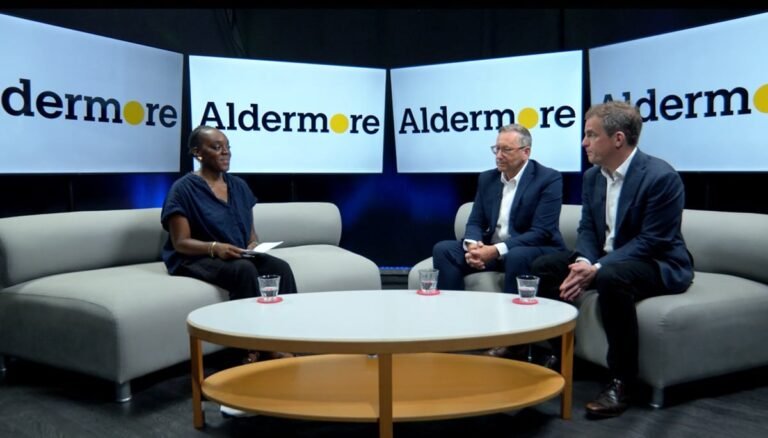
“If you, as a broker, only look at the rate, you don’t understand the whole story,” Sequence Capital’s Sebastien Kuperhause said during a recent panel on private lending in Toronto. “It’s not just the cost on the way in; it’s the cost on the way out. What is the true cost to your client?”
Panelists cited rates on private first mortgages ranging from the mid-5% level to nearly 9%, but said fees, renewal terms and the borrower’s exit strategy are also central to assessing the cost.
Donna Thornton, a CMBA-Ontario board member who moderated the panel, said clients in financial distress will often sign whatever is put in front of them. Brokers therefore need to ensure clients understand the terms they’re agreeing to, she said.
Why private rates vary so widely
Panelists pointed to differences in lenders’ funding models as one reason private mortgage rates vary widely.

Jason Geall, CEO and principal broker of Peerage Mortgage Capital, said lenders offering rates around 5.49% or 5.99% are typically borrowing from a bank at about 4.5%. Few individual investors would take on the risk of a private mortgage for a 5% return, he said.
Geall said banks also typically charge lenders about 40 basis points on the undrawn portion of their credit facilities. In a slower market, that puts pressure on lenders to lower rates to deploy their capital. “It costs them a lot of money to sit on these large sums of cash,” he said.
Joe Flor, vice-president of national sales and broker relations at CMI Canadian Mortgages, said rates reflect lending risk as well as profit. Under CMI’s direct-lending model, each mortgage is registered to an individual investor, so the rate must offer a return that investor is willing to accept, he said.
“In this space, rate is not the driver,” Kuperhause said, noting that lenders assess location, property and risk differently.
Nick Christopoulos, CEO of Hosper Mortgage, said a low rate means little if the mortgage doesn’t fund. He described last-minute deals involving another private lender withdrawing its commitment days before closing.
“The lowest price is not always the best solution, because a lot of times you get the lowest price, but the deal doesn’t fund,” he said.
The cost on the way out

Christopoulos said lenders’ fee schedules vary widely, with charges for administration, discharge and enforcement. Depending on the fees incurred, he said, those charges can add three to five percentage points to a mortgage’s annualized cost.
“If brokers want to do a service to their clients, they should give them the complete picture of what each lender charges, including all the additional fees,” he said.
Kuperhause said he has seen “eye-watering” payout statements.
Geall urged brokers to read every commitment letter in full, warning that auto-renewal terms can turn an initially low-rate mortgage into a much more expensive loan. In one scenario he described, a mortgage that remains outstanding at maturity automatically renews at a higher rate, with a 4% renewal fee.
Geall also cautioned against mortgages with 12 months of interest prepaid, warning that borrowers can face a payment shock when regular payments begin.
Flor said failing to disclose relevant details about a deal can lead to problems. If lenders learn new information after issuing a commitment, they may need to increase the rate or fee.
“But if you told us from the beginning, there’s no surprises,” he said. “So it’s important to not just read the commitment, but tell us the story on that transaction.”
Kuperhause said the best brokers in the private lending space have clients initial each section of their disclosure, including renewal terms and fees. “Your job is to be abundantly clear with your client,” he said.
Thornton also urged brokers to keep detailed notes in case a regulator later reviews the file, when the details of a transaction may be harder to recall.
Planning the exit in a flat market

Planning an exit from a private mortgage is becoming more challenging as borrowers take longer to qualify with traditional lenders, according to the panelists. Kuperhause said many now need two or three years to make that transition.
That longer timeline is prompting lenders to introduce longer-term products, he added. A two-year term can provide rate certainty and give borrowers time to move directly to a traditional lender without first refinancing with an alternative lender.
Terms vary between lenders, however. Flor said CMI offers a maximum term of 12 months, while some competitors offer 24 months, making it important to match the mortgage term to the borrower’s exit plan.
Geall said flat home prices leave borrowers less room to rely on rising property values to offset accumulating interest costs. Borrowers who defer interest payments while waiting for their financial situation to improve can quickly see their equity eroded, he said.
“Your 75 becomes 85 becomes 90,” he said, referring to rising loan-to-value ratios. “Now there’s nothing left.”
Kuperhause estimated that only about one in five brokers has a plan to follow up with private mortgage clients during the term. He called that the biggest gap he sees in the private lending space.
Visited 2 times, 2 visit(s) today
alternative lenders alternative lending Donna Thornton Jason Geall Joe Flor Nick Christopoulos Sebastien Kuperhause
Last modified: September 30, 2026