Taiwan Pushes Back on China’s World War Two Narrative at US Summit
Taiwan Pushes Back Against China’s World War II Narrative After US-China Summit
By Ben Blanchard
Contesting Historical Narratives in the Wake of the US-China Summit
TAIPEI, Sept 28 (Reuters) – Taiwan is pushing back against what it sees as Beijing’s efforts to rewrite the history of World War Two after Chinese President Xi Jinping and US President Donald Trump highlighted the wartime alliance between their countries at a summit last week.
That has rattled Taipei, which is wary that Washington could be won over to Beijing’s interpretation of history, potentially lessening support for the island from its most important arms supplier.
Taiwan’s Perspective on World War II History
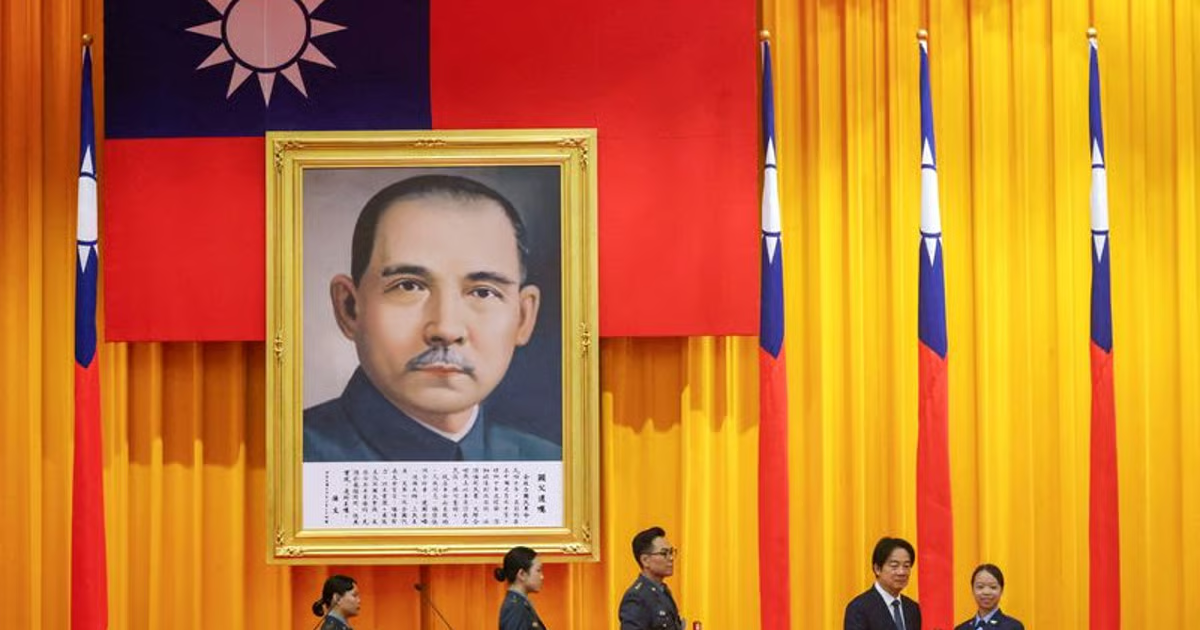
Democratically governed Taiwan, claimed by China as its own territory, says the version of events Beijing is promoting is distorted, given that the Republic of China was the government at the time, fighting alongside the Allies.
The Republic of China government fled to Taiwan in 1949 after losing a civil war with Mao Zedong’s communists and retains the formal name to this day.
Beijing’s Official Narrative
Beijing says that during the war, communist guerrilla forces acted as the “backbone” of the fighting in China, and its official history gives little mention of the Republican forces.
US-China Summit Statements
At their state dinner in Washington on Thursday, both Xi and Trump lauded how their countries fought together in the war.
A White House fact sheet following the summit said Trump and Xi recalled that the US and China “were allies in World War Two and fought side by side to win the war”.
Taiwan’s Response to Beijing’s Narrative
Shen Yu-chung, deputy head of Taiwan’s China policy-making Mainland Affairs Council, said Xi is “continuously trying to guide the World War Two historical narrative to be led by the People’s Republic of China”.
Taiwan will continue to convey messages to the US so it “correctly understands that during the entire World War Two process, the Republic of China was America’s steadfast ally”, he added.
Neither the White House, US State Department nor China’s Taiwan Affairs Office responded to requests for comment.
Concerns Over Historical Revisionism
Taiwan Deputy Foreign Minister Francois Wu said Beijing wanted to overwrite the “true history”.
“China is trying to replace the Republic of China’s role during World War Two,” he said. “I think this is something we should feel very sad about.”
‘Enormous Propaganda Resources’
Last year during the 80th anniversary of the war’s end, the de facto US embassy in Taipei said China was spreading “false” World War Two narratives to pressure Taiwan.
Challenges in Countering Chinese Narratives
Chen Fang-yu, an associate professor at Taipei’s Soochow University, said Taiwan faced a problem of how to combat China’s narratives to a US audience.
Influence on US Public Opinion
“We’re facing the Chinese communists’ enormous propaganda resources and their continuous attempts through various means to brainwash and influence US public opinion,” he told a forum in Taipei on Sunday.
Internal Debates Within Taiwan
Even within Taiwan the war’s legacy is contested, given the island itself was a Japanese colony from 1895 to 1945 and the ruling Democratic Progressive Party traditionally champions Taiwan’s separate identity and history from China.
Political Use of History
Taiwan’s largest opposition party, the Kuomintang (KMT), which was the Republic of China’s ruling party during the war, said that while the government got its history right, it was lambasting Beijing merely for its own political expediency.
President Lai Ching-te’s government refers only to pre-1949 Republic of China history when it is convenient, “bringing back the 1945 Republic of China when they need to confront Beijing and compete for the narrative rights”, the KMT said.
(Reporting by Ben Blanchard; Editing by Kevin Buckland)