₹10 lakh in 3-year Post Office TD vs 5-year TD: Which earns more interest? Check out the calculations
A ₹10 lakh investment in a Post Office Time Deposit (TD) can provide predictable interest income, but the amount earned depends entirely on the tenure chosen by the individual investor. Furthermore, the Post Office TD is officially known as the National Savings Time Deposit (TD) scheme.
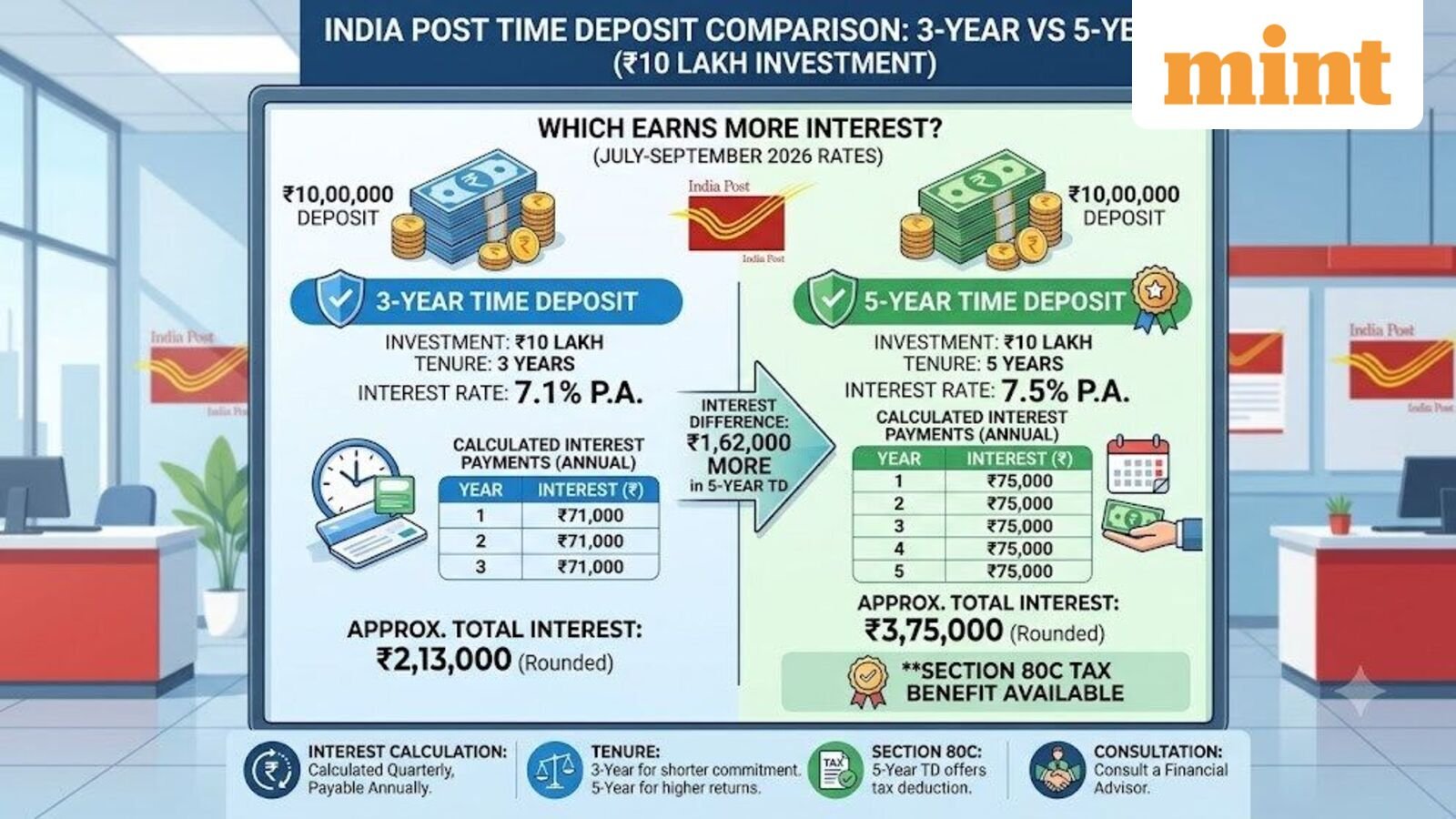
It is important to keep in mind that for the July-September 2026 quarter, the government has retained the interest rate at 7.1% per annum for 3-year TDs and 7.5% for 5-year TDs. These rates apply to deposits opened during the quarter. The complete calculations on ₹10 lakh are discussed below.
Note: Illustration assumes the prevailing rate remains applicable throughout the respective tenure. Interest is calculated quarterly but payable annually. The interest rates are as of 27 September 2026, and are taken from the official website of India Post.
Therefore, on a ₹10 lakh deposit, the 5-year TD would generate about ₹3.75 lakh in interest over 5 years, in comparison with about ₹2.13 lakh over a 3-year TD. The approximate difference of ₹1.62 lakh is earned, although the funds remain invested for an additional 2 years in the 5-year option.
Which Post Office TD should you choose?
The eventual choice in this case largely depends on when an individual actually requires the money. A 3-year Post Office TD has a shorter tenure and might be more meaningful for individuals who might need funds sooner. A 5-year tenure TD might offer a higher current interest rate and might be more meaningful for conservative investors, as it requires a longer commitment.
The 5-year TD also qualifies for the applicable Section 80C tax deduction, subject to the prevailing income-tax related rules and conditions. The interest earned on the deposit is taxable under the investor’s applicable tax rules.
It is also vital to keep in mind that TD interest is calculated quarterly but paid annually. Also, unwithdrawn annual interest does not itself earn additional interest under the scheme.
In summary, for a ₹10 lakh investment, the 5-year Post Office TD currently helps an investor earn more total interest because it offers a slightly higher rate, even though it runs for a longer period.
Still, investors who may require their funds after 3 years may prefer the shorter TD. The final decision in this regard is individualistic and should be taken after proper due diligence and consultation with a certified financial advisor.
Finally, small-savings interest rates are reviewed quarterly by the Ministry of Finance, so investors should check the prevailing rate before opening a new deposit.
Disclaimer: The calculations are illustrative estimates only. Interest rates are subject to change, so investors should check the latest rates on the official India Post website before investing. Readers should make investment decisions after due diligence and consider consulting a qualified investment professional and tax adviser.