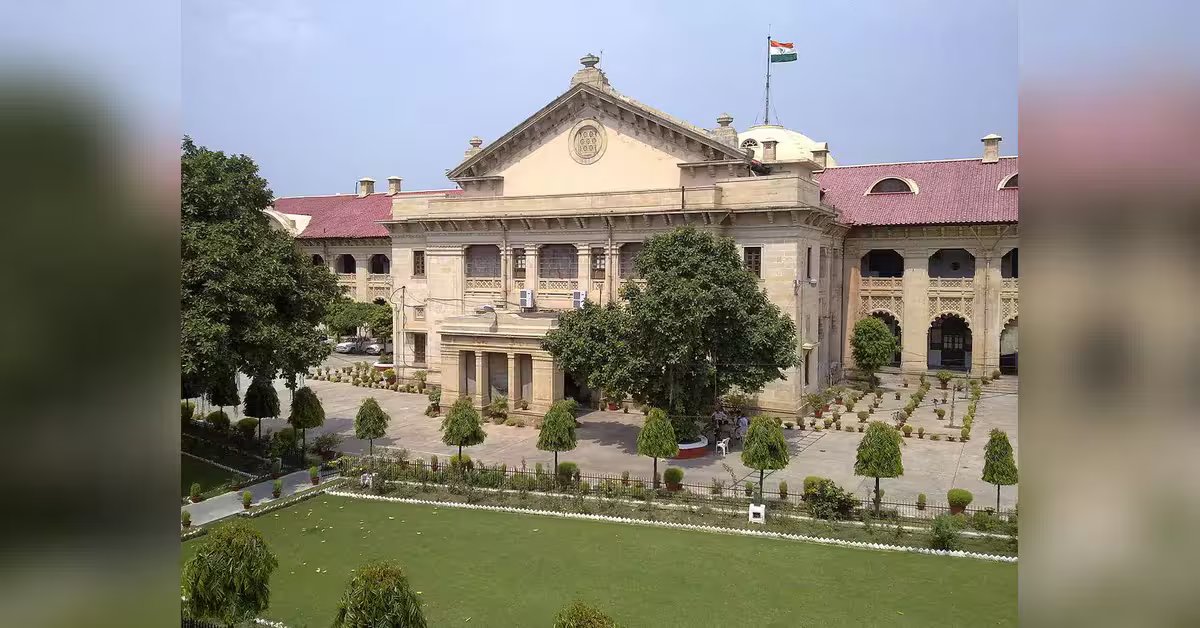
SBI Loan Recovery: Can banks recover loans from life insurance payouts? Allahabad HC weighs in | Personal Finance
Can a bank recover a deceased person’s loan from money received by his widow as a life insurance payout? Earlier this week, the Allahabad High Court took a prima facie view that a bank cannot recover loan dues from such insurance proceeds when the widow was neither the borrower nor the guarantor.
The court directed the State Bank of India (SBI) to refund ₹17,29,999 deducted from the woman’s bank account, or explain through affidavits why the refund should not be made.
What is the case about?
The case concerns Priti Singh, whose husband, Ambesh Kumar Singh, had taken a personal loan from SBI while working as the Headmaster of a primary school in Uttar Pradesh’s Kaushambi.
The court said the husband died in a road accident on June 7, 2025, without repaying the loan. After his death, the insurance proceeds of ₹50 lakh were credited to Priti Singh’s bank account.
The SBI subsequently deducted ₹17,29,999 from that account to recover the outstanding loan amount. Singh challenged the recovery, saying she was neither a borrower nor a guarantor for the loan.
What did the loan agreement say?
The SBI relied on Clause 18(iii) of the loan agreement signed by the deceased borrower on February 7, 2025.
The clause gave the bank a right of set-off and lien over monies, accounts, securities, goods and other assets and properties belonging to the borrower or standing to the borrower’s credit, whether held individually or jointly with others.
What did the high court say?
The court said the clause was “very widely worded” and gave the bank a “paramount right to set off” and a general lien over the borrower’s assets. But it found that this did not, prima facie, cover insurance proceeds received by the widow after the borrower’s death.
“Prima facie, in our considered opinion, the clause does not entitle the Bank to recover from proceeds of insurance that the petitioner, as the widow of the assured, has received upon his demise,” the court said.
The judges said that under a life insurance policy, the proceeds become payable upon the death of the insured and “possibly, can never be owned by him”. The court added that the proceeds are not the deceased’s money or property, but belong to the beneficiary.
The court further said, “It is not an estate, which the deceased passes on to his heirs, but a social security measure or a benefit, which the deceased acquires in his/her own right, after the assured is no more.”
According to the court, the bank’s clause dealt with assets owned by the deceased while he was alive. It did not cover benefits under a life insurance policy that went to the nominee or beneficiary after his death.
SBI asked to refund ₹17.29 lakh
In its interim order, the high court directed the senior manager of SBI’s Regional Office in Prayagraj and the branch manager of its Colonelganj branch to ensure the refund of ₹17,29,999 to Singh’s account. Or, they can file separate affidavits within two weeks explaining why the interim direction should not be made absolute.
The matter has been listed for October 7, 2026, along with a report on the status of the pleadings.