Debt-to-income ratio explained: How lenders assess your repayment capacity
A strong credit score can help improve your chances of getting a loan. Still, it is not the only metric lending institutions consider. Another very important metric that is given equal weight is your debt-to-income ratio (DTI). It shows a lending institution how much of an individual’s monthly income is already committed to debt repayments.
This makes DTI an important measure of an individual’s repayment capacity, particularly when they are applying for a large loan, such as a home loan.
So an individual’s credit score reflects their debt management behaviour, whereas their DTI reflects their current financial reality. This makes DTI an important measure of their overall repayment capacity, particularly when they are in urgent need of fresh debt.
Keeping these basics in mind, let us discuss the meaning and significance of the debt-to-income ratio in detail.
What is the debt-to-income ratio, and how is it calculated?
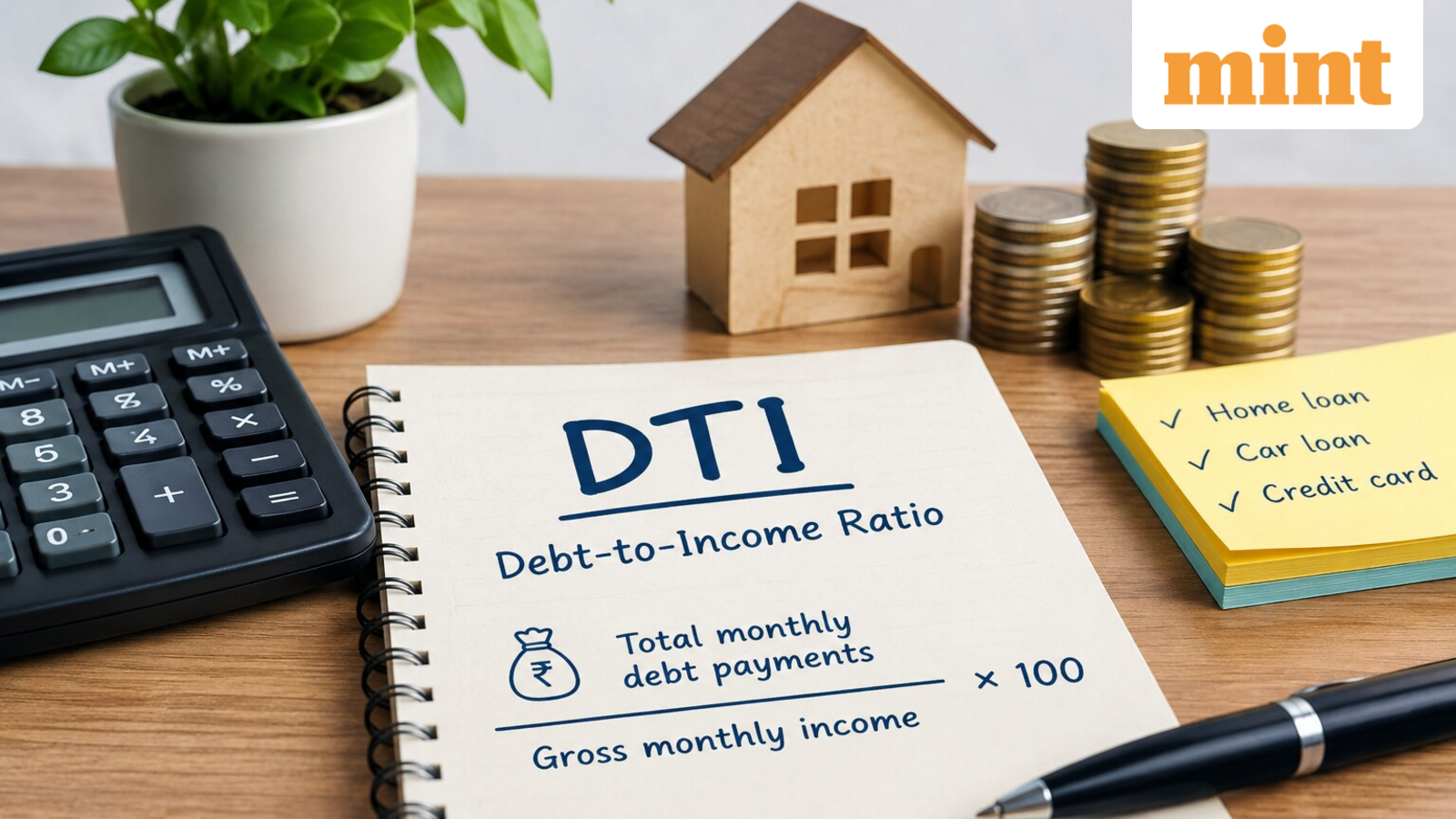
DTI compares an individual’s total monthly debt payments with their gross monthly income. The formula for the same is as follows:
DTI = (Total monthly debt payments ÷ Gross monthly income) × 100
For example, if A earns ₹80,000 per month and pays
- ₹18,000 towards an ongoing home loan.
- ₹8,000 towards a car loan
- ₹4,000 as a credit card minimum payment
Then their total monthly debt obligation totals to ₹30,000.
In such a case, their calculated DTI would therefore be 37.5%.
Furthermore, there is no single RBI-prescribed ideal DTI. According to the country’s prominent credit bureau, CRIF High Mark, many lending institutions generally prefer a DTI of 40-43%. Even though the threshold can vary based on the lending institution, type of loan and the borrower’s overall profile.
Note: The division is illustrative only. It is subject to change based on the loan type, borrower, and credit bureau metrics.
How can borrowers improve their DTI?
A high debt-to-income ratio (DTI) does not automatically mean that an individual’s loan application will be rejected. Lenders may also assess income stability, employment, repayment history, past defaults (if any) and credit profile before clearing a loan.
That is why, in order to improve their debt-to-income ratios before applying for a fresh loan, borrowers can:
- Pay down existing debt: Lower EMIs can help in reducing DTI.
- Avoid new borrowing: New loans, credit lines or credit card obligations can increase the ratio. Make sure new debt is avoided in order to keep DTI in check.
- Increase income: A higher eligible income can improve DTI.
- Check your credit report: Correct any inaccurate loan or repayment information before applying.
In simple terms, a credit score as a metric reflects an individual’s past credit behaviour. DTI shows how much of their current income is already dedicated to meeting debt obligations.
Both metrics have their own significance and are important tools for credit bureaus and lenders. Carefully reviewing them before applying for a loan can help an aspiring borrower ensure that their borrowing decisions are made after analysing financial realities, and it can also help an individual stay properly prepared for the lender’s assessment.