Stuck in a debt cycle? 5 ways to get out of EMI trap and regain control of your finances
Equated Monthly Instalments (EMIs) can result in making purchases easier to manage. Still, multiple instalments can gradually consume a large chunk of your monthly income. What generally starts as a comfortable, easy-to-manage way to spread payments can eventually turn into a serious cash-flow problem without efficient planning. It could leave little room for savings, emergencies or other financial obligations.
The best way to combat such a difficult situation is not necessarily to stop borrowing altogether. It is to acknowledge the debt you already have, prioritise expensive loans strategically, and ensure that new EMIs do not pile up.
To successfully overcome EMI trap-related problems, it is vital to quickly learn from your past mistakes and ensure you don’t repeat them.
Start by taking stock of your debt
The first step is to calculate your total monthly EMI burden and compare it carefully with your take-home income. This will give you a fair idea of the total debt you need to manage.
Raj P Narayanam, Executive Chairman, Zaggle, explained this in detail. “The EMI trap rarely announces itself; it builds quietly, one convenient instalment at a time, until your income is committed before it arrives. The exit begins with a single honest calculation: add every active EMI and compare the total to your monthly take-home. If it exceeds 40%, you are over-leveraged.”
Narayanam says one should prioritise prepaying the highest-interest EMI first, resist converting fresh purchases to instalments and always pay your credit card outstanding in full every month. “A credit card used wisely is a tool, not a trap. Financial freedom is not about earning more, it is about owing less,” he noted.
Vijendra Singh Sekhawat, CEO, CFPL, added, “EMI stress usually builds quietly, through several small loans rather than one large one, until repayments take up more of monthly income than the household can comfortably carry. Start by listing every EMI and ranking them by interest cost. Any surplus should go towards prepaying the costliest loan first, after checking for prepayment charges. Avoid taking a new loan to repay an old one unless it clearly lowers your total cost. Most importantly, speak to your lender at the first sign of difficulty, not after a missed payment. Early conversations leave far more room for a workable solution.”
Stop the cycle of endless debt and rebuild cash flow
Now, reducing existing debt is only half the solution. Make sure that you avoid borrowing for discretionary purchases, as this can prevent the entire cycle from starting again. Automating debt repayments can also help avoid missed dues and additional expenses.
Adhil Shetty, CEO, BankBazaar, touched on this aspect. “An EMI trap is essentially a cash flow mismatch, and escaping it requires systematic restructuring rather than panic. First, assess your debt and pause new credit. Prioritise expensive dues and automate repayments to prevent delays. If stress arises, contact your lender early to explore loan restructuring or tenure extension. Consolidating multiple debts into a low-cost loan also helps reduce monthly outflows. Responsible borrowing and structured repayment plans are essential tools to rebuild your financial health and regain complete control of your finances,” Shetty pointed out.
For borrowers facing persistent stress, speaking to lenders early may provide more options than waiting until payments are missed. In case of doubt, it is prudent to seek guidance from a certified financial advisor, as professionals can help manage debt obligations more effectively. Furthermore, debt consolidation can also be considered, but only if the new loan genuinely reduces the overall borrowing cost after fees and charges.
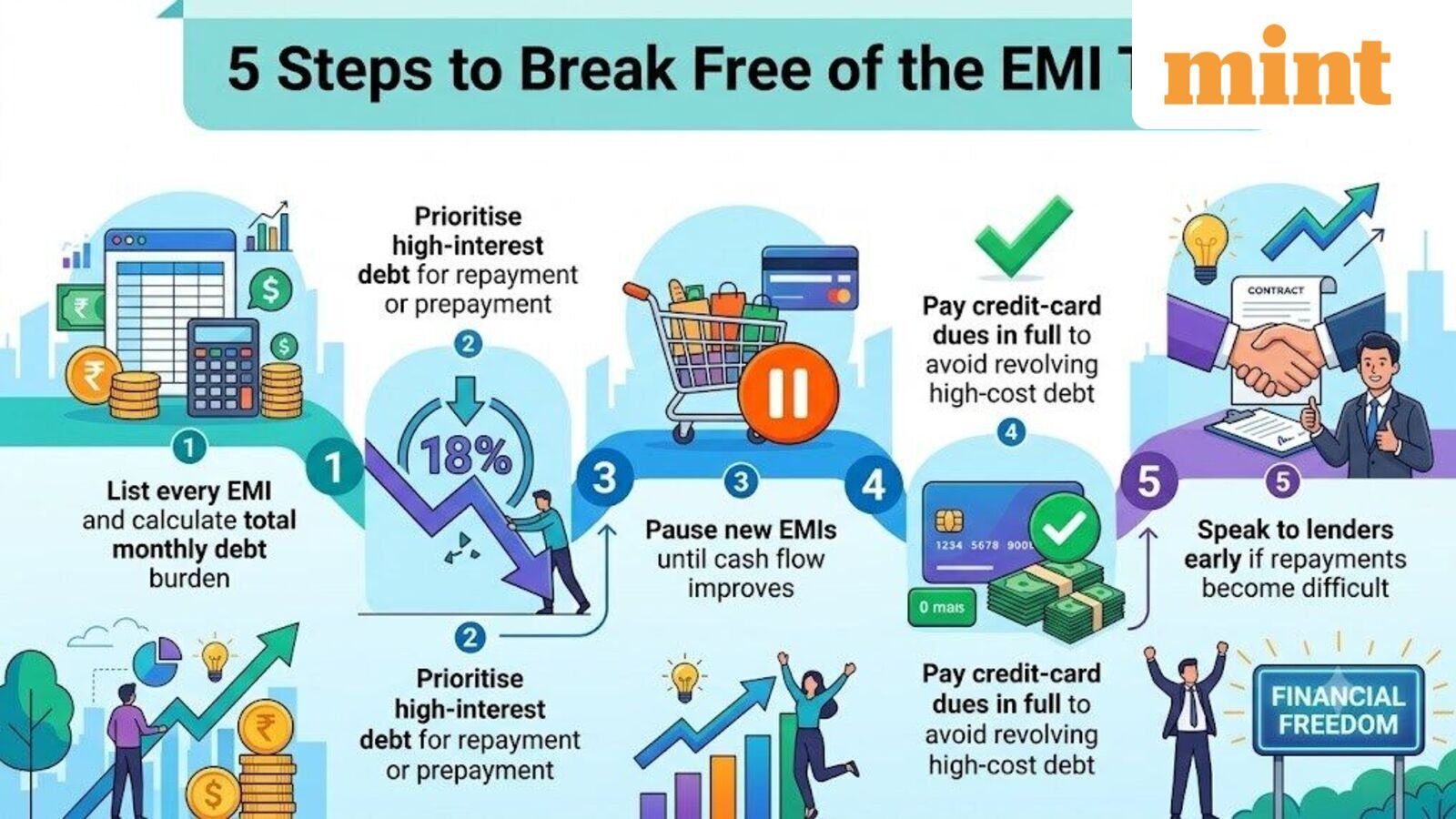
5 steps to break free of EMI trap
- List every EMI and calculate your total monthly debt burden.
- Prioritise high-interest debt for repayment or prepayment.
- Pause new EMIs until your cash flow improves.
- Pay credit card dues in full or other similar debts to avoid revolving high-cost debt.
- Speak to lenders early if repayments become difficult.
Getting out of the EMI trap is eventually about creating breathing room in your monthly budget. Once debt stops consuming an excessive share of your income, the freed-up funds can be gradually redirected towards essentials such as emergency savings, investments, and other financial objectives.