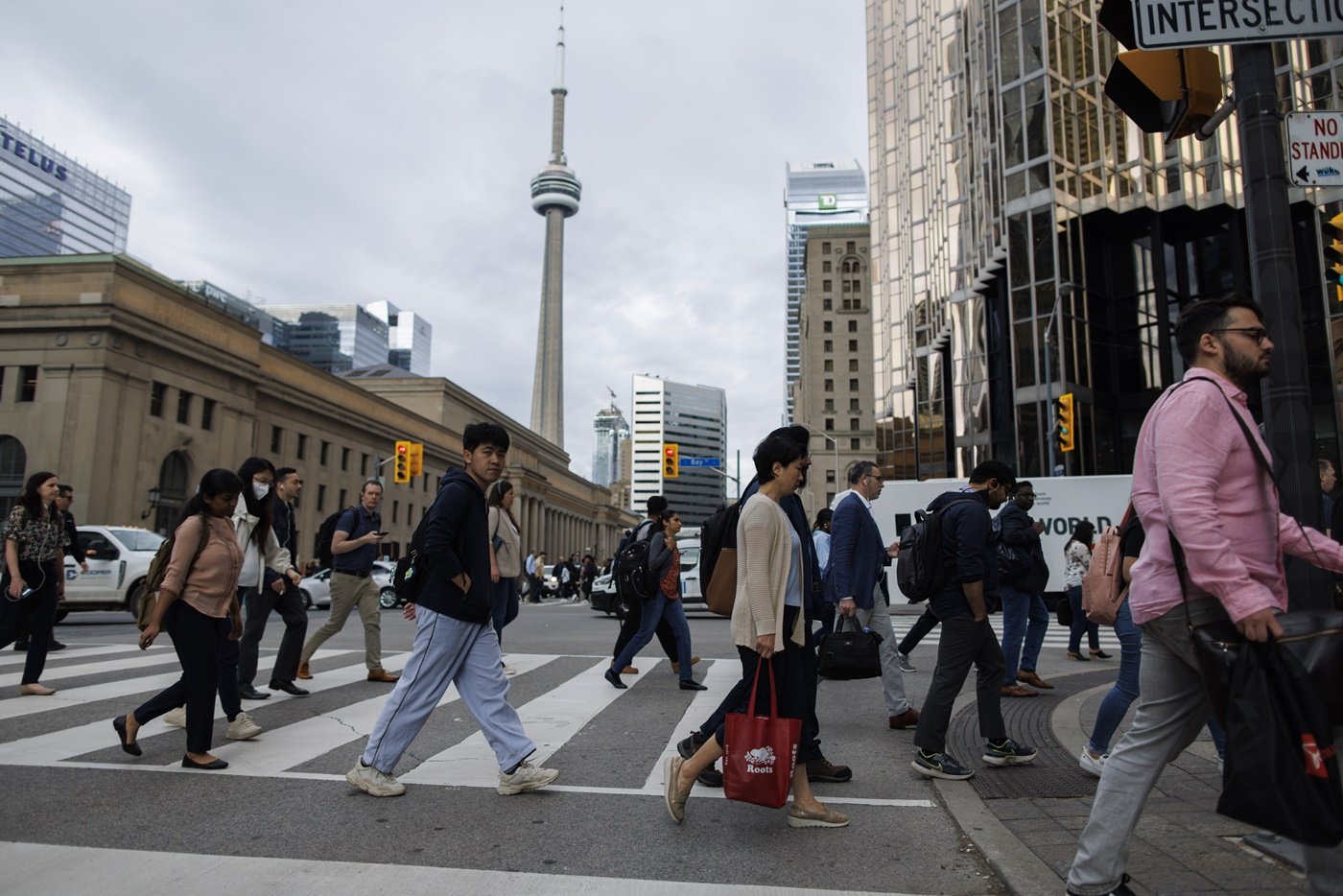
Canada’s population growth hits lowest rate since World War I
By Nojoud Al Mallees
(Bloomberg) — Canada’s population increased by 0.5% in the 12-month period that ended on July 1, marking the slowest pace of growth since World War I as the government maintains restrictions on immigration.
The country’s population rose by about 189,000 people to 41.8 million, which marked the smallest percentage change since 1915-16, Statistics Canada reported Wednesday.
The slowdown follows a period of exceptionally strong population growth driven by immigration after the COVID-19 pandemic. That rapid growth — which largely reflected more international students and temporary foreign workers — fuelled sharp criticism of former prime minister Justin Trudeau’s government, and ultimately led to immigration policy changes aimed at reducing the number of people allowed into the country.

BMO senior economist Robert Kavcic noted the data revised up previous figures that had suggested the population was shrinking, making the report less negative than at first glance.
“But the reality is that we’re seeing 0.5% population growth, which is still a major shift from the last couple years,” Kavcic said.
Wednesday’s report shows the number of non-permanent residents declined by 154,614, bringing the population of temporary residents to 2.8 million. The number of new immigrants welcomed to the country also declined for a fourth consecutive year, reflecting lower annual targets for permanent resident admission.
The national slowdown in population growth has also led to a resumption in population aging, as the number of people in their 20s dropped, reflecting fewer international students.
Meanwhile, Alberta had the fastest growth rate among provinces at 1.5%.
The slowdown in population growth has been one of the drivers of softer economic activity in the country, as tariffs also batter some sectors and fuel uncertainty. The housing sector in particular has felt the impact from lower immigration levels, with both sales activity and home prices stalling.
Kavcic said Canada’s experience post-pandemic demonstrated the economy can’t handle population growth that exceeded 3%, making the current slowdown a “necessary adjustment.”
While the strong population growth boosted gross domestic product at the time, the country struggled with productivity and in attracting investment. Kavcic said Canada is now pivoting on that as well, hosting its first investment summit last week and changing federal policies to incentivize capital investment.
“So if it plays out that way, that’s a pretty sharp reversal from what we’ve seen over the last decade in Canada, which was a lack of capital investment and really, really significant population growth,” he said.
–With assistance from Erik Hertzberg.
©2026 Bloomberg L.P.
Visited 73 times, 73 visit(s) today
bloomberg Dashboard population population growth Robert Kavcic statcan statistics canada
Last modified: September 23, 2026