Is SpaceX Actually Worth $10 Trillion?
Wall Street is generally bullish on Space Exploration Technologies (SPCX +1.89%) shares. The average price target for the space stock is $232 as I write this, implying roughly 50% upside. More than 30 analysts currently cover the company known as SpaceX, the majority of whom have a “buy” rating on its shares. Only two analysts currently have a “sell” rating.
The most bullish analyst, Brian Gesuale of Raymond James, has an astounding $800 price target on shares. That would value SpaceX at $10 trillion.
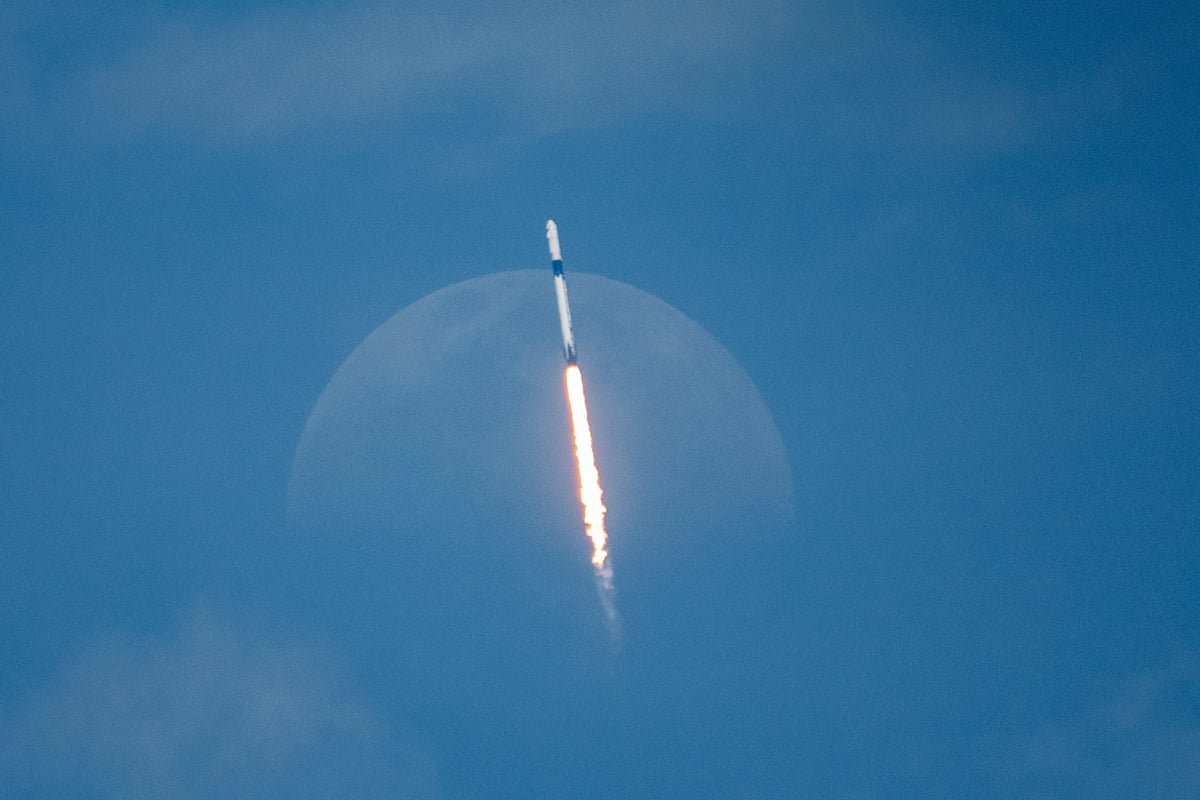
Image source: Getty Images.
To understand why Gesuale is so optimistic, it’s important to understand where he sees SpaceX heading in the years ahead.
Here’s how SpaceX could be worth $10 trillion
Gesuale thinks SpaceX’s business will be critical to the foundation of the 21st-century economy, similar to the railroads of past eras. “We see the company as one of the defining industrial infrastructure companies of the 21st century,” Gesuale wrote. “Just as railroads, electric grids, and the Internet reshaped prior economic eras, we believe SpaceX is building the foundational platform for the next generation of industrial capacity.”

Space Exploration Technologies
Today’s Change
(1.89%) $2.87
Current Price
$154.72
Key Data Points
Market Cap
Day’s Range
$150.55 – $154.94
52wk Range
$104.83 – $225.64
Volume
59.2M
Avg Vol
96.6M
Gesuale said he thinks that SpaceX’s Starship megarocket will cut space launch costs dramatically, that the company will be able to successfully scale orbital data centers, and that, over the long term, SpaceX’s businesses will generate trillions of dollars in annual revenue.
In short, Gesuale is bullish that SpaceX will execute successfully on essentially all of its potential growth opportunities. Every other analyst, it seems, believes that realizing this growth could encounter more challenges along the way.
Is that assessment solid?
While it’s often not wise to go along with the crowd, it’s relatively easy to agree with what those other analysts are apparently seeing right now. Yes, AI is a generational investment opportunity. And yes, SpaceX is uniquely positioned to become one of the world’s leading AI companies. But that doesn’t mean all of its growth opportunities will be realized exactly as planned.
For example, consider orbital data centers. SpaceX’s ability to get payloads into space cheaply makes it perhaps the only company currently capable of realizing such a lofty vision. Space-based compute could benefit from low temperatures, perhaps dramatically lowering cooling costs. Plus, much more solar power is accessible in orbit than on land, allowing data centers in space to generate large amounts of continuous, low-carbon energy.
Some experts believe, however, that the physics constraints involved will make orbital data centers unfeasible, even if getting the equipment to space is affordable. Convection constraints, for example, make it difficult for heat exhaust to move away from the components despite the low surrounding temperatures.
And it’s not just cooling that will be a challenge.
“The lack of atmosphere exposes space-bound objects to much higher doses of the sun’s ultraviolet rays, which can degrade radiator infrastructure, limiting the technology’s performance and lifespan,” the Brookings Institution wrote. “General maintenance difficulties in space, infrastructure size and weight, and economic costs similarly decrease the possible deployment of orbital data centers — not to mention the increased likelihood of orbital collisions given the growing number of satellites in space.”
Perhaps SpaceX can overcome these physics constraints. Perhaps not. But factoring in inevitable success on this front into the company’s valuation seems overly optimistic.