G2’s CFO says SaaS expos may become obsolete
CFOs have never had more software buying options, which for many finance teams has made finding the right tool its own job.
G2, a business software marketplace built around user reviews, has made a business out of helping buyers sort through those choices. Now, CFO Alex Bradley is watching AI change how buyers research software and potentially make purchasing decisions.
Bradley believes that shift could eventually make conferences and events that showcase dozens of SaaS tools via sales booths obsolete. He spoke with CFO.com about using AI to scale, why CFOs are moving further upstream in software purchases and what working at General Electric early in his career taught him about operating beyond finance.
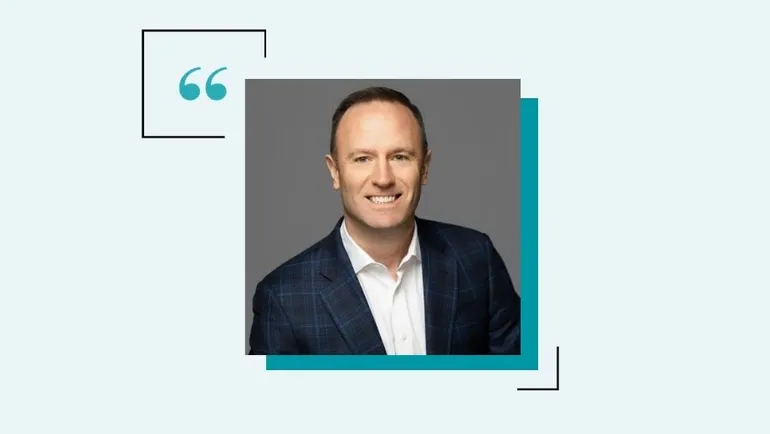
Alex Bradley

Permission granted by Alex Bradley
CFO, G2
First CFO Position: 2024
Notable previous employers:
- Transact Campus
- Thermo Fisher Scientific
- Vail Resorts
- General Electric
This interview has been edited for brevity and clarity.
ADAM ZAKI: You’ve worked across different industries and company structures. Which experience best prepared you for the day-to-day role of a CFO?
ALEX BRADLEY: GE is the employer I would point to. It has a long history of developing successful leaders, and I liked having a career where I couldn’t predict what I would do next. I wasn’t always intentional about how that variety would benefit me later. I was curious, and GE was willing to bet on people. Once you demonstrated an ability to do something and earned credibility, the company stretched you in ways that were uncomfortable but valuable for your growth.
I started in consumer financial services in Connecticut before moving into a commercial role in Europe. I later joined a smaller GE business in Salt Lake City in a pricing role, which was eventually sold to American Express. When I returned to GE, I joined its asset management business. After Dodd-Frank, the company asked me to move into risk because GE Capital was facing new regulatory requirements.
That was one of the biggest leaps of faith in my career. I was a finance person wondering what I knew about risk. GE needed enterprising people who could step into a white space and figure it out. That was really the mantra within its finance organization. You learned to figure things out, and that extended well beyond the numbers into how the business operated.
Whether you were in your first management role or serving as the CFO of a business unit, you were expected to act as both the CFO and COO of your area. If you were the primary finance partner to the chief people officer, for example, you were expected to understand that function inside and out, including how it assessed talent and thought about retention.
That CFO-COO mindset became natural as you advanced. It gave me the courage and conviction to move into private equity-backed companies earlier in my career and ultimately into my current role.
That CFO-COO mesh of duties is becoming more formalized across corporate finance. Do you think the rise of the “COFO” is mainly about the title, or does it reflect something bigger?
A lot of CFOs are already doing that work without having the title. Finance often sits at the nucleus of a company. Other functional leaders may go very deep within their areas, but finance has to see everything.
When you’re building the annual plan, evaluating risks and opportunities or influencing longer-term strategy, you have to understand what is happening outside the company and how it affects the business. You also need to know where the organization is executing well and where it isn’t. Finance leaders naturally anchor themselves in data. When they combine that with operational capabilities, they can begin to extend their influence across the business.
The CFO has also become a strong partner to the CEO. CEOs need an adviser who understands what is happening inside the company at a deep level, particularly because they spend so much time managing external relationships with customers and investors.
You see something similar with M&A. The CEO may play a larger role in shaping the strategy, while the CFO is often responsible for executing it. CEOs increasingly want CFOs who can stretch strategically and operationally because that gives them more operating leverage.
With software capabilities and pricing changing so quickly, how do you think CFOs are getting involved earlier in purchasing decisions?
CFOs are getting more involved than ever before, particularly in the current environment. CFOs have traditionally helped establish procurement processes, set delegations of authority and adjust those controls based on the level of risk facing the business. But the pace of change is now so rapid that a capability considered best in class six months ago may already be standard.
Pricing models are also evolving quickly. As a buyer, I want to understand what teams are advocating for and get involved earlier in the process. It isn’t because I don’t trust the people making those decisions. There is simply so much volatility and uncertainty that the company needs to preserve flexibility.
That is why buyers are looking for shorter contracts and more flexible pricing. You don’t want to commit to something that could be leapfrogged tomorrow, either in its capabilities or economics, and then find yourself unable to make a change.
AI adds another dimension because it can fundamentally change how a company operates. CFOs often own the value-creation plan, which requires them to determine how the company allocates its people and other resources. If a team wants to change how it works by introducing an AI tool, the CFO needs to understand whether it will augment or replace existing work and whether the expected outcome justifies the investment.
The only way to develop a useful mental model for those decisions is to get involved. My own mental model needs constant recalibration. What I understood in a previous role may no longer apply today.
Where have you seen tangible returns from AI within your own organization?
As a company, we have leaned heavily into enabling employees to test different tools. The right tool is often situational, so I focus more on the outcome. If someone on my finance, legal, M&A or IT team brings me an idea, I want to understand what they are trying to accomplish and how the tool will help them get there.
“Our AI fluency has to improve if we want to keep scaling without meeting every new need by hiring more people. The tools are available, but we have to invest our own time in learning how to use them.”

The process is just as important because the tool alone will not deliver the outcome. It often needs to be paired with a stronger process, and humans still need to remain involved. I expect the level of human involvement to decline over time.
We recently completed our annual audit and, with full transparency from our auditors, used large language models in new ways that saved us time and money. We were able to do work ourselves, including Monte Carlo simulations, for which we might previously have sought outside support.
Our legal team has also scaled without adding headcount, even after G2 acquired Gartner Digital Markets in February and tripled in size overnight. A headquarters-driven legal team cannot support an enterprise three times the size without redesigning how it works. AI tools have allowed people to become more efficient in their day-to-day work.
We are also using AI in corporate development to evaluate deals and working toward using it in our planning process. I prefer having my team develop these capabilities rather than immediately bringing in a systems integrator or consultant. The team will ultimately own and operate the process, so it needs to build that muscle.
Our AI fluency has to improve if we want to keep scaling without meeting every new need by hiring more people. The tools are available, but we have to invest our own time in learning how to use them. I also think that creates opportunities for employees to grow in their roles and find more satisfaction in their work.
CFOs often complain that software prices rise as vendors add features they never asked for. How should software companies balance product development with delivering value to customers?
Companies need to approach it as a partnership rather than a sales motion. When I buy into the vision for a product, there are certain things my team and I can do ourselves. But if the vendor helps us achieve the outcome it sold us, it earns our trust.
At that point, price becomes less central to the conversation. I’m asking what outcome we can achieve next and what is on the vendor’s roadmap. Companies need to invest in implementation, onboarding and activation because customers are making a bet when they choose a vendor. The vendor has to help them move through that journey and deliver on what it promised.
When customers say they didn’t want a new feature and don’t understand why they are paying for it, companies need to take that feedback seriously. They should reflect on the purpose of the product and the outcomes it is supposed to deliver. Additional features can sometimes water down a product by making it more confusing. If customers don’t know how to use those features, they may start questioning the product’s value.
Sometimes simplicity is more impactful. The use case still matters, whether you are selling to a CIO, an engineer or an FP&A leader. Companies need to put themselves in the user’s seat and understand how that person will use the product. That can reduce the disconnect between the seller and buyer before it develops.
When you go to a conference and see a mass array of SaaS vendors, what do you believe will separate the companies that are still around five years from now from the ones that aren’t?
I actually wonder whether the events where you see all those vendors will still be around in five years.
Discovery has changed, and time is precious. Buyers can now identify software for a particular use case almost instantly through large language models. Trusted reviews matter because they provide firsthand accounts from actual users explaining what works, what doesn’t and how they use the product. That can be more valuable than walking around a conference and speaking with someone who is trying to sell you something.
AI is already accelerating the research and discovery process, but buyers are still spending significant time evaluating their options. More than 60% of users currently use AI during research and evaluation, according to our buyer behavior report, while less than 10% allow an AI agent to make the purchasing decision within established guardrails.
I think that smaller figure is where the growth will occur. More purchasing decisions will happen in a headless, agent-driven environment because walking a conference floor is inefficient. As buyers become more confident in what agents can evaluate, more of those decisions will be delegated to them.
Agents can process far more information in a day than any individual can. If buyers trust their recommendations, they can reclaim that time for other work. That is why I question whether those events will exist five years from now.