Repaid your loan but your credit report still shows it as active? Experts explain how to fix it
Clearing a pending loan is generally considered the end of a borrower’s repayment obligation. However, there are several other important aspects that need attention before a loan can be considered fully closed.
One of these is the borrower’s credit report. A loan may continue to appear as ‘active’ on a credit report for some time after the final payment has been made. Borrowers should therefore follow up with the lender and check their credit report to ensure the loan has been properly closed and accurately reported.
This is because credit bureaus rely on information provided by banks and other lending institutions. Lenders generally update information periodically, so a recently closed loan may take some time to be reflected on the borrower’s credit report.
First check the lender’s loan closure records
Before raising a dispute over a loan that continues to appear as active, borrowers should first confirm whether the lending institution has actually marked the account as ‘closed’.
While checking with the lender and speaking to the concerned officials, borrowers should keep the original loan closure letter, the no-dues certificate with acknowledgement details, the final payment receipt and other relevant account documents handy.
Kaushik Chatterjee, Founder & CEO, lendingplate, explains this aspect in detail, stating, “After a loan is fully repaid, there can sometimes be a gap before the closure status is reflected on the borrower’s credit report. Borrowers should first confirm the closure with the lender and retain the relevant documentation. If the account continues to show as active, they can raise a dispute with the credit bureau and submit supporting documents for correction.”
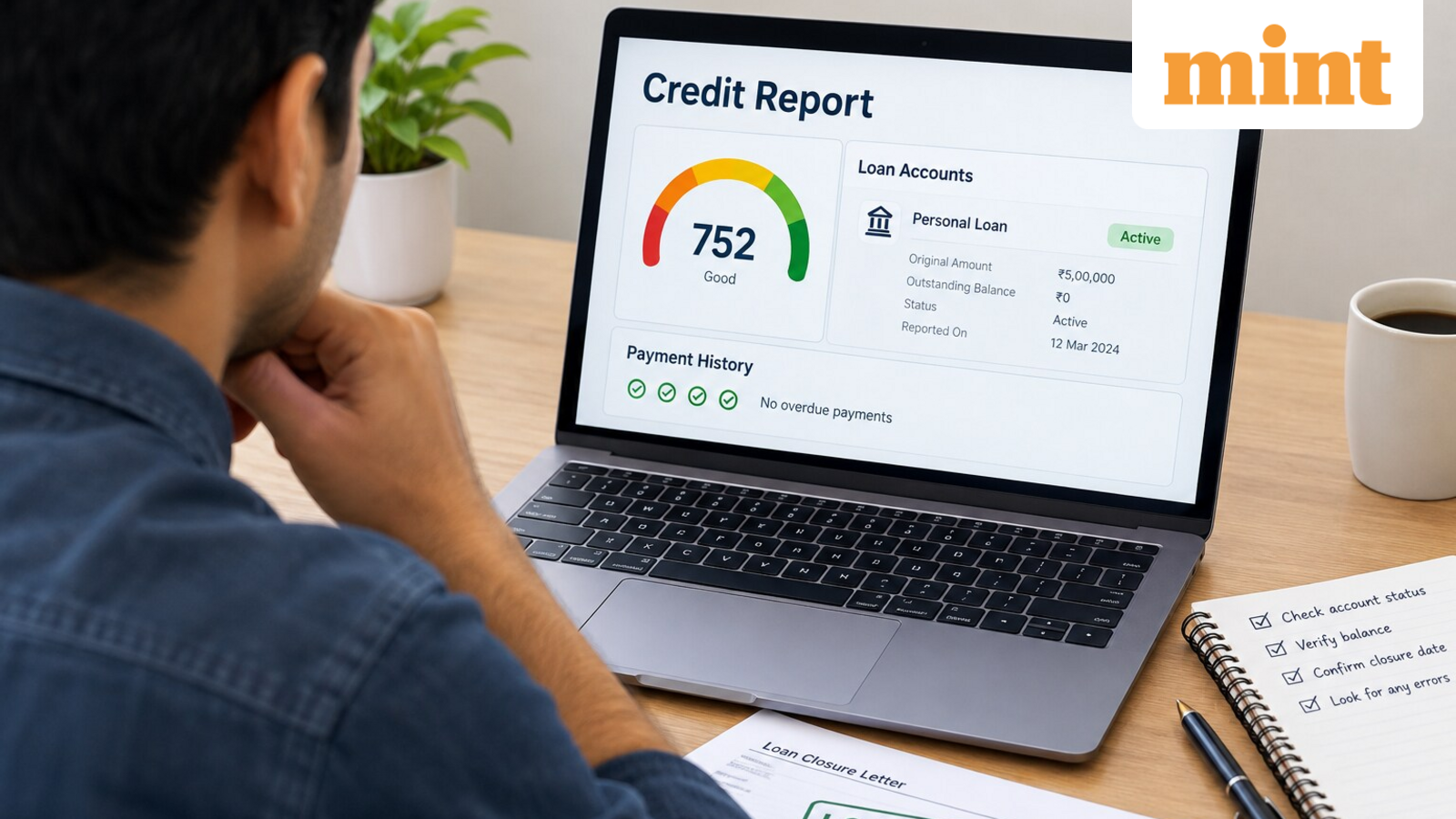
Loan closed? Check these details on your credit report
Keeping these basics in mind, here are the key aspects to consider and check carefully before proceeding to raise a credit dispute.
|
What to check |
What to do |
|---|---|
| Account status | Check whether it says ‘closed’ if it reflects closed then it will not have any adverse impact on your credit score. |
| Outstanding balance | Ensure it shows zero as per the final payment made by you. This figure should align accurately with the loan closure and payment details you have been provided by your lending instituion. |
| Closure date | Verify the final repayment/closure date. Make sure it matches accurately with the loan closure details provided to you from your lending institution. |
| Payment history | Check for any incorrect overdue amounts, ongoing loans marked in your name or other common discrepancies. Clarity on this helps in building borrower integrity. |
Note: The above list is illustrative only and not exhaustive. For complete details, refer to the official website of your respective credit bureau and lending institution.
What if the loan still shows as active?
Shakti Shekhawat, Business Head, BharatLoan, touches upon this in detail, explaining, “Borrowers should not assume that repayment automatically means their credit report will be updated immediately. Once a loan is closed, they should review the account status, outstanding balance and closure date on their report. In case of a mismatch, approaching the lender with the closure records should be the first step, followed by a formal dispute if the issue persists.”
If the lending institution does not rectify the information, borrowers can dispute the report with the credit bureau that initially issued it. Now, the overall resolution timeline may depend on the lending institution’s response and applicable credit reporting rules.
Under the RBI’s framework, borrowers may also be entitled to compensation of ₹100 per calendar day if a complaint regarding the rectification or updation of credit information is not resolved within 30 calendar days from the date of its initial filing, subject to the applicable rules and regulations.
A closed loan should therefore not simply be ignored on a credit report. After completing repayment, borrowers should check the account status, review any changes to their credit score and verify that the loan has been correctly reported. They should also retain all essential loan closure documents and related records.
Taking these steps can help borrowers promptly identify and rectify reporting errors. It can also help keep their credit profile up to date and free of inaccurate defaults, errors, or omissions.
Maintaining an accurate credit profile can support future borrowing, including applications for personal loans, home loans and credit cards.