Policy ‘Regime Change:’ Warsh Takes Tougher Tone on Inflation
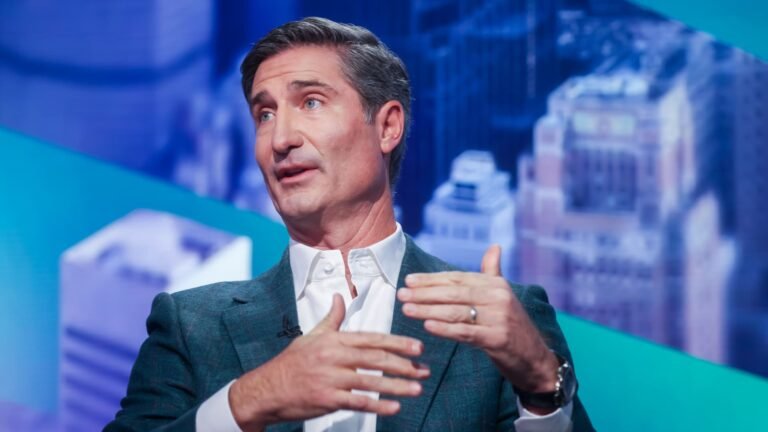
Federal Reserve Chairman Kevin Warsh on Tuesday reiterated his call for a policy “regime change” at the central bank and ramped up his recent tough talk on inflation during testimony before a Congressional committee.
In testimony before the House Financial Services Committee, Warsh called out the impact of inflation.
“It has been a tax on the American people and businesses. We plan on getting rid of that tax,” he said. “That means we need a regime change in policy, and we need new consideration of practices, some of which have been working, some of which haven’t.”
In remarks for delivery to separate congressional panels this week, Warsh amplified his rhetoric on inflation, while also touting the strength of the U.S. economy and benefits coming from business investment, particularly involving artificial intelligence.
Warsh will appear Wednesday before the Senate Banking Committee.
Task Forces Highlighted
The Fed Chair highlighted the five task forces he has created to look at all aspects of how the Fed conducts business. Those panels will examine the communications, technology, the balance sheet, economic data the Fed employs and the way it looks at inflation.
CNBC noted that taken together, Warsh said they will further his goals to remake the central bank.
“In six weeks, we have caused, I think, a sea change in new thinking-the beginning of a set of reforms that are going to be put in place across at least five dimensions in monetary policy,” Warsh said. “We made a lot of progress in six weeks, but I think it’s important to use this opportunity wisely.”
Warsh’s remarks come just two months into his term leading the central bank. Fed chairs are mandated to appear twice a year before Congress to deliver a monetary policy report then take legislators’ questions.
“Today we are at a hinge point in history. It’s up to all of us to meet this moment,” Warsh said Tuesday.
“The Fed’s number one objective is to get monetary policy right — or as near to it as we possibly can. That is our clear and constant aim, the star we steer by,” he added. “And if we get policy right — and we will — the inflation surge of the last five years will be a thing of the past.”
Inflation ‘A Choice’
Warsh takes over a Fed that has seen inflation exceed its 2% mandate since 2021. During his confirmation hearing earlier this year, he called inflation “a choice,” and emphasized repeatedly the importance of bringing down the cost of living during his first news conference.
The Fed Chair first made the pledge about “regime change” during an interview last summer with CNBC.
Warsh criticized past practices of the Fed, specifically a policy adopted in 2020 that allowed for above-target inflation after periods of lower prices. That policy, known as flexible average inflation targeting, specifically sought to address imbalances in employment, the type of thing that Warsh argues is outside the Fed’s scope.
“That central bank wasn’t the first central bank to ask for a little more inflation and end up with a lot more. It was a mistake,” he said. “The framework did not succeed in its objectives, and I am pleased that before my arrival, that my predecessors took that and cast it aside.”
Warsh noted that the persistently high inflation levels have “been an undue burden on American households and businesses” who have faced higher costs across the board, with the latest surge coming in good part from soaring energy prices.
On Tuesday, the Department of Labor released its Consumer Price Index that showed inflation eased to 3.5% in June, primarily thanks to energy prices that briefly fell after the U.S. and Iran signed a memorandum of understanding in a bid to end the ongoing war.
‘No Tolerance’
From May, consumer prices broadly fell 0.4%, more than economists had been expecting, NBC reported.
“While monthly price fluctuations are inevitable — especially in an unsettled world — underlying inflation over longer time horizons is determined largely by monetary policy,” Warsh said. “The members of our Committee have no tolerance for persistently elevated inflation. And we share a resolute commitment to restoring price stability.”
On broader conditions, the Fed Chair said the nation’s economy “is expanding at a solid pace, showing resilience in the face of recent developments.”
Warsh pointed to business investment that he called “the most striking feature” of the current climate.
“The rapid pace — which appears to be accelerating — reflects, in large part, the construction of data centers and the immense demand for the AI-related equipment and software that fill them,” Warsh said.
“We don’t know the extent to which the economy will benefit from the AI buildout,” he said. “Yet it seems inevitable that what is now called ‘AI investment’ will soon be called just ‘investment.’”
AI Productivity Boom
Previously, Warsh has said he expects an AI productivity boom will prove disinflationary — a thought challenged by some economists as well as his fellow Fed policymakers.
Warsh further gave more details about the five task forces he has created to conduct a comprehensive review of the Fed’s operations.
Together, he said the groups are part of “a new chapter at the Federal Reserve.” However, whereas Warsh previously faulted “incumbents” at the Fed for institutional problems, he has taken a more conciliatory tone since he’s been in office, CNBC said.
“It’s been a privilege to return to the Fed and to work again with so many talented and dedicated people I’m fortunate to call my colleague,” he said.