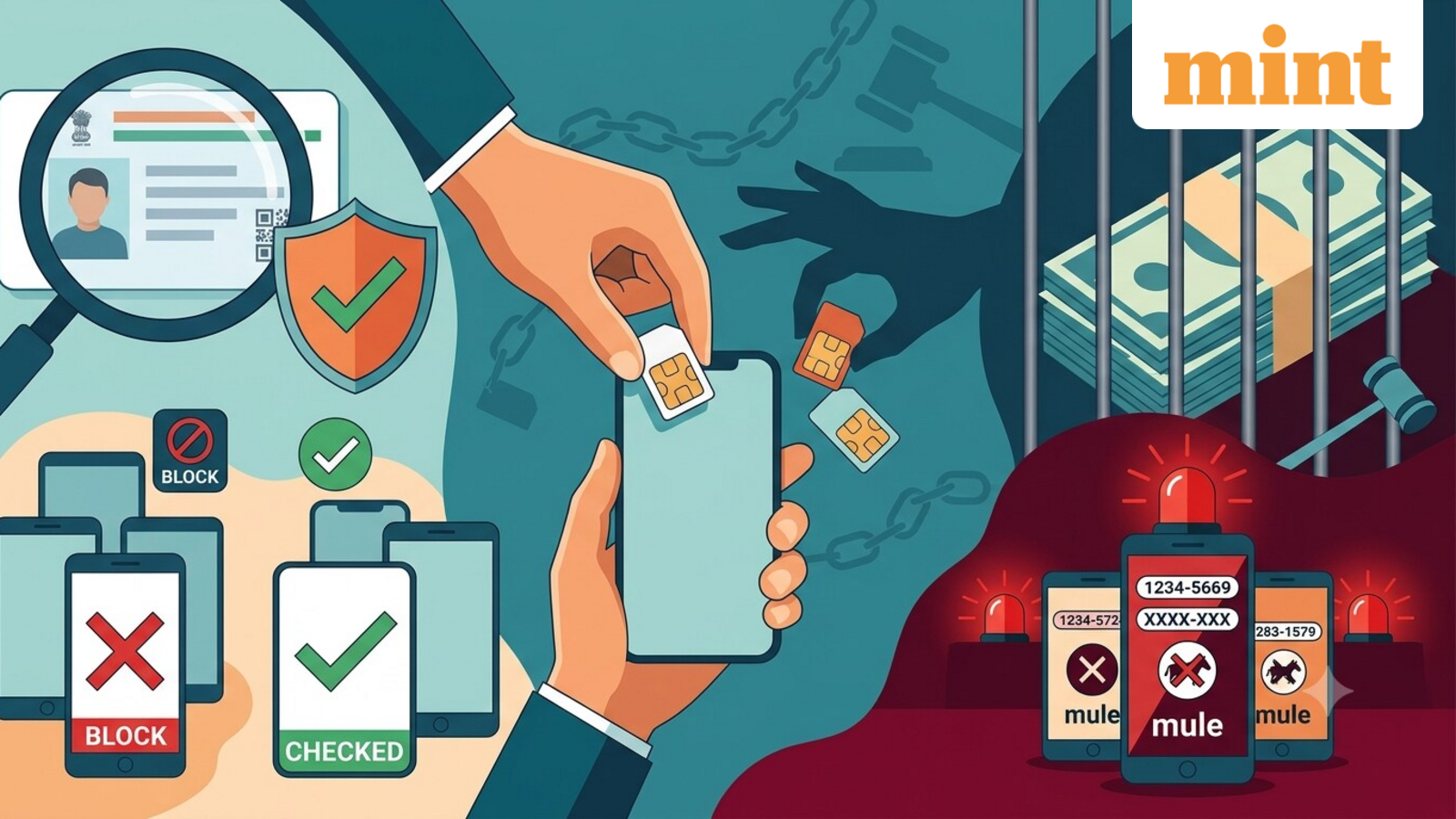
SIM card misuse can attract ₹50 lakh fine, 3-year jail: DoT warns users, here’s what you should check
The Department of Telecommunications (DoT) has cautioned mobile users against allowing SIM cards issued in their name to be used by others, warning that fraudulent SIM issuance, misuse of telecom identifiers and tampering with IMEI numbers can carry serious legal consequences.
Under the Telecommunications Act, 2023, such violations may attract imprisonment of up to three years and a fine of up to ₹50 lakh, the department said in an advisory issued on 21 September.
The warning is particularly important for users who may have mobile connections issued against their identity documents without their knowledge, or who have handed over SIM cards registered in their name to another person. DoT has advised citizens to regularly check all mobile numbers linked to their identity through the Sanchar Saathi portal or mobile app.
Why has DoT issued the warning?
The advisory follows a case uncovered during recent cybercrime investigations in which a Point of Sale, or PoS, agent in Chhattisgarh allegedly activated 25 mobile connections using citizens’ identification documents without their knowledge or consent.
Following the discovery, DoT and telecom service providers blacklisted the PoS, preventing it from issuing further SIM cards. The 25 connections were also examined through DoT’s Digital Intelligence Platform.
Connections identified as suspicious were sent for re-verification and numbers that failed the process were subsequently deactivated. The incident highlights a risk for consumers because a person may not always be aware that a mobile number has been obtained using their identity documents.
DoT has also cautioned subscribers against transferring SIM cards issued in their own name. According to the department, legal liability may extend to the original subscriber if such a SIM is subsequently misused.
What should mobile users avoid?
DoT has listed several practices that citizens should stay away from.
These include obtaining SIM cards using fake documents, fraud, cheating or impersonation, as well as selling, transferring or handing over SIM cards registered in one’s name to another person who may misuse them.
The department has also warned against procuring a SIM in one’s own name and subsequently loaning, renting or using it as a “mule SIM” for cyber fraud or other unlawful activities. Such misuse may expose the original subscriber to legal liability.
Users should also avoid devices such as modems, SIM boxes or other equipment with configurable or tampered IMEI numbers. DoT has further advised against using apps, websites or other tools to modify Calling Line Identity, or CLI, and other telecom identifiers.
IMEI, or International Mobile Equipment Identity, is the identifier associated with a mobile device. The government said misuse or tampering of such telecom identifiers can create risks for citizens as well as the security and integrity of telecom networks.
How can you check SIM cards issued in your name?
Consumers can use the government’s Sanchar Saathi platform to check the mobile numbers issued in their name. The service allows users to identify connections that they do not require or do not recognise and seek their blocking.
Users can also verify the IMEI details of a handset through the platform’s Check Genuineness of Your Mobile Handset facility. It can show information such as the phone’s brand, model and manufacturer details.
For consumers, the advisory makes two checks particularly important: periodically reviewing all mobile numbers linked to their identity and verifying a handset’s details when there is doubt about its authenticity.
DoT’s latest warning is that SIM cards and telecom identifiers should not be treated casually. A connection issued in your name can potentially be misused even when you are not the person operating it, making regular verification of linked mobile numbers an important safeguard against telecom and cyber fraud.